I can not identify what type of solder this spool is, it is marked ...

Thread Starter

Dan Pressman

Joined Apr 19, 2017
19
I can not identify what type of solder this spool is, it is marked:

T.L.C.
BS 219 Grade T
370 Flux 16awg
WRAP3 1.6mm

556/781

I know that the BS 219 and the Grade is the important part but I have included everything for completness.

I can find references to "BS 219" but not to a "Grade T".

It is an old but large full spool. Is it for electrical, plumbing or should I give it to my jewelery making friends?

Thanks in advance


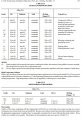
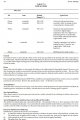
PS I have found some things which 2018-11-13_15-27-11.jpg 2018-11-13_15-27-55.jpg
 

WBahn

Joined Mar 31, 2012
32,702
The 370 flux is the type of flux used, which is a rosin flux, so this is possibly an electrical solder (but that's weak evidence, I'm really saying nothing more than that this flux doesn't rule it out as an electronic solder).

WRAP3 likely means that the solder has 3 flux cores in it, which typically translates to about 2% flux.

BS 219 appears to be a U.K standard for soft solders and the Grade appears to indicate the basic alloy content as well as the max impurities.

I Googled "BS 219 Grade T" and got the following hit on the first page:

https://books.google.com/books?id=q...B3oECAEQAQ#v=onepage&q=BS 219 Grade T&f=false

which indicates that it is a eutectic mixture with 51.2% Sn, 30.6% Pb, and 18.2% Cd with a melting point of 145 °C. That's a very low melting temperature compared to most electronic solders and I have no idea what the reason (other than possibly lowering the melting point) for the cadmium is. Normally cadmium is an undesirable impurity in an electronic solder, so it could well be that this solder is intended for something other than electronics applications, but I don't know one way or the other.
 

dl324

Joined Mar 30, 2015
18,216
Most of the references I found make me think it contains lead with a rosin activated flux. Not suitable for plumbing and likely not even for jewelry with the lead paranoia these days.
 

Thread Starter

Dan Pressman

Joined Apr 19, 2017
19
Thanks guys - WBahn - I missed the line in that reference for Grade T - oops.

So sounds like ok to use for normal wiring but not for serious breadboarding - and good ventilation to avoid breathing too much lead. I really do not do a lot of soldering but if you think I should just throw this out - I will!
 

ebp

Joined Feb 8, 2018
2,332
I believe that Ersin designated a common activated rosin flux as 370. They were also notable for producing solder with multiple flux cores when the standard cored wire solder had a single core. I'm fairly certain it was originally a British company, which would be consistent with a BS designation for the alloy. In my opinion, their products were superior quality.

Over the years, Ersin became Multicore then disappeared into the morass that is Henkel. Henkel's website used to be something of a disaster area where finding anything was a challenge, but I haven't looked for some time. I don't know if the Multicore tradename is still in use.

If the solder is on a red spool, there is a good chance it is Ersin/Multicore/Henkel. I don't know if the red spool was a trademark, but it was certainly used for most of their products that I used. They did use white spool for small put-ups (e.g. 50 grams), I think primarily sold as "consumer" items.

I may have some ancient data that might be helpful. I'll have a dig later.
 

dl324

Joined Mar 30, 2015
18,216
So sounds like ok to use for normal wiring but not for serious breadboarding
It's suitable for any electronic circuits.
- and good ventilation to avoid breathing too much lead. I really do not do a lot of soldering but if you think I should just throw this out - I will!
The dangers of using leaded solder are overblown. Under normal soldering temperatures, there is no lead in the fumes. Those will be from the flux. Breathing flux fumes can cause reactions in hypersensitive individuals, but some fine the pine aroma to be pleasant. The only precautions I take are to avoid breathing fumes and washing my hands after handling the solder.

The last I heard, hobbyists were still allowed to use leaded solder in locales where RoHS restrictions are in effect.
 

Thread Starter

Dan Pressman

Joined Apr 19, 2017
19
Thanks Everyone - I will use it with joy! Now if i can only remember what my pop taught me 58 years ago about tinning and stuff i will be in great shape!
 

WBahn

Joined Mar 31, 2012
32,702
I have no idea whether cadmium-bearing solder is acceptable for electronics work -- it probably is, at least for hobby-type applications.

As near as I can tell, cadmium-bearing solder is primarily used in the jewelry industry to get the lower melting points given some of the temperature-sensitive materials used.

I also don't know whether soldering with cadmium-bearing solder is a significant risk for cadmium exposure, but just to be safe you might take extra precautions when using it as far as ventilation and cleanup.
 

sdowney717

Joined Jul 18, 2012
801
I just came across this: https://www.ebay.co.uk/itm/Solder-w...052264?hash=item214b9626a8:g:nGAAAOSwG3Fa6tyn
It seems to be the same alloy but without flux cores. The description says "PLEASE NOTE that this alloy is NOT suitable for use on any type of electronic circuits."
Not suitable as there is no flux. An ebay seller is not going to be happy when the buyer buys this and tries to electrically solder and cant and then complains the item is not as described.
 

AlbertHall

Joined Jun 4, 2014
12,619
Not suitable as there is no flux. An ebay seller is not going to be happy when the buyer buys this and tries to electrically solder and cant and then complains the item is not as described.
It also says "Solid wire (no flux core). Flux gel or liquid flux is available from stock." so I don't think the lack of flux is the reason it is unsuitable. Can you do any soldering without flux?
 

sdowney717

Joined Jul 18, 2012
801
It also says "Solid wire (no flux core). Flux gel or liquid flux is available from stock." so I don't think the lack of flux is the reason it is unsuitable. Can you do any soldering without flux?
Ebay has a problem with dumb buyers and fraudulent buyers who will claim it is not as described and get their money back.
 
Wow, that was a tough one.
ASM Ready Reference: Thermal properties of metals
- Page 491
https://books.google.com/books?isbn=0871707683

upload_2018-11-15_8-17-9.jpg
Fran Cverna - 2002 - ‎Preview - ‎More editions
... eutectic 67.0Sn 33.0Cd, Binary eutectic 70Sn-18Pb-12In, Solder 92.0Sn 8.0Zn, Binary eutectic 96.5Sn 3.5Ag, Binary eutectic 96.5Sn-3.5Ag, Sn-3.5Ag, Solder, eutectic 99.25Sn 0.75Cu, Binary eutectic BS219 Grade T, 51.2Sn 30.6Pb 18.2Cd, ...

Melts 145 C, 293 F

It is a Cadmium containing solder.

Cadmium containing solders (Cd70/Sn30) were used for low thermal EMF connections.

I'd stay away from it.

This http://www.marutimetal.com/solderwire.htm reference, shows it's a low melting point alloy for soldering to gold, so maybe jewelery making or some soldering to Printed Circuit Boards that were gold (actually Copper/Ni/gold) like from yesteryear from Hewlett Packard.
 
Last edited:
Top