I always remember "56 = 7 x 8 because 5,6,7,8"; why not for transistor theory?

Thread Starter

Mellisa_K

Joined Apr 2, 2017
391
Maybe I'm the weird one in the forum of weird ones, but I don't find mnemonics or analogies useful. I learned the water analogies for electricity, but I thought they were stupid. If I was ever taught any mnemonics for the resistor color code, I don't remember. I do, however, remember referring to a chart over and over and over until eventually it became ingrained in my mind.

As far as BJT's, I would think it should be easy enough to remember that the arrow points in the direction of conventional current flow.
horses for courses eh @Veracohr ? i love them. if we were all the same it would be pretty boring world! :)
 

Wendy

Joined Mar 24, 2008
23,860
How are your math skills? Along time ago possibly before you were born. I started with Ic=B Ib. and with that as a base assumption dirived th voltages for every transistor con figuration. It has stood mein good with theory ever since. Not sue I could it again. Probably. It was for a program I was tring to write on myTRS80
 

Thread Starter

Mellisa_K

Joined Apr 2, 2017
391
How are your math skills? Along time ago possibly before you were born. I started with Ic=B Ib. and with that as a base assumption dirived th voltages for every transistor con figuration. It has stood mein good with theory ever since. Not sue I could it again. Probably. It was for a program I was tring to write on myTRS80
I struggle with maths Wendy. It might sound odd, but that's one reason I chose my current career as a research statistician in the social sciences. If you have a weakness you should try to overcome it - not by hiding from it - but by confronting it. One technique I use to overcome my organic weakness in statistics (maths) is to step back and find perspective in it. So, for example, I look to linkages with other disciplines and find meaning in the connections I come up with. I was over the moon when i discovered the famous theoretical Cambridge statistician R A Fisher was a professor at my old University and he is buried here in Adelaide. https://www.adelaide.edu.au/library/special/mss/fisher/ . Fisher, one of my heroes invented ANOVA (analysis of variance) and the F distribution and the concept of statistical significance. https://www.famousscientists.org/ronald-fisher/ . However, he was also a eugenicist and politically I hate that about him. He was irascible and probably a thoroughly unpleasant person. Still a hero though. Beyond smart. A genius.

My weakness in maths also partly feeds my interest in electronics. And I find that by forcing yourself to practice your weakness you will overcome it all the easier. I just need to let go of embarassment about asking questions. I find that most people who know more than me love to help me - without judgement. Aside from my self imposed need to practice maths through statistics, i think statistics is an elegant and practical derivative of maths. Statistics is to science as foundations are to a building.

Thanks for asking Wendy. and thanks for helping me

Regards

Mellisa
 

Thread Starter

Mellisa_K

Joined Apr 2, 2017
391
Hello,

If you like to watch videos, have a look at the colleges recorded at learnerstv:
http://learnerstv.com/Free-Engineering-video-lecture-courses.htm

Bertus
Hi Bertus,

Thanks for suggesting that. It looks an amazing learning reference.

I only had time just now for a quick preview. There are problems with the website. It wont play the vids on my PC. I will look into it. Probably just need to download some software to make it play. I hope I can get this one to work. It looks a gem. thanks so much.

I will let you know how i get on.

Mell
 

Thread Starter

Mellisa_K

Joined Apr 2, 2017
391
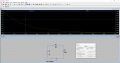
I'm not sure if you are a visual learner but here for example is how I always remember the voltage and current graph when a capacitor being charged with DC.

Blue being the voltage drop over the capacitor and the green one the current in the circuit.

View attachment 128013

And here is more in depth explanation behind the math in an RC circuit. http://www.electronics-tutorials.ws/rc/rc_1.html
wow sinus thats an awesome learning resource. what a fabbo website.
i will book mark that and use it frequently.
thankyou so much
Mellisa
 
Top