hydroponically grown plant ,need help

Thread Starter

abhimanyu143

Joined Aug 25, 2014
211
I am talking about making one. Platinum or platinum plates electrodes would be best - something that doesn't build up any oxides when in water so long. Make something to support the electrode (wire) tips at 1 cm apart.
as you said me. I am trying to make some connection . I made temporary diagram please look the diagram
I did google for ion-selective electrode
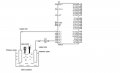
I saw link where we can use different type of ion-selective electrode
Q1. can we use 6 different ion-selective electrode that can measure conductivity of NPK in water
two ion-selective probe will measure conductivity of N
two ion-selective probe will measure conductivity of P
two ion-selective probe will measure conductivity of K

Is it possible ?
 
Last edited:

Thread Starter

abhimanyu143

Joined Aug 25, 2014
211
Yes, Ion Selective Electrodes were already suggested in post #16 of this thread
The problem will be nitrogen in the form of Urea, it is not an ion but it is nitrogen.
what is next step for me.

can we make home made selective prob for NPK ?
Do you think that diagram is right ?

I know fallowing things
microcontroller
Ion Selective Electrodes
fertilizer

I need for following
circuit diagram
measurement

please tell me what I do next for this project ?
 

wayneh

Joined Sep 9, 2010
18,108
...can we make home made selective prob for NPK ?
With enough time, effort and expense, you could build yourself a Ferrari. I can't recommend it.

If I was running a small-to-medium hydroponic facility, I would probably do a weekly test using commercially available test kits and tweak my process parameters according to the findings. I would not use online probes except perhaps for pH and conductivity (they are often combined in a single probe), and I would use those only is the facility was large enough to justify the cost of maintaining those probes.
 

GopherT

Joined Nov 23, 2012
8,009
what is next step for me.

can we make home made selective prob for NPK ?
Do you think that diagram is right ?

I know fallowing things
microcontroller
Ion Selective Electrodes
fertilizer

I need for following
circuit diagram
measurement

please tell me what I do next for this project ?
Most chemical manufacturers do not have on-line analysis - and those reactions are fast. Why would you need a on-line ion analysis for the very slow change in nutrients in a hydroponic agricultural system? The as mentioned in post #16, the electrodes drift constantly and need hourly attention/calibration. If the calibration is more work than the daily/weekly (monthly?) changes in ion concentration, why would you bother with an on-line system?

Control system/meters for the ion-selective electrodes are not very expensive. The electrodes themselves are about $100 - $300 each for decent ones. If they are allowed to dry out, they are dead in a hurry. If your plan is to build a controller for an ion-selective electrode with calibration system, you need another partner besides me. If your goal is to fumble around and try to understand how a conductivity meter might work for a simple DIY electronics project, I will be happy to keep posting.

Note that you will not get a cheaper version by doing it yourself. By the time you acquire 1 of each piece you need, make a PCB, assemble and test it, all of your costs and time will be way over what a commercial unit will cost and it is sure to work if you buy a decent one - yours may or may not work ever. Buy one if you need it. Buy a set of test strips or what ever other options are out there if you think your plants can survive weekly adjustments of minerals.
 

Thread Starter

abhimanyu143

Joined Aug 25, 2014
211
when we try to make circuit we should know which component we are going to use
when we get component we try to connect them together
but still its not clear for me which component should i used and how to connect them together

summary for project
1 . micro controller
2. electrode
3.measurement - conductivity
4. material- fertilizer
5. Add or stop supply of fertilizer according to condition

I am really sorry I have taken your much time to understand for this topic. you people gave your best for me but honestly I am turning around and around. but not understood actually what should I do . I am still confused what I use , and what I don't use . please treat me as dumb, stupid guy who does not know anything but trying to learn from ground
Thank you very much for your time and your every help
 

wayneh

Joined Sep 9, 2010
18,108
You are not hearing us. You keep insisting on using a microcontroller and automated nutrient addition system - a system that can respond on the scale of seconds - and we are saying this is unnecessary overkill. You have not said how large your system is, but we assume it is not a large commercial farm. Your response time for control is on the order of days, meaning you do not need so much expensive automation.

I have said before: If you insist on an automated system, start with one parameter - conductivity. Add your nutrients based solely on that parameter. When you have your system under control and can prove that you need more sophistication than that, add another parameter.

To control on conductivity, you need a probe and a circuit to condition the signal to provide a proper signal to your µC. I would use a commercially available conductivity probe and meter for those. They are widely available and you can likely find used equipment. Note that many pH meters accept conductivity probes.

You'll want a relay board so that signals from your µC can operate valves or pumps. You need to think about the scale of those control points, whether you need a 1W pump or a 1HP pump, a 1 L/h valve or a 1L/s valve, and so on.
 

#12

Joined Nov 30, 2010
18,224
This is what I'm hearing: I want to build a rocket. I will not tell you if it has to go up 400 feet for New Years party or take a crew to Mars. I will not perform even the first step you tell me to do. Please provide printable list of parts, full set of schematics, and code for computer chip(s).
 

Thread Starter

abhimanyu143

Joined Aug 25, 2014
211
This is what I'm hearing: I want to build a rocket. I will not tell you if it has to go up 400 feet for New Years party or take a crew to Mars. I will not perform even the first step you tell me to do. Please provide printable list of parts, full set of schematics, and code for computer chip(s).
Ok , I like your complement

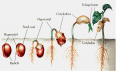
lets start from seed , we place the seed into water, seed grow into water , growth should start after 2 or 3 weeks.we don’t feed furtilizer until the first set of true leaves appears When seeding develop their true leaves and roots. Its time to feeding furtlize.we need to provide right fertilizer for good growth
Most common fertilizer is NPK, after two or three weak or after the first set of true leaves apper we need to fertilize plant. Fertilize approx every two weeks
Automated system (small and low cost system)
Parameter – conductivity

Project part list
Electrodes probes
Micorcontroller
Amplifier or filter
Resistor
A to D converter Ic
Volve or relay

Automated system that Add more or less fertilizer into water ,that maintain conductivity range

Best time to fertlize plant

Time- fertilize plant after their active growth ,after two or three weak or after the first set of true leaves apper we need to fertilize plant

ADD small value of NPK into water because small plant take less fertilizer
After two weeks Add large value of NPK into water because large plant take large fertilizer

Provide enough NPK to complete their life cycle

My aim – I want to make Automated system that will Add more or less fertilizer into water
If plant need more or less fertilizer system will adjust itself
method - electrical conductivity
Its not complete diagram its just idea It show how can I do it in term of electronics
If you need more Information to help me, please ask me
welcome for your every help
 
Last edited:

shortbus

Joined Sep 30, 2009
10,050
You are still not understanding how plants grow and how hydroponics actually work. Plants do not require/consume feeding like a animal. They take in much more water than they do nutrients. You don't need to add nutrients as often as you seem to think, you do need to add water to the solution to make up the lost water from evaporation and plant aspiration.

In hydroponic growing it is the human interaction with the plant that decides when to add extra nutrients. The same way that growing in a outdoor garden is done. There is no "magic" level to this, and this is the simple fact you don't seem to want to understand. Have you ever grown plants? The micro controller for this is found right between the the farmer/growers ears.

You should really, really take a step back on this project and do more research on how hydroponics is done. You will then see that your approach is flawed. https://www.hydroponics.net/learn/hydroponic_gardening_for_beginners.asp
 
Top