Howland current pump with voltage level instead of ground

Thread Starter

sindre jacobsen

Joined Apr 1, 2019
40
Hello,
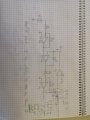
I've been looking a little on the Howland current pump, mainly on how it would function if there is a voltage that is non-zero at the supposedly grounded pin of the load. From what I can see, the pump can be used this way, but if the voltage level on the negative pin of the load (looking at the circuit diagram when referenced to ground) is greater than the positive, the opamp sinks current instead of sourcing. Are there any problems with using the circuit in such a way other than that if the voltage difference is too high, the opamp will either sink too much compared to the max rating, or it will source too much?
The reason I'm asking if it can be used this way, is because every book I've read about it in, and from google, it is always said that the pin is grounded, so I would like to know what implications there would be if the pin is raised to a voltage level other than ground.

Thanks,
S.
 

Thread Starter

sindre jacobsen

Joined Apr 1, 2019
40
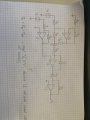
Quick follow up question: Is there some type of circuitry that can be placed between two points to make the current flow freely from, say, a Howland Current Pump, to another circuit where the voltage on one side is independent on the other? Right now I have connected a Howland pump to another circuit to feed it with current, but on the other end of a resistance (basically the load cause otherwise the pump's load would be ideally 0) there is a DC voltage that is variable. As far as I can tell, connecting the Howland to the circuit this way will make the output current be dependent on what voltage level there is on the other side of the load. Am I wrong in my way of thinking about it?
I've attached 2 different ways I'm trying. One where the circuit is a floating load to the voltage to current converter, and one where the circuit is a "grounded" load (Howland pump). My problem right now is that the voltage from the voltage to current converter is always affecting either the output of the circuit being fed current (if floating load) or the inverting input. I'd like, if possible, for the voltage to not affect the circuit, but still provide the current controlled wholly by the converter.
 

Attachments

Thread Starter

sindre jacobsen

Joined Apr 1, 2019
40
Just calculated that if I set R4=R5=R6=R7 on the Howland pump there are some really sweet cancellations happening such that the current, IF, is only dependent on VI and R5B. So forget the part about the IF being dependent on the voltage on the inverting input of U2 :p
 

crutschow

Joined Mar 14, 2008
38,322
Yes, the output current of a Howland current-pump stays constant as the other end of the load voltage varies (within the operating limits of the op amp).
The circuit maintains a constant current by generating a constant differential voltage across R5 as determined by the input voltage, which is therefore independent of the load voltage.

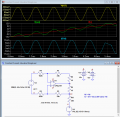
This is shown in the LTspice simulation below of a modified Howland pump (similar to yours):
As the voltage at the bottom of the load changes from -15V to +15V (red trace), the load current (blue trace) stays constant until the op amp output saturates (green trace).


(You might consider getting the free LTspice simulator from Analog Devices to simulate your circuit.)

upload_2019-7-26_19-10-19.png
 
Last edited:

Thread Starter

sindre jacobsen

Joined Apr 1, 2019
40
Yes, the output current of a Howland current-pump stays constant as the other end of the load voltage varies (within the operating limits of the op amp).
This is shown in the LTspice simulation below of a modified Howland pump:
As the voltage at the bottom of the load changes (red trace), the load current (blue trace) stays constant until the op amp output saturates (green trace).

(You might consider getting the free LTspice simulator from Analog Devices to simulate your circuit.)

View attachment 182490
Thanks for the great explanation! :)
 
Top