Facebook
 Google
 GitHub
 Linkedin
Hi all,
I’ve been tasked with building a “shifter box” for a race car. The purpose is to manually place the transmission into neutral after a crash, since the car sometimes remains stuck in gear. To achieve this, I need to send a 14.5 V signal to the electronic shifter box, while maintaining a 3 V idle state under normal conditions.
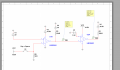
I designed a comparator-based circuit to mimic the paddle shifter: when the button is pressed, the output switches from 3 V (idle) to 14.5 V. The problem is that when I tie the outputs together, they form a voltage divider, which throws off Vout.
I came across the idea of using Ideal Diode Controllers on each output line to isolate them, and then tying the outputs together. Would this approach work, or is there a better way to achieve this?
Thanks!
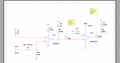
I’ve been tasked with building a “shifter box” for a race car. The purpose is to manually place the transmission into neutral after a crash, since the car sometimes remains stuck in gear. To achieve this, I need to send a 14.5 V signal to the electronic shifter box, while maintaining a 3 V idle state under normal conditions.
I designed a comparator-based circuit to mimic the paddle shifter: when the button is pressed, the output switches from 3 V (idle) to 14.5 V. The problem is that when I tie the outputs together, they form a voltage divider, which throws off Vout.
I came across the idea of using Ideal Diode Controllers on each output line to isolate them, and then tying the outputs together. Would this approach work, or is there a better way to achieve this?
Thanks!