How to test a varistor?

Thread Starter

xchcui

Joined May 12, 2014
309
Ok, well done for doing the detailed research, I just simplified by assuming the avalanche voltage was fairly sharp at 430V. Perhaps you could do the maths based on voltage at different currents to target a better resistance value.
So,should i calculate it like that:
500V(source)-325V(300V-350V varistor)=175V(resistor)
175V/46uA=3.8MΩ(resistor)
And expect to get a proper reading between
300V to 350V?
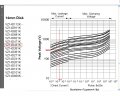
VARISTOR U-I1.jpg


But how should that tell me that the varistor is okay,
if the voltage on the varistor is on low voltage(~325),
while it rated as ~431V?
I think,i lost it.
It looks to me,like we can play with the resistor value and make any results that we want to achieve,like we determine what will be the result and it looks strange.
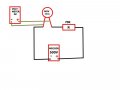
 

drjohsmith

Joined Dec 13, 2021
1,612
The
So,should i calculate it like that:
500V(source)-325V(300V-350V varistor)=175V(resistor)
175V/46uA=3.8MΩ(resistor)
And expect to get a proper reading between
300V to 350V?
View attachment 278192


But how should that tell me that the varistor is okay,
if the voltage on the varistor is on low voltage(~325),
while it rated as ~431V?
I think,i lost it.
It looks to me,like we can play with the resistor value and make any results that we want to achieve,like we determine what will be the result and it looks strange.
Thats the point
What exactly do you want to test ?
Does the varister protect your circuit or the characteristics of a single device at random.
Which would have to be to destruction to get all the characteristics. .
 

Thread Starter

xchcui

Joined May 12, 2014
309
VARISTOR MEGER TEST.jpg
Okay,i finally made the test.
It looks like the above photo.
When i make the test,the megger showed a first value,
lets say-500K ohm,but then,as long as the megger is ON,the total resistance gradually increased(also on the mov),while the total current value gradually decreased.
Is it related to the battery of the megger that loses power or to the"capacitance charging current effect"?
One more strange thing is that when i turn-on the megger,the voltmeter showed 0V
and gradually increased up.While the voltage was rising-up,after 10 seconds,i stopped the test,so i don't know if it reached to 390vdc(as i allowed to turn-on the megger up to 10 seconds and it is too much time to run a varistor).
Shouldn't the voltmeter show the proper voltage at first and then decrease(rather than increase from 0V)?
Since the varistor resistance is increased,i was expecting to see a decreasing in varistor voltage rather than increasing.
May you explain those phenomenons?
Thanks.
 

drjohsmith

Joined Dec 13, 2021
1,612
View attachment 285224
Okay,i finally made the test.
It looks like the above photo.
When i make the test,the megger showed a first value,
lets say-500K ohm,but then,as long as the megger is ON,the total resistance gradually increased(also on the mov),while the total current value gradually decreased.
Is it related to the battery of the megger that loses power or to the"capacitance charging current effect"?
One more strange thing is that when i turn-on the megger,the voltmeter showed 0V
and gradually increased up.While the voltage was rising-up,after 10 seconds,i stopped the test,so i don't know if it reached to 390vdc(as i allowed to turn-on the megger up to 10 seconds and it is too much time to run a varistor).
Shouldn't the voltmeter show the proper voltage at first and then decrease(rather than increase from 0V)?
Since the varistor resistance is increased,i was expecting to see a decreasing in varistor voltage rather than increasing.
May you explain those phenomenons?
Thanks.
Still dont know what your trying to do
but You need to measure the difference in voltage , not guess one
so you need two meters, and as its dynamic, probably a scope would be better.
 

drjohsmith

Joined Dec 13, 2021
1,612
I did what,jerry-hat trick,adviced me to do.
The current should be 1mA,while the voltage-drop on the mov
should be 430V(+-10%).
Anyway,i am not talking anymore about the purpose of this test
or what the results mean,i am talking about the phenomenons.
1 phenomenon:
Why when i turn-on the megger(500vdc),the voltmeter show 0V and then
gradually increased up?
(After 10 seconds it reached to about 300vdc,but i turned-off the megger after those 10 seconds,
so i don't know how much it could reach,but the tendency is clear).
When the voltmeter(on the mov)showed 0vdc,the current in the circuit was 1mA,
the resistance of the mov 430K ohm.So the real voltage on the mov is 430vdc in
that first moment,so why the voltmeter is acting like that?
at the moment you dont know what the voltage source and the load are doing at the same time, so you cant say
put a volt meter on the voltage source and the load at the same time
measure difference and plot against time

A megga for instance does not have a low impedance output, nor a constant voltage out
 

Thread Starter

xchcui

Joined May 12, 2014
309
Still dont know what your trying to do
but You need to measure the difference in voltage , not guess one
so you need two meters, and as its dynamic, probably a scope would be better.
I did what,jerry-hat trick,adviced me to do.
The current should be 1mA,while the voltage-drop on the mov
should be 430V(+-10%).
Anyway,i am not talking anymore about the purpose of this test
or what the results mean,i am talking about the phenomenons.
1 phenomenon:
Why when i turn-on the megger(500vdc),the voltmeter show 0V and then
gradually increased up?
(After 10 seconds it reached to about 300vdc,but i turned-off the megger after those 10 seconds,
so i don't know how much it could reach,but the tendency is clear).
When the voltmeter(on the mov)showed 0vdc,the current in the circuit was 1mA,
the resistance of the mov 430K ohm.So the real voltage on the mov is 430vdc in
that first moment,so why the voltmeter is acting like that?
Thanks for your response,but what does it mean?
 

drjohsmith

Joined Dec 13, 2021
1,612
I did what,jerry-hat trick,adviced me to do.
The current should be 1mA,while the voltage-drop on the mov
should be 430V(+-10%).
Anyway,i am not talking anymore about the purpose of this test
or what the results mean,i am talking about the phenomenons.
1 phenomenon:
Why when i turn-on the megger(500vdc),the voltmeter show 0V and then
gradually increased up?
(After 10 seconds it reached to about 300vdc,but i turned-off the megger after those 10 seconds,
so i don't know how much it could reach,but the tendency is clear).
When the voltmeter(on the mov)showed 0vdc,the current in the circuit was 1mA,
the resistance of the mov 430K ohm.So the real voltage on the mov is 430vdc in
that first moment,so why the voltmeter is acting like that?

Thanks for your response,but what does it mean?
Hi

The basis of measurement, is to compare,
First up, you are assuming the mega immediately gets up to a set voltage and stays there.
Second , you have a question re something changing over time, a meter cant tell you much on this
You also have no load, its a purely capacitive / inductive system,

As a minimum,
you need to test the MOV as per the data sheet,
use a scope, with apropreate probes,
to measure the voltage from the Megga , and across the MOV at the same time
I'd also be putting load on there to dissipate the voltage
 

DickCappels

Joined Aug 21, 2008
10,661
Thanks for your response,but what does it mean?
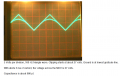
It is just there to give you an image of current through a varistor as a function of applied voltage. The important thing is the slope of the of the curved trace. The triangle is the voltage that is across it.
 

Thread Starter

xchcui

Joined May 12, 2014
309
Thanks for all responses.
After several testing and calculation,i think that the source of the problem is the DMM.
My DMM is suitable for testing voltage up to 1000VDC,but i think that there is something with the DMM high internal resistance that responsible for my false measurement results which drive me crazy,but can't figure how exactly and how to correct that.
I understand that a scope is the proper tool and the megger is not the ideal power source,but that's what i have.
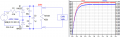
View attachment 285333
EDIT:
Added resistor R1 for calibrating possibility.
Select value of resistor R1 to obtain DMM voltage 430 V on resistor 430k, connected instead varistor.
Thanks for the diagram,but
How do i determine(calculate),at first place,the value of the R1 to obtain 430V on resistor 430k(instead varistor)?
 

Danko

Joined Nov 22, 2017
2,172
My DMM is suitable for testing voltage up to 1000VDC,but i think that there is something with the DMM high internal resistance that responsible for my false measurement results which drive me crazy,but can't figure how exactly and how to correct that.
Check your DMM at first. In this circuit, without resistor 430k and without varistor, DMM should show voltage about 600 V.
Thanks for the diagram,but
How do i determine(calculate),at first place,the value of the R1 to obtain 430V on resistor 430k(instead varistor)?
If voltage on resistor 430k is lower than 430 V, then resistance R1 should be decreased (3.9k or 3.6k or 3.3k and so).
If voltage on resistor 430k is higher than 430 V, then resistance R1 should be increased (4.7k or 5.1k or 5.6k and so).
 

drjohsmith

Joined Dec 13, 2021
1,612
Check your DMM at first. In this circuit, without resistor 430k and without varistor, DMM should show voltage about 600 V.

If voltage on resistor 430k is lower than 430 V, then resistance R1 should be decreased (3.9k or 3.6k or 3.3k and so).
If voltage on resistor 430k is higher than 430 V, then resistance R1 should be increased (4.7k or 5.1k or 5.6k and so).
Does the circuit your referring to , not use AC mains, not the mega which is DC,
look here, fig 5
https://www.instrumart.com/assets/Megger-Guide-to-Insulation-Testing.pdf
and in particular the note in the paragraph after fig 5

Alos , have a look at
https://electronicshacks.com/how-to-test-a-varistor/
 
Last edited:

Danko

Joined Nov 22, 2017
2,172
Does the circuit your referring to , not use AC mains, not the mega which is DC,
look here, fig 5
https://www.instrumart.com/assets/Megger-Guide-to-Insulation-Testing.pdf
and in particular the note in the paragraph after fig 5

Alos , have a look at
https://electronicshacks.com/how-to-test-a-varistor/
I feel I am too stupid to understand, how your links can help TS
to obtain test with his requirements:

A quick way to check if the varistor is okay is to test with DMM
if it has infinite resistance.
But this test can't tell me if the varistor meet the requirements,
like if the clamping voltage of the varistor at 1mA DC
meets the value which the varistor is rated.
How can i test that without a special laboratory instruments?
 

drjohsmith

Joined Dec 13, 2021
1,612
I feel I am too stupid to understand, how your links can help TS
to obtain test with his requirements:
Sorry @Danko

I was highlighting to the OP in case they had missed it
that there are two circuits on this thread
one with the megga supplying the voltage source, which is DC
and one using AC mains and a rectifier
 

Thread Starter

xchcui

Joined May 12, 2014
309
Check your DMM at first. In this circuit, without resistor 430k and without varistor, DMM should show voltage about 600 V.

If voltage on resistor 430k is lower than 430 V, then resistance R1 should be decreased (3.9k or 3.6k or 3.3k and so).
If voltage on resistor 430k is higher than 430 V, then resistance R1 should be increased (4.7k or 5.1k or 5.6k and so).
Okay,i think i got the idea.
It looks like a simple circuit to build,which can be simply pluged into the 220VAC socket.
Thanks everyone for your help:)
 
Top