How to switch a control panel with AC/DC relays

Reloadron

Joined Jan 15, 2015
7,892
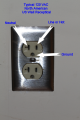
Below is pictured a typical North American US 120 VAC receptacle also know as an everyday wall outlet. :)
Outlet Typical.png

I will respectfully disagree with Philba in that I would not switch the neutral side of your 120 VAC supply. My thinking here runs with that of the NEC (National Electric Code) US. Granted you are not doing new electrical work in a new building and you really have no need to comply with any codes. The NEC devotes an entire article (404) to switches. Article 100 provides six separate definitions for "switch," covering bypass isolation, general-use, general-use snap, isolating, motor-circuit, and transfer. Article 404 requirements apply to all switches, switching devices, and circuit breakers used as switches. Your relays will be acting as a switch by every definition of the word and with that in mind. Even when we wire, for a simple on/off operation of a 120V light, you wire the switch contacts in series with the hot lead. That is, the hot lead comes from the supply to the switch, and then goes from the switch to the light. The neutral and ground wires are not switched, though you must ground the switch body. This is done for safety reasons and the driving logic behind doing it this way is that if for any reason neutral is lost through your switching logic, in this case relay contacts, and the hot were to short to any chassis that metal box, enclosure or chassis would be floating at mains voltage. Don't shoot me as I am merely the messenger.

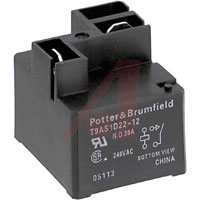
As to relays? You can choose whatever you like with consideration for the maximum current the relay contacts will handle and then some headroom. The relay design I mentioned earlier are not cheap relays. I like and use them. Automotive relays are also a very good and affordable choice and many can be bought with a mounting hole tab as well as easy to find sockets for. Your only concern is the contacts be able to switch 120 VAC at your current requirements.

Ron
 

philba

Joined Aug 17, 2017
959
Ron, we definitely disagree. The reason for switching both lines because, as I said, it is possible to have miswired receptacles and cords. I got a nasty shock in my home shortly after I moved in because the amateur electrician previous owner screwed up an outlet. Lamp with a polarized plug and a loose wire. My fault but wouldn't have happened if socket had been wired correctly. Actually, 5 outlets were backwards. If everything is exactly correct, then there is no need. However, the cost is minimal, the extra effort is minimal, it doesn't cause any problems. Makes complete sense to me.

I think both sides have been heard from. Half fast can make up his own mind.
 

Reloadron

Joined Jan 15, 2015
7,892
Ron, we definitely disagree. The reason for switching both lines because, as I said, it is possible to have miswired receptacles and cords. I got a nasty shock in my home shortly after I moved in because the amateur electrician previous owner screwed up an outlet. Lamp with a polarized plug and a loose wire. My fault but wouldn't have happened if socket had been wired correctly. Actually, 5 outlets were backwards. If everything is exactly correct, then there is no need. However, the cost is minimal, the extra effort is minimal, it doesn't cause any problems. Makes complete sense to me.

I think both sides have been heard from. Half fast can make up his own mind.
I can see your point and think the if the outlets had been wired correctly is the problem. Had the outlets been wired according to code you never would have received a shock would you? While I am not a major NEC fan I do understand their logic with safety and why neutral is never switched. Had your system been properly inspected at time of sale any outlets wired in reverse (incorrectly) would have been identified. I can't tell someone that switching neutral is a good idea. That said how the original poster chooses to switch his power is his choice, I merely made a recommendation based on the reasoning I stated.

Ron
 

philba

Joined Aug 17, 2017
959
Yeah, I had a beef with the inspection but they usually don't check outlets. The guy missed worse things.

I would agree that ONLY switching neutral is way wrong but switching both is perfectly ok.
 

Reloadron

Joined Jan 15, 2015
7,892
I agree, best six bucks you will spend.

Philba, let me share some horror stories with you, My wife was 11 years old when she moved into the house we now live in and Kathy will be 70 next month. Kathy's dad was a good carpenter but clueless with anything electrical. That never stopped him from adding outlets and assorted fuse panels. When the US code adopted the three wire grounded outlets my father-in-law got a deal on the now illegal old two wire no ground outlets. He bought about 100 of them at three cents each. He began installing them all through this old house with original knob and tube wiring. He daisy chained outlets inside walls using AWG 18 lamp zip cord. Eventually started a fire inside a wall. While this was going on my wife's mother was bed ridden in a room saturated with oxygen, I freaked totally out when I saw what was done. Outlets just screwed into drywall less any gang box and some wired one way and some the other way. Two outlets side by side on the kitchen counter. Using an adapter Kathy could plug the metal electric mixer in one and it worked fine, the other outlet was also fine right till Kathy touched a kitchen sink and the mixer. The list goes on and on. Over the years new service went in and wall by wall we have replaced everything. We still have a few walls to go but I cut out all of that junk. Really amazing and all I can figure is there is a God who apparently loved my wife and her mother, Kathy hated it when I worked on the electric, I am not sure if it was my vocabulary of throwing tools that concerned her. Took about 27 years but we are just about there. Kiddie Fire Extinguishers were my new best friend and you can never own too many smoke detectors. My worst nightmare was if the place burned down State Farm would have likely told us to screw off. :)

Have a Good Weekend....
Ron
 

be80be

Joined Jul 5, 2008
2,395
There is a reason that you not break a neutral. Just because someone wired outlets wrong don't mean you wire a switch wrong
without the neutral your breakers don't do there job.
I would break just the hot.
Use these there easy to hookup and cheap less then $3.20 each in the US
and ebay has some cheaper.
https://www.alliedelec.com/te-conne...7qR56SH1CE2COfZq8f19l35Km2DI-P-BoCpqYQAvD_BwE
There made for switch small motors and such on and there safe the line side is at top.
Coil at bottom.
10 here for $26.
https://www.google.com/aclk?sa=l&ai...Ewjr0pqMmP7WAhUH7oMKHYapAtsQ2CkI2QIwBQ&adurl=

They can handle a 30 amp load but that don't really mater your down side of a breaker so that limits you to the breaker rating witch is 20 amps on most home in the US If wired to code. Yes some have 15 amp breakers but that's not the nomal way that because copper was high so they used 14/2 wire
Most homes have 12/2 wire for wall outlets and may have 14/2 on the lighting to save money on wire.
 
Last edited:

philba

Joined Aug 17, 2017
959
Yeah, you definitely win the horror story contest! We had to replace some knob-n-tube and there are still a few weird switch locations (living room fireplace sconce switch is in the firewood box!??!!). I haven't found any massive NEC violations but there was a lot of corner cutting. The guy loved switches - there are 12 in the living room alone.
 

philba

Joined Aug 17, 2017
959
I surely don't understand that. If the circuit is isolated, what do the breakers need to break?

There is a reason that you not break a neutral. Just because someone wired outlets wrong don't mean you wire a switch wrong
without the neutral your breakers don't do there job.
I would break just the hot.
Use these there easy to hookup and cheap less then $3.20 each in the US
and ebay has some cheaper.
https://www.alliedelec.com/te-conne...7qR56SH1CE2COfZq8f19l35Km2DI-P-BoCpqYQAvD_BwE
There made for switch small motors and such on and there safe the line side is at top.
Coil at bottom.
10 here for $26.
https://www.google.com/aclk?sa=l&ai...Ewjr0pqMmP7WAhUH7oMKHYapAtsQ2CkI2QIwBQ&adurl=
 

strantor

Joined Oct 3, 2010
6,875
Personally, I wouldn't use 12V switching to do this. I'd just build a box and use AC switches. But the size would be an issue and I suppose that's why you want 12V.
I read the whole thread and did not see this addressed. Maybe I missed it?

Why are we using 12V switches, 12V relays, and 12V power supply when we could be using just 120V switches?
I do not see why size would be an issue. 120V switches do not have to be in-wall gangbox switches. Any panel mounted switch style can be had in 120V as well as 12V.

size & price of a 12V power supply + 12V relay + 12V swtich < 120V switch?
 

be80be

Joined Jul 5, 2008
2,395
You'll understand when you lose the neutral and for some unknown reason something get power on and it back feeds the line which happen more often then a outlet missed wired.

strantor You are right I would just use 120 rocker switches and run the wire to his main control box If there short runs but if they get to be lots of switches it maybe better to go low voltage 30 wire in box of 12/2.
Need to see the control box. and where it would be installed.
 
Last edited:

Reloadron

Joined Jan 15, 2015
7,892
I read the whole thread and did not see this addressed. Maybe I missed it?

Why are we using 12V switches, 12V relays, and 12V power supply when we could be using just 120V switches?
I do not see why size would be an issue. 120V switches do not have to be in-wall gangbox switches. Any panel mounted switch style can be had in 120V as well as 12V.

size & price of a 12V power supply + 12V relay + 12V swtich < 120V switch?
Well that's a good point. :) The original post raeds:
I want to make a control panel in my hobby room. Something similar to the control panel to a homebrew setup. All I will be doing is controlling various 120v items (exhaust fan, lights, desk fan, stereo, computer, etc). My aim was to use nice small electronic switches to make it look cool. I cannot figure out how to make the circuit so that I can take 120Vac into a relay that brings is down to 12Vdc and sends the signal to a 12v rocker switch, which sends the signal to another relay that uses the 12v impulse to fire up 120V and close the circuit to the appliance. Basically, I want to turn stuff on and off from a central location using 12v switches using a control panel similar to the one in this picture.
There are likely a few dozen ways to go about a project like this. I figure we all toss out some thoughts and ideas leaving the original poster to make a well informed decision on how he wants to do it. Rocker switches are always nice as in a control panel they are visually appealing and you can always buy the illuminated version which makes for nice because at a glance you know what is on. The only downside I see with a rocker switch used to switch either a low control voltage like 12 VDC or switching mains of 120 VAC is making the knockout holes neat and clean. Not a monumental task but slightly painstaking using a saber saw with a hacksaw blade. Making a single panel hardly justifies buying a rectangular knockout punc tool.

Everyday off the shelf toggle switches are also fine for the task and depending on cool factor they can have a pilot lamp above each switch. They can be drilled using a standard size bit in a simple hand held drill. They can also switch high current (20 Amp) 120 VAC or low current 12 VDC.

I guess it all comes down to whatever trips the trigger of the original poster and what he would like, can afford and is comfortable with that will fit his needs. It can be basic or something from the flight deck or control room of The Star Ship Enterprise. :)

Ron
 

Tonyr1084

Joined Sep 24, 2015
9,744
Having an earthquake right now. Monitor bouncing about. Not big, estimate 2.5 maybe.

[edit]
You can go to an auto wrecking yard and collect thousands of 12 volt relays. Many of them will be rated to handle 40 amps. Off hand I don't know what voltage they would be rated for (the contacts part, not the coil) but I'm confident 120 VAC could be managed quite safely.
 

Thread Starter

Half Fast

Joined Aug 14, 2017
18
I read the whole thread and did not see this addressed. Maybe I missed it?

Why are we using 12V switches, 12V relays, and 12V power supply when we could be using just 120V switches?
I do not see why size would be an issue. 120V switches do not have to be in-wall gangbox switches. Any panel mounted switch style can be had in 120V as well as 12V.

size & price of a 12V power supply + 12V relay + 12V swtich < 120V switch?
I dont want to use 120V switches because they are big, ugly, and expensive. This is a nerd project where I want the control panel to be something you might see in the USS Enterprise, not US Steel.
 

Reloadron

Joined Jan 15, 2015
7,892
Having an earthquake right now. Monitor bouncing about. Not big, estimate 2.5 maybe.

[edit]
You can go to an auto wrecking yard and collect thousands of 12 volt relays. Many of them will be rated to handle 40 amps. Off hand I don't know what voltage they would be rated for (the contacts part, not the coil) but I'm confident 120 VAC could be managed quite safely.
So you are either in the vicinity of Concord, CA or Seward, Alaska? :)

Ron
 

Tonyr1084

Joined Sep 24, 2015
9,744
Anatomy of a relay:

Essentially there are two parts to a relay; the coil that controls the contacts (other than that it has nothing to do with the contacts), and the other part is the contacts (which are voltage independent of the coil.

You can have a relay controlled by a few volts and use it to control much higher voltages and amperages. The first part, the coil, has a voltage it was designed to operate at. A 12 volt relay is designed to be used on a 12 volt system. You COULD use a 24 volt coil on a 12 volt system but this isn't reliable. I've used 24 volt coils I got out of an old dishwasher and used them on my car. But in reality the car's voltage can be (normally) between 13.6 and 14.6 volts, pretty close to 24 volts, close enough to make them switch over. But on a 12 volt wall wart they might not pull in. So all the coil does is either switch the contacts over from the Common ( C ) and the Normally Closed ( NC ) contacts over to the Normally Open ( NO ) contact. That's all the coil does. The usefulness of the coil is that you can use a much smaller source of power to control them. You don't need 120 volt switches.

The contacts: They are typically rated in a Max Voltage (the voltage they can handle without suffering any arcing between points you want isolated) and Max Current. Using a relay with contacts rated to handle 40 amps doesn't mean they're going to MAKE the circuit use 40 amps. It's like a bucket of water. If you want a drink you don't have to drink the whole thing. I believe most common relays are rated to safely handle up to 250 VAC, meaning you can use that much voltage without exceeding the safety margin of the contacts.

What I would do is go to an auto wrecking yard and gather up as many as I'd need Horn Relays. They're 40 amp rated and they only switch one set of contacts. Those contacts are often referred to as the Common and the Normally Open. When a relay has the Normally Closed contacts that just means whatever is present at the C will switch between the NO and NC contacts. When the relay is NOT energized the horn relay type I mentioned makes no connection between the C and the NO. After all, when not powered the relay is normally open at that point. They call the NC contacts "Normally Closed" because again, when the relay is NOT energized the C is connected to the NC. For what you want to do you don't need relays with NO and NC contacts, you only need NO contacts (normally open)

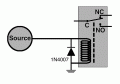
I've attached a drawing that shows the basic anatomy of a relay. A single coil can be used to switch multiple contacts such as someone mentioned yesterday about using a DPDT relay (Double Pole Double Throw). Yeah, it's safer, but you can easily build a monitor that will alert you if the wiring is wrong. Typically there should be no voltage on the Neutral (white) line. A simple non-contact voltage detector will alert you if there's voltage present on the neutral. They're cheap, but require a battery. With a 12 volt source it should be easy enough to drop the voltage down to the 3.2 volts (two AAA batteries) required. I may just do that with my project. I'm doing something similar. I have an old microwave control panel and I want to use it to switch certain outlets on for a set period of time. Often I turn my soldering iron on and then forget it for hours, leaving it to burn up. Using the control panel I can run my soldering iron (or anything else plugged into it) for a set period of time anywhere from 1 second to 99 minutes and 99 seconds (a.k.a 1h: 40m: 39s) then turn off. Other relay circuits within the control panel can be used to run a light (low and high) and a fan (low and high).

What you are doing is using a low voltage (12 volts) to control outlets with whatever may be plugged into them. Keep in mind that with many modern homes, outlets are wired with 15 amp service in mind. Slightly older homes may have 12 gauge wire which is rated for 20 amp service typically with 15 amp rated outlets. You can (and is recommended) use a 3 wire plug (with ground) and make sure your wiring is done correctly. The relays only need to switch on or off whatever you plug into a particular outlet. Not a big project. Easily done.

Here's that drawing I mentioned: Notice my drawing shows the NC contacts as well. When you energize the relay the contacts switch from the NC to the NO contact. Just be sure to include the flyback diode shown. This will protect your supply from being hit by high flyback voltage when the coil shuts down. It's needed. (the 1N4007)

Flyback Diode Coil.gif
 

Thread Starter

Half Fast

Joined Aug 14, 2017
18
Well that's a good point. :) The original post raeds:


There are likely a few dozen ways to go about a project like this. I figure we all toss out some thoughts and ideas leaving the original poster to make a well informed decision on how he wants to do it. Rocker switches are always nice as in a control panel they are visually appealing and you can always buy the illuminated version which makes for nice because at a glance you know what is on. The only downside I see with a rocker switch used to switch either a low control voltage like 12 VDC or switching mains of 120 VAC is making the knockout holes neat and clean. Not a monumental task but slightly painstaking using a saber saw with a hacksaw blade. Making a single panel hardly justifies buying a rectangular knockout punc tool.

Everyday off the shelf toggle switches are also fine for the task and depending on cool factor they can have a pilot lamp above each switch. They can be drilled using a standard size bit in a simple hand held drill. They can also switch high current (20 Amp) 120 VAC or low current 12 VDC.

I guess it all comes down to whatever trips the trigger of the original poster and what he would like, can afford and is comfortable with that will fit his needs. It can be basic or something from the flight deck or control room of The Star Ship Enterprise. :)

Ron
I have bee purchasing and hoarding unique switches for years, and they are all low voltage. The completed control panel will be much more appreciated for aesthetics than function. I will have switches on there that merely make fart noises, give the user an electric shock, and likely a ton more juvenile things. I will have slide switches operate as dimmers, key switches to release remotes, and I will even have the protected switch like you see on the trigger buttons for fighter jets. This will be a grown up's fidget spinner and just happen to automate my studio at the same time.
 

Tonyr1084

Joined Sep 24, 2015
9,744
So you are either in the vicinity of Concord, CA or Seward, Alaska?
No. Just south of Yellowstone National Park. They've been experiencing numerous tremors and they can be felt all the way to Salt Lake. They're not violent, just constant. At first I thought it was the train (tracks about 150 yards from here) but it happens even when no trains are present. I'm not far from Hill AFB and one day while experiencing one of these tremors I went outside to see if I could hear a train. No, but I DID hear a jet engine running at full power. That can shake the ground too. But the thing with jets is they fly by and then are gone. The tremors last much longer than that. They can shake for a minute or so. Haven't timed one; maybe I should.

Feeling a smaller one right now. 7:24 AM

Idaho has been feeling these tremors a lot stronger, and it's been going on for much of the year. Experts are talking about the Yellowstone Super Volcano. They don't expect an eruption, but what they are saying is that changes in the volcano, once thought to take thousands of years can happen in mere hundreds of years. Somewhat less comforting, but if it blows it's not going to matter how long before the next. We'll likely be gone. The YSV is the kind that can cause a mass extinction event, so if it goes, and since I'm this close - well, put it this way; you won't miss me.
 

Thread Starter

Half Fast

Joined Aug 14, 2017
18
Anatomy of a relay:

Essentially there are two parts to a relay; the coil that controls the contacts (other than that it has nothing to do with the contacts), and the other part is the contacts (which are voltage independent of the coil.

You can have a relay controlled by a few volts and use it to control much higher voltages and amperages. The first part, the coil, has a voltage it was designed to operate at. A 12 volt relay is designed to be used on a 12 volt system. You COULD use a 24 volt coil on a 12 volt system but this isn't reliable. I've used 24 volt coils I got out of an old dishwasher and used them on my car. But in reality the car's voltage can be (normally) between 13.6 and 14.6 volts, pretty close to 24 volts, close enough to make them switch over. But on a 12 volt wall wart they might not pull in. So all the coil does is either switch the contacts over from the Common ( C ) and the Normally Closed ( NC ) contacts over to the Normally Open ( NO ) contact. That's all the coil does. The usefulness of the coil is that you can use a much smaller source of power to control them. You don't need 120 volt switches.

The contacts: They are typically rated in a Max Voltage (the voltage they can handle without suffering any arcing between points you want isolated) and Max Current. Using a relay with contacts rated to handle 40 amps doesn't mean they're going to MAKE the circuit use 40 amps. It's like a bucket of water. If you want a drink you don't have to drink the whole thing. I believe most common relays are rated to safely handle up to 250 VAC, meaning you can use that much voltage without exceeding the safety margin of the contacts.

What I would do is go to an auto wrecking yard and gather up as many as I'd need Horn Relays. They're 40 amp rated and they only switch one set of contacts. Those contacts are often referred to as the Common and the Normally Open. When a relay has the Normally Closed contacts that just means whatever is present at the C will switch between the NO and NC contacts. When the relay is NOT energized the horn relay type I mentioned makes no connection between the C and the NO. After all, when not powered the relay is normally open at that point. They call the NC contacts "Normally Closed" because again, when the relay is NOT energized the C is connected to the NC. For what you want to do you don't need relays with NO and NC contacts, you only need NO contacts (normally open)

I've attached a drawing that shows the basic anatomy of a relay. A single coil can be used to switch multiple contacts such as someone mentioned yesterday about using a DPDT relay (Double Pole Double Throw). Yeah, it's safer, but you can easily build a monitor that will alert you if the wiring is wrong. Typically there should be no voltage on the Neutral (white) line. A simple non-contact voltage detector will alert you if there's voltage present on the neutral. They're cheap, but require a battery. With a 12 volt source it should be easy enough to drop the voltage down to the 3.2 volts (two AAA batteries) required. I may just do that with my project. I'm doing something similar. I have an old microwave control panel and I want to use it to switch certain outlets on for a set period of time. Often I turn my soldering iron on and then forget it for hours, leaving it to burn up. Using the control panel I can run my soldering iron (or anything else plugged into it) for a set period of time anywhere from 1 second to 99 minutes and 99 seconds (a.k.a 1h: 40m: 39s) then turn off. Other relay circuits within the control panel can be used to run a light (low and high) and a fan (low and high).

What you are doing is using a low voltage (12 volts) to control outlets with whatever may be plugged into them. Keep in mind that with many modern homes, outlets are wired with 15 amp service in mind. Slightly older homes may have 12 gauge wire which is rated for 20 amp service typically with 15 amp rated outlets. You can (and is recommended) use a 3 wire plug (with ground) and make sure your wiring is done correctly. The relays only need to switch on or off whatever you plug into a particular outlet. Not a big project. Easily done.

Here's that drawing I mentioned: Notice my drawing shows the NC contacts as well. When you energize the relay the contacts switch from the NC to the NO contact. Just be sure to include the flyback diode shown. This will protect your supply from being hit by high flyback voltage when the coil shuts down. It's needed. (the 1N4007)

View attachment 137632
Wow, thank you. I have copied that to my Google Drive. That was very informative. I have been hung up on the contact and coil ratings thinking I need to run 250VAC for the relay to work. The bucket analogy made it easy to understand. Thank you.
 
Top