how to measure dc current through device

Thread Starter

Fanfire174

Joined Mar 13, 2018
240
Thanks Ron
This is very informative, Too many concepts are cleared in this thread

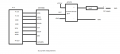
I made this block diagram in paint. do you see something wrong then please let me know. later I have doubts regrading power and ground
upload_2018-9-12_21-51-33.png
 
Last edited:

Thread Starter

Fanfire174

Joined Mar 13, 2018
240
At a glance the drawing looks fine but I have never worked with or written code for a Raspberry Pi. Someone familiar with the Pi may wish to comment.

Ron
I have 5V DC adapter to power Raspberry PI. I am planning to use 5V Supply of PI to power MCP3008 and ACS712.

Is it good or I need to use separate power supply for each device ?

Where to connect ground of MCP3008 and ACS712 ?
 
Last edited:

Reloadron

Joined Jan 15, 2015
7,892
No, it doesn't matter. I would use 5.0 V for the Raspberry Pi, MCP3008 and the ACS 712, all the same supply. Keep something in mind if you want to improve the accuracy of the measurement plane. Make the Vcc of the MCP3008 5 Volts and make the MCP 3008 Reference 5 Volts but measure your 5.0 volts as best and accurately as you can. When you write your code for your Raspberry Pi you are assuming 0 to 5.0 Volts is 0 to 1023 bits. That assumes a 5.0 volt reference on your A/D conversion. If the actual reference Vref is actually 4.9 volts or 5.1 volts, just as an example then your code will change.

I have 5V DC adopter to power Raspberry PI.
Also I appreciate your English you do very well but it is an adapter with an e. :)

Ron
 

Travm

Joined Aug 16, 2016
363
Just a thought, and I understand you have a RPI and the sensor, and an ADC, but since you seem to be learning as you go I would look at using a microcontroller with built in ADC and learning to program it with C. Your current sensor could then be a shunt resistor (or still use your sensor).
I don't know all the details of your application but using an RPI for this seems overkill.
 

Thread Starter

Fanfire174

Joined Mar 13, 2018
240
Hello,

I do not know if the adapter has a current limiting circuit build in.
As the sensor will have a very low resistance, it is wise to use a huge 2.5 Ohms resistor as load.
The resistor will dissipate 2 Amp X 2 Amp X 2.5 Ohms = 10 Watts.
Use a resistor of 20 Watt for the test.

Bertus
5 V DC adapter with maximum 2 A Current
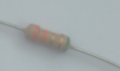
I have only 3.5 ohms resistor
current = voltage / Resistance
current = 5 / 3.5
current = 1.428571428 A
I can use 3.5 ohms according to law
P = I * V
P = 1.428571428 * 5 = 7.1428571 W

Practically Can i use 3.5 resistor to test more then 1 A current ?
 

ericgibbs

Joined Jan 29, 2010
21,460
hi 174,
Do you have a photo image of the resistor you could post.?
Place a measuring rule on view on the image so that we can see the actual reference size .
E
 

ericgibbs

Joined Jan 29, 2010
21,460
hi,
As you have not placed a known measuring scale in view view, I will make a guess.
I would say that is 0.5W max continuous rating.
E
Added continuous
 

Thread Starter

Fanfire174

Joined Mar 13, 2018
240
hi,
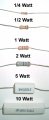
Its not the resistance value thats the problem, its how hot the resistor will become and how much heat it can dissipate.
In this case size does matter, look thru suppliers catalogues of resistors and you will see the power rating versus size etc ...
AsAKHTWgBREQsAR6BAgEEAE&biw=1318&bih=894
it means load will always depend on power.

19.0 Volts at 3.0 Amps for example resistance would be a 6.3 Ohm

P = I * V
P = 3 * 19 = 57 W

then i need 6.3 ohms resistor with the power of 57W
 

ericgibbs

Joined Jan 29, 2010
21,460
hi,
Your maths looks OK.;)
I would use a resistor that has a 25% higher wattage rating than the calculated value.
You should consider the ambient temperature in which the resistor is working.
Also mount the resistor away from any heat sensitive components in your project.
E

EDIT:
I guess you realise that you could use 6 off, 1R resistors in series, each rated at 10Watts.
 
Last edited:

Thread Starter

Fanfire174

Joined Mar 13, 2018
240
hi,
Your maths looks OK.;)
I would use a resistor that has a 25% higher wattage rating than the calculated value.
You should consider the ambient temperature in which the resistor is working.
Also mount the resistor away from any heat sensitive components in your project.
E
It means i need resistor 6.3 ohms that has a power of 75 Watts
 

ericgibbs

Joined Jan 29, 2010
21,460
Read my edit in post 114.
In the past I have used lower wattage resistors in series to give the wattage/resistor rating required.
 

Thread Starter

Fanfire174

Joined Mar 13, 2018
240
Read my edit in post 114.
In the past I have used lower wattage resistors in series to give the wattage/resistor rating required.
Here I am getting confused I don't understand how do you select required wattage/resistor rating .

80 Volts at 30 Amps for example resistance would be a 2.6 Ohm

if I want to connect any suitable DC load other then resistor then how do you select required wattage/resistor rating
 

ericgibbs

Joined Jan 29, 2010
21,460
hi,
W= I^2 * R

So R= 80V at 30A =2.6R

So (30*30) * 2.6 = 900 * 2.6' = ~2340 Watts

Also as you know the current and voltage

W= V * I = 80V * 30A = 2400Watts

Is this what you are asking.?

E
 

Thread Starter

Fanfire174

Joined Mar 13, 2018
240
calculation is okay. I am looking for practically I have laptop charger it has rating 19.0 Volts at 3.0
19.0 Volts at 3.0 Amps for example resistance would be a 6.3 Ohm

every load as power rating, which type of power load i can connect to the laptop charger

What would be wattage value ?
 
Top