How to connect a relay coil in parallel with other components without it shorting?

Thread Starter

circit!#$$101

Joined Jul 5, 2024
12
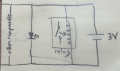
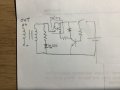
Hi everyone, I'm very inexperienced in electronics so please bear with me if this question is really simple. I had a problem the other day when I was trying to connect a 3V relay coil (SRD-03VDC-SL-C relay) to a 3V battery, and an LED and other components in parallel to it as shown in the schematic. When the relay is turned on, the power shorts through the coil and nothing reaches my LED. Is there a way to connect the relay coil in parallel with everything else without short?
34DB8632-66EF-424D-95C1-01F158F1F266.jpeg

(photo edited)
Thanks, J
 
Last edited:

R!f@@

Joined Apr 2, 2009
10,004
Could be relay current draw is too much dropping the voltage lower than the LED Vf.
Also as asked before the LED might need more Vf than 3V. ( depends on LED color ).
 

Thread Starter

circit!#$$101

Joined Jul 5, 2024
12
hi R!f@@,
the relay coil is supposed to draw 150mA according to the datasheet (it has 20ohm resistance) and my battery CR2032 has a 210mAh capacity, so it probably is drawing too much current. But I added a current limiting resistor to it with resistance as low as 20ohm and it didn't turn on, so seems it needs full current.
Also it isn't the led having Vf > 3V, as the led and my other components in parallel with relay coil were working fine without relay, and only stopped working after i connected it.
How can i connect the coil without short? I feel like i'm missing something simple here
 

ronsimpson

Joined Oct 7, 2019
4,645
The CR2032 battery was designed for a watch not a relay. It was designed for a 15k load 200uA, 3mA max.
It is not in the data sheet but probably the battery has 200 ohms internal resistance.
CR2032 Data sheet.
You will not get 150mA out of it at all. Even under a short.
has a 210mAh capacity
210mA hours. Not 210mA at one time.
 

Tonyr1084

Joined Sep 24, 2015
9,744
Welcome to AAC.
Your relay is not shorting it's drawing more power than is available, leaving nothing left for the rest of the circuit.
The relay coil is supposed to draw 150mA according to the datasheet (it has 20ohm resistance) and my battery CR2032 has a 210mAh capacity, so it probably is drawing too much current.
I've powered LED's directly from a CR2032 battery without a resistor. Part of the reason why that's possible is because of having a high internal resistance. Off hand I don't know what that is, but it's not likely going to be strong enough to power a relay. Also, looking at your diagram:
Screenshot 2024-07-05 at 9.06.09 AM.png
there is no switch to turn things on or off. If you were to wire it up directly as shown your battery will be dead in short order, depending on the resistance of the coil.

More details and an accurate drawing of what you're doing will help us help you. Otherwise we're just guessing at what might solve your problem.crutschow said you might want to use a transistor to do the switching.
Perhaps a transistor could do the switching.
But as yet we don't even know what it is you're switching, so that requires more guesswork on our part. Let alone what "Other Components" means.
 

BobTPH

Joined Jun 5, 2013
11,463
IIRC CR2032 has 20 Ω internal resistance when new. With a 20 Ω load it will drop to 1.5V.
 
Last edited:

MisterBill2

Joined Jan 23, 2018
27,159
My First question is why do you think that the relay is sort circuiting anything?? Are you measuring the battery voltage when you connect the battery?? What is the battery voltage without the relay connected?? It might even be that you ARE connecting closed contacts across the battery, which would be a short circuit. So really, we have no clues as to exactly what is the problem, although it is obvious that such a low power battery can not operate such a high powered relay.
 

Thread Starter

circit!#$$101

Joined Jul 5, 2024
12
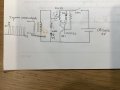
Sorry, apologies for not gving enough information. I am trying to build a simple square wave generator from scratch, as shown below

image.jpg

When the switch is closed, the transistor q1 turns on & activates the relay, which supplies power to the led (that serves as indicator light) and transformer. The transformer primary (which has low resistance) then acts like a short, drawing all the current and leaving none for the base of q1. this shuts the transistor off, which turns the relay off (the relay coil discharges through D2 flywheel diode), inducing a huge voltage into the primary. Then it all repeats again many times a second.
The problem is that I want L2 to short while L1 not to, but how can I do this?
 

Thread Starter

circit!#$$101

Joined Jul 5, 2024
12
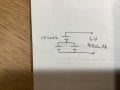
R!f@@, I am trying to use as few batteries as possible, and only CR2032s as they fit better. so should I connect two cells in parallel to increase mAh capacity and then put another cell in series to get 6V?
Then I can put a resistor in series with 3V relay coil to prevent short.
Would this work, and is it possible to use less batteries (i originally planned to use 1)?
 
Last edited:

ericgibbs

Joined Jan 29, 2010
21,390
Hi cir,
Basically, a CR coin is not a suitable current source for your application.
Have you considered using two AA 1.5V batteries?
E
 

Thread Starter

circit!#$$101

Joined Jul 5, 2024
12
hi ericgibbs,
I want the batteries to be as compact as possible, and two AAs would be quite bulky. Is there no way to use coin cells / could you please explain why not?

image.jpg
 

LesJones

Joined Jan 8, 2017
4,511
Using your circuit is JUST NOT POSSIBLE using coin cells.
If you want a square wave with close to 3 volts peak to peak then consider using a TLC555 or an LMC555 integrated circuit. You have not told us what the square wave is driving so we don't know if this solution would provide enough current.
If you need any significant power from the square wave then there is NO WAY to provide that from a button cell.

Les.
 

ericgibbs

Joined Jan 29, 2010
21,390
Hi cir,
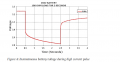
Read and understand this PDF.
E
As illustrated in Figure 4, there are two reasons for this de-rating when the battery is put under a high load. First, the internal resistance (IR) of the battery causes an immediate voltage drop at the terminals that is proportional to the current drained. Second, the battery voltage will continue to slope downwards due to polarisation from an electrochemical process that’s slower than the drain rate applied; the chemistry simply can’t keep up.
EG57_ 1909.png
 

Attachments

Last edited:
Top