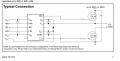
When the output is low (Vs at ground voltage) the capacitor between VB and Vs charges to the Vcc voltage through the diode.
When HIN goes high and HO rises, turning on the top MOSFET, its source also starts to rise.
This causes the bottom voltage of the capacitor to rise with the source voltage.
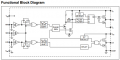
Since the voltage across a capacitor cannot change instantly, the capacitor top voltage (VB) also rises, keeping the MOSFET gate Vcc volts above its source and keeping the MOSFET on through the internal MOSFET switch as the voltage rises in the circuit (see below for the block diagram).
When HIN goes back low, the MOSFET source voltage goes back to ground, allowing the capacitor to regain any charge it has lost during the time the output was high.
Make sense?

 Facebook
 Google
 GitHub
 Linkedin