How to automate a soap dispenser?

Reloadron

Joined Jan 15, 2015
7,893
For faucets, there are already available alternate handles designed to be used to shut off the valves by means of pressure from the back of the upper wrist. Those handles are available from Home Depot and many plumbing supply stores. The advantage is that no plumbing changes are required, and so no expensive plumber need be called. In addition, no electrical supply or batteries. Plus, a pair of the handles costs a lot less than one solenoid valve.
It seems that all of the "low tech" answers are ignored here.
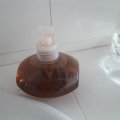
So how do we make it work in the proposed scheme? That's the question. The faucet already has water pressure behind the valve pushing. Hand soap unlike water is thick, hand soap is thicker and has a much higher viscosity than water and unlike water has no line pressure it just sits there at atmospheric pressure. Kind of like inverting or pumping Heinz ketchup. That's the problem.

Ron
 

djsfantasi

Joined Apr 11, 2010
9,237
So how do we make it work in the proposed scheme? That's the question. The faucet already has water pressure behind the valve pushing. Hand soap unlike water is thick, hand soap is thicker and has a much higher viscosity than water and unlike water has no line pressure it just sits there at atmospheric pressure. Kind of like inverting or pumping Heinz ketchup. That's the problem.

Ron
If you go beyond the limitation of using the existing container, it’s not difficult.

How about an Archimedes Screw pump?

One issue many people have mentioned, it that the fluid isn’t pressurized. So how about modifying the top to introduce air pressure?

Finally, how about a peristaltic pump, as mentioned in post #10? (Disclosure; Post #10 was mine)
 

MrChips

Joined Oct 2, 2009
34,931
There are many viable solutions offered:

1) Motorized cam wheel
2) Peristaltic pump
3) Thin the soap with water, invert the container and use a liquid valve (solenoid or motorized)
4) Do nothing

Try any of the above and see what works best.

* Solenoid plunger is not going to work (it requires too much force).
 

Reloadron

Joined Jan 15, 2015
7,893
Finally, how about a peristaltic pump, as mentioned in post #10? (Disclosure; Post #10 was mine)
I see that as a good option.

Guys keep in mind this is not my thread. I am good with the old fashion hand pump. :) The thread starter is looking for ways to go about it and as low cost as possible.

Ron
 

MisterBill2

Joined Jan 23, 2018
27,714
So how do we make it work in the proposed scheme? That's the question. The faucet already has water pressure behind the valve pushing. Hand soap unlike water is thick, hand soap is thicker and has a much higher viscosity than water and unlike water has no line pressure it just sits there at atmospheric pressure. Kind of like inverting or pumping Heinz ketchup. That's the problem.

Ron
The soap dispenser would not be automated, but since the stroke is short, it could use a lever that provided a mechanical advantage of about 4:1, the lever driven by a foot pedal, and linear motion cable similar to those low friction versions used for automotive hood release and gas-door release functions. This can be quite simple hardware not requiring any electrical power or circuitry. In addition, the dispenser mechanism and container would not need to be changed, making the implementation much simpler and cleaner.
 
Last edited:

Natalie21

Joined Dec 26, 2020
1
You can use pressurized dispensers . You just need to place your hand underneath the sensor within the required distance. There’s also a pump that delivers the measured amount of soap when it’s pressurized.
 
Top