Completed Project How much current is drawn by an 18,600 BTU A/C compressor while running at atmospheric pressure?

Thread Starter

Rahulk70

Joined Dec 16, 2016
538
Hi everyone,

First I apologize for asking an electrical question in an electronics website. But we have many experienced wise members here so I'm asking.
I recently got a 26 year old hermetic A/C compressor. I plan to use this as a vacuum pump mostly for some of my hobby projects after adding an air filter and a moisture removal setup to it.

The specs on the label on the A/C said that it power draw is 2450 Watts, 11.5Amps.

Does it mean that the current draw is 11.5 Amps always or is it only while there is some load on the compressor like while it is compressing some refrigerant or gas? Also I noticed that the compressor isn't very loud while its outside compared to when it was inside the A/C it was quite loud.

Also I heard that the compressor oil gets acidic while exposed to air. Is it true? Or does the oil become acidic only when the freon is present?
The specs of the A/C is in the below pic.
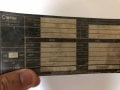
IMG_0030.jpg
Thanks in advance.
 

MaxHeadRoom

Joined Jul 18, 2013
30,558
A air compressor/vacuum pump is a slightly different application than a sealed A/C. unit.
I would expect the loading to be quite a bit less for a vacuum pump than the normal maximum for a A/C.
Take empirical readings.
Max..
 

jpanhalt

Joined Jan 18, 2008
11,087
Acidic oil : Don't know what the oil is. Sufficient oxidation of any organic compound will usually give an acid. Some liquids used as oils might be more prone to do that than others. We ran ordinary mineral oil in our vacuum pumps and never worried about acidity.
 

Thread Starter

Rahulk70

Joined Dec 16, 2016
538
Acidic oil : Don't know what the oil is. Sufficient oxidation of any organic compound will usually give an acid. Some liquids used as oils might be more prone to do that than others. We ran ordinary mineral oil in our vacuum pumps and never worried about acidity.
I read from a few websites that the oil isn't acidic but with exposure to moisture it turns acidic. Then I read that sometimes its only the freon that turns it acidic when exposed to moisture. I just wanted to confirm which one does. Because as of now I use the compressor just as a vacuum pump with exposure to a air with desiccant filter to remove moisture.
 

Thread Starter

Rahulk70

Joined Dec 16, 2016
538
A air compressor/vacuum pump is a slightly different application than a sealed A/C. unit.
I would expect the loading to be quite a bit less for a vacuum pump than the normal maximum for a A/C.
Take empirical readings.
Max..
Maybe it's lower than the rated I guess. At this moment I don't have any AC amp meter to measure the current.
 

ebp

Joined Feb 8, 2018
2,332
Apparently some synthetic oils are subject to hydrolysis (decomposition by reaction with water) and the product can be acidic.

Given the relatively small size of the compressor, it is likely that the lubricant would normally be in the refrigerant in a completely closed system. Once you open the system, oil will constantly be lost as it is blown out of the compressor, so you must constantly provide fresh oil at the intake to the compressor.
 

MaxHeadRoom

Joined Jul 18, 2013
30,558
Most A/C compressors are different from modern H.S. vane type compressors/vacuum units, the former is usually a wobble plate principle operating a series of pistons, the latter type uses a centrifugal vane method.
Max.
 

jpanhalt

Joined Jan 18, 2008
11,087
I read from a few websites that the oil isn't acidic but with exposure to moisture it turns acidic. Then I read that sometimes its only the freon that turns it acidic when exposed to moisture. I just wanted to confirm which one does. Because as of now I use the compressor just as a vacuum pump with exposure to a air with desiccant filter to remove moisture.
Of course. In the system you describe, acidity is produced by exposure to oxygen and/or moisture. "Freon" is a large group of halogenated hydrocarbons with fluorine. Fluorine itself on a hydrocarbon does not make it acidic in the Bronsted sense (https://en.wikipedia.org/wiki/Brønsted–Lowry_acid–base_theory). But oxidation will.
 

MrSoftware

Joined Oct 29, 2013
2,273
You didn't mention the refrigerant, but safe to assume that in the A/C system the pressure differential between high and low sides would be more than 100psi. Used as a vacuum pump the max load on the piston will be 1 atmosphere, or about 14.6ish psi. So I would expect a much smaller load on the motor when used as a vacuum pump, and therefore much less demand for current while running.

As far as oil; inside an enclosed A/C system with very frequent and drastic temperature and pressure changes, mixed up with refrigerants that are changing state very frequently, the oil is in quite a different situation than oil surrounded by air in a vacuum pump. I wouldn't worry about acid when re-purposing the compressor, just make sure whatever oil you use won't eat any rubber parts.

Edit --> Looking at the label more closely, it shows 350psi for the high side and 150 for the low side, so the piston has a 200psi load when running with the air conditioner. Quite significantly more load then if running as a vacuum pump.
 
Last edited:

Thread Starter

Rahulk70

Joined Dec 16, 2016
538
You didn't mention the refrigerant, but safe to assume that in the A/C system the pressure differential between high and low sides would be more than 100psi. Used as a vacuum pump the max load on the piston will be 1 atmosphere, or about 14.6ish psi. So I would expect a much smaller load on the motor when used as a vacuum pump, and therefore much less demand for current while running.

As far as oil; inside an enclosed A/C system with very frequent and drastic temperature and pressure changes, mixed up with refrigerants that are changing state very frequently, the oil is in quite a different situation than oil surrounded by air in a vacuum pump. I wouldn't worry about acid when re-purposing the compressor, just make sure whatever oil you use won't eat any rubber parts.

Edit --> Looking at the label more closely, it shows 350psi for the high side and 150 for the low side, so the piston has a 200psi load when running with the air conditioner. Quite significantly more load then if running as a vacuum pump.
I don’t intent to run the compressor for more than 2-4mins at a time during my experiments. And for the oil you are right I’ll need to find a compressor oil that doesn’t turn corrosive when exposed to air. Maybe I’ll ask my friend who is an HVAC technician to get me a good oil. But I have a doubt that does this compressor need a particular type of oil because as per the label it used R22 refrigerant.
 

jpanhalt

Joined Jan 18, 2008
11,087
Here's a quote from searching "oil used with R22:"
Mineral oil charged compressors and condensing units can be used as replacements on existing R22 systems. New Copeland® brand compressors, which are factory-charged with polyolester oil may be used with HCFCs (R22) or the appropriate HFC refrigerant such as R404A, R407C or R134a.
That fits with what I recalled about the oil used with R134a, namely that it is not a mineral oil. Ask you friend, but I suspect a mineral oil will work. You can buy relatively expensive "vacuum pump oil" for mechanical pumps, but we used ordinary non-detergent motor oil for pumps that did not need to get into the micron range (e.g., 10^-2 torr). We would run them overnight "vented" (pumping low pressure air) to get rid of volatiles. From your description, I suspect you do not need to do that.

Will you use a "cold trap" with your pump? If not, whatever you are putting under vacuum will become a little contaminated with the pump oil too.
 

Thread Starter

Rahulk70

Joined Dec 16, 2016
538
Here's a quote from searching "oil used with R22:"


That fits with what I recalled about the oil used with R134a, namely that it is not a mineral oil. Ask you friend, but I suspect a mineral oil will work. You can buy relatively expensive "vacuum pump oil" for mechanical pumps, but we used ordinary non-detergent motor oil for pumps that did not need to get into the micron range (e.g., 10^-2 torr). We would run them overnight "vented" (pumping low pressure air) to get rid of volatiles. From your description, I suspect you do not need to do that.

Will you use a "cold trap" with your pump? If not, whatever you are putting under vacuum will become a little contaminated with the pump oil too.
Yeah, I too read that mineral oil was used mostly back with the original R22 refrigerant. But the POE oil undergoes hydrolysis and there is chance for corrosion. PVE seems to be less susceptible. Might have to see which one absorbs less water, but mineral oil is more hygroscopic compared to the other two. I do have access to lot of vacuum pump oil at work, but can it be used as a substitute for a/c compressor oil?

No, I won't be adding a cold trap. Maybe later on when I make a movable wheel mount etc make it a proper system. Right no I'm trying to add a receiver filter drier to the inlet suction side to remove moisture.
 
Last edited:

Thread Starter

Rahulk70

Joined Dec 16, 2016
538
I do have an EPA small appliance/automotive certification and I worked in UHV (Ulta-High Vacuum realm) as well. This is where Ion and tubomolecular pumps are used. In that realm, a single fingerprint is a problem and so are things called virtual leaks. It's an area where vented screws are used.

In general, water is the biggest problem.

In an '82 vehicle I had, I put the factory AC in the vehicle from a big box. 14 hrs of work. Every 7 years I had to replace two hoses and recharge. After 17 years, the clutch started to slip and I got a new car. That AC was installed as if it was a UHV system.
 

Thread Starter

Rahulk70

Joined Dec 16, 2016
538
R12/R22 oils are different and incompatible than R410. https://sciencing.com/info-12025740-difference-between-r410-r22-compressor.html

Another piece of info regarding oils is here: https://www.vacmobiles.com/Oil+discharge.html
Okay I did a little digging and it seems that R22 uses mineral oil. Also I found the compressor brand after some polishing over the rust. It’s a Bristol H24B203ABCB compressor.
I have a question, is it okay to use SUNOCO vacuum pump oil 4L (4S65) as a substitute?
 

jpanhalt

Joined Jan 18, 2008
11,087
@Rahulk70
I wouldn't worry about using a purpose-made vacuum pump oil. Your refrigerator pump will never get to such a low pressure that it will matter. However, if you have the purpose-made oil, that should work for your use. (Our mechanical vac pumps ran more or less continuously.) You don't say how you determined the current oil was a mineral oil. The two types (mineral and polyolester/PVE) are not compatible. (BTW, I suspect mineral oil is less hygroscopic then POE or PVE, but that is really not the issue.) I would test residual oil in the refrigerator pump with a sample of the oil you plan to use to see if they are miscible.

Hare are two discussions relevant to the conversion you plan:
http://www.instructables.com/id/Making-A-Fridge-Compressor-Into-A-Vacuum-Pump/
http://www.belljar.net/refrig.htm
Note that your minimum expected pressure will be several torr, perhaps 10's of torr.

The conversions I made (circa 1960) used older pumps and actually worked as roughing pumps for oil or mercury diffusion pumps. Your conversion will probably not reduce pressure much more than a water aspirator pump with cool water will (about 15 torr).
 

MisterBill2

Joined Jan 23, 2018
27,173
Usually the published load current is at the rated pressure load, which in a closed refrigeration system is reached with the maximum heat load. So the 11.55 amps would be at the normal operation pressure head and thus flow. The usefulness of that number is for a service person to be able to check operation without tapping into the freon loop. Also for those folks determining the required power delivery. I once used a freezer compressor as an air pump, it lasted about 30 years in that application. The next compressor lasted 4 months, followed by one that lasted about a year. Finally I substituted an actual air compressor and it has lasted ever since. My point being that the lifetime in air pumping service is far different from the lifetime in refrigeration service. Probably the oil has something to do with that.
 

Thread Starter

Rahulk70

Joined Dec 16, 2016
538
@Rahulk70
I wouldn't worry about using a purpose-made vacuum pump oil. Your refrigerator pump will never get to such a low pressure that it will matter. However, if you have the purpose-made oil, that should work for your use. (Our mechanical vac pumps ran more or less continuously.) You don't say how you determined the current oil was a mineral oil. The two types (mineral and polyolester/PVE) are not compatible. (BTW, I suspect mineral oil is less hygroscopic then POE or PVE, but that is really not the issue.) I would test residual oil in the refrigerator pump with a sample of the oil you plan to use to see if they are miscible.

Hare are two discussions relevant to the conversion you plan:
http://www.instructables.com/id/Making-A-Fridge-Compressor-Into-A-Vacuum-Pump/
http://www.belljar.net/refrig.htm
Note that your minimum expected pressure will be several torr, perhaps 10's of torr.

The conversions I made (circa 1960) used older pumps and actually worked as roughing pumps for oil or mercury diffusion pumps. Your conversion will probably not reduce pressure much more than a water aspirator pump with cool water will (about 15 torr).
I found from the manufacturer’s website and also as per the label above it uses R22 refrigerant, which uses mineral oil.
I would try taking a sample from the compressor and mixing with the vacuum oil and see how it reacts.
 

Thread Starter

Rahulk70

Joined Dec 16, 2016
538
Usually the published load current is at the rated pressure load, which in a closed refrigeration system is reached with the maximum heat load. So the 11.55 amps would be at the normal operation pressure head and thus flow. The usefulness of that number is for a service person to be able to check operation without tapping into the freon loop. Also for those folks determining the required power delivery. I once used a freezer compressor as an air pump, it lasted about 30 years in that application. The next compressor lasted 4 months, followed by one that lasted about a year. Finally I substituted an actual air compressor and it has lasted ever since. My point being that the lifetime in air pumping service is far different from the lifetime in refrigeration service. Probably the oil has something to do with that.
When you used as an air compressor did you add any air filter, air filter drier(moisture removal) and also change & add any compressor oil at intervals?
 
Top