Custom PCB drawing too much current when devices are in shutdown

Thread Starter

freeflyer

Joined Sep 9, 2016
148
I have designed a custom PCB that is drawing 1.5mA when all devices are shiutdown and seeking help on how to find and rectify the excess current draw.

I calculate the worse case current should be 221uA, so its drawing 1.3mA more than the worse case.

This is a battery powered device with a 500mAh battery, so although 1.5mA does not sound a lot it will discharge the battery in less than 2 weeks.

Below is a block diagram of the design including the current draw for each device:

1756146379243.png


+BAT LOADS:

  • MCP73871 Load sharing & charger: I cannot determine the current draw as I'm not sure how the device behaves when VBAT/VBAT_SENSE is connected but VIN is disconnected (theres no explaination in the datasheet)

  • MAX17048 Battery Fuel Gauge: Assuming worse case (active mode) with a specified current of 23 to 40uA 1756144925878.png
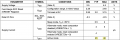
  • So worse case current draw for VBAT loads should be 40uA

+VSYS LOADS:

  • TPS630703.3V SMPS: This is permanently enabled with a maximum load current of 60.371uA (see +3.3V loads below)
    • Assuming efficieny is ~50% then current draw would be ~120uA
1756143653476.png

  • TPS61230A 5V SMPS: This is disabled with a specified current of 0.2 to 1uA 1756143383566.png
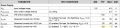
  • So worse case current draw for +VSYS loads should be 121uA

+3.3V LOADS:


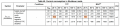
  • STM32L433 MCU: This is in shutdown mode with a specified current of 44.3 to 70.1nA 1756143177086.png
  • BME280 pressure sensor: This is in sleep mode with a specified current of 0.1 to 0.3uA 1756143191188.png

  • W25Q128JVS flash: This is in standby mode with a specified current of 10 to 60uA 1756143238481.png
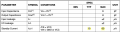
  • So worse case current draw for +3.3V loads should be 60.371uA
 

Thread Starter

freeflyer

Joined Sep 9, 2016
148
If you have a blank spare PCB, start populating the board one chip at a time.
This way hopefully you can measure what each item draws while shutdown.
I have 4 spare pcbs but no components.

Unfortunately most of these components can’t be hand soldered with a soldering iron.

I would need at least a solder stencil, solder paste and heater plate (none of which I have).

When I tried to assemble components like this before, it was extremely difficult and some components failed to assemble.

That’s why I paid to have the board assembled this time.
 

Thread Starter

freeflyer

Joined Sep 9, 2016
148
well, since first board is populated you can try strategically cutting power traces till you find culprit. leave the cuts narrow so you can patch it up later on.
Unfortunately this will not be possible either, as a lot of the devices have copper pour power planes
 

panic mode

Joined Oct 10, 2011
4,864
unfortunate indeed.. without seeing design not sure what else to suggest. when making prototype, it is a good idea to leave some 0-Ohm resistors etc. just for debugging. check if any of devices is enabled by mistake. that can be done either in software or if probing PCB, sharp probe will do.
 

WBahn

Joined Mar 31, 2012
32,703
Do you have access to a decent optical thermometer or thermal imager? That may give at least a hint as to which components are dissipating the most power.
 

nsaspook

Joined Aug 27, 2009
16,250

Thread Starter

freeflyer

Joined Sep 9, 2016
148
Depends on how sensitive the camera is and what the heatsinking of the components is like. If you have access to a decent camera, it's worth a shot.
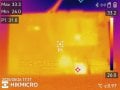
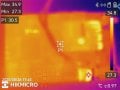
Results are below but appear to be of no use...

HM20250826173703.jpeg

HM20250826174525.jpeg


Correct me if I am wrong, but the trouble with thermal cameras is that colour and reflectivity cause errors with the measurements.

So two different colours at the same temperature will give different readings.

And to detect 1mA of current would require an extremely sensitive camera.

This camera cost around £800, you probably need a camera costing thousands at least
 

WBahn

Joined Mar 31, 2012
32,703
Are those just two images with the board powered? Are they before/after shots? A bit more description would be nice.

If you didn't already do so, take an image with the board unpowered and stable at a cool temperature. The will give you an idea if some part is appearing artificially hot/cold due to reflectivity or other non-thermal effects.

Another thing you might try is to take thermal video (or time-lapse shots) to see how quickly parts of the board change temperature after powering up.

Yet another idea would be to monitor total current and then apply a hot or cold finger to different components and look for changes in total current draw. If one component is drawing nearly all of the current relative to the others, then the change in current in those components, even if a large fraction of their current draw, will contribute virtually nothing to the total change in current, while the component that is hogging everything will likely make a noticeable change in total current when its temperature is changed.
 
Last edited:

Rf300

Joined Apr 18, 2025
72
Switching off the power supply is a tricky way of power management. As I mentioned in your other post, the unpowered ICs can be "backwards feeded" via a logic high level at their input pins which will raise the VDD level via the input protection diodes. This causes an unwanted supply current. So check that all signals going to the unsupplied devices have a logic low level after switching off the power supply. Check especially CE-signals.
 

Thread Starter

freeflyer

Joined Sep 9, 2016
148
I think the only solution is to go back to my prototype development boards. I have all the development boards in the block diagram apart from the TPS63070 which I have just ordered. This will allow me to measure the current of each device to check if its within spec.

1756236149729.png
 

Thread Starter

freeflyer

Joined Sep 9, 2016
148
What type of meter or measurement setup are you using? Check to make sure the 1.5mA is real.
It would be nice if it was due to a poor meter, but I believe it’s a reasonable one.

It’s a Brymen BM257s

https://brymen.eu/shop/bm257s

I can’t use the uA range though as the current exceeds the measurement range and prevents the STM32 from booting up to then go into shutdown mode.

I assume the shunt resistance is too large ?
 

WBahn

Joined Mar 31, 2012
32,703
That’s how multimeters usually work. A shunt resistors causes a voltage drop and the voltage measured is used to calculate the current
Yes, but you have no control of the burden resistance, which can affect circuit performance significantly (such as you are seeing when you try to use the µA ranges).

By using a series resistor that you choose, you can pick a voltage drop that is tolerable to the circuit while providing the most sensitive measurement.
 
Top