Completed Project How does the coil in an AC relay differ from that of a DC relay? Can an AC relay be used on DC?

Thread Starter

Rahulk70

Joined Dec 16, 2016
538
Hi,
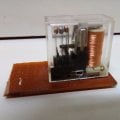
I've noticed that in a DC relay the electromagnetic coil is just an electromagnet with a large no of turns as shown in below pic.

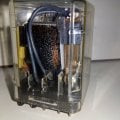
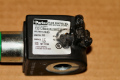
But when I examined the AC relay I've it just has a thick piece of copper in a the black circular cylinder, with no visible coil turns. So, does the AC relay has any coils like in a DC relay or just one thick central copper electrode.

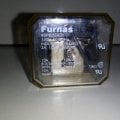
Also I've a doubt relating to the relay shown in below 120VAC relay in the pic.The details on the top of the relay are given below:
Furnas
46PB33A01
Industrial rated
3A, 1/2HP, 600VAC

10A, 1/3HP, 120VAC
6 2/3A, 1/3HP, 250VAC
Appliance rated
10A, 250VAC
Made in Mexico

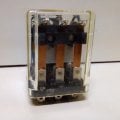
Since, the relay has three group of conductors for COM,NC and NO it seems to be a 3-phase relay. So does it mean @ 120VAC each conductor handles 10A or all the 3 conductors together handle 10A?
 

Attachments

#12

Joined Nov 30, 2010
18,224
You might have to wait a while for somebody that knows how to wind relays, but I can tell you from experience that the last DC relay I tried to feed AC just chattered.
 

Thread Starter

Rahulk70

Joined Dec 16, 2016
538
You might have to wait a while for somebody that knows how to wind relays, but I can tell you from experience that the last DC relay I tried to feed AC just chattered.
I tried to feed an AC 9V to the DC relay in the pic shown and did the chatter. But I notices that the back e.m.f in oscillator mode from the coil is very high enough to even light a neon bulb.

Though I'm curious what would happen if I fed DC to an AC relay. But this relay would need at least 120V DC I guess.
 

MaxHeadRoom

Joined Jul 18, 2013
30,562
The difference between AC and DC relay coils for the same voltage is the coil resistance, An AC relay/contactor coil relies on the inductive reactance to limit current, hence the resistance is very low, and current is very high initially , so operating on DC of the same level will result in excessive current.
The only asset an AC coil has is faster pull in time of the armature, this is due to the high initial current due to low inductance when the armature is open, once closed then it requires a shaded pole to retain the armature at the cross over point to avoid chatter.
The DC relay has higher resistance but has slightly lower pull in time, but once the armature has closed, the current to keep the relay closed requires lower current.
Max.
 

BillB3857

Joined Feb 28, 2009
2,573
An AC relay depends upon two things. One, the impedance of the inductor (coil) to limit the coil currrent and, two, a shading pole to prevent chatter. Typically, you will see lower DC resistance of an AC relay than for a DC relay rated for the same coil voltage. If you want to use an AC relay with a DC source, a series current limiting resistor can be used.
 

Thread Starter

Rahulk70

Joined Dec 16, 2016
538
The difference between AC and DC relay coils for the same voltage is the coil resistance, An AC relay/contactor coil relies on the inductive reactance to limit current, hence the resistance is very low, and current is very high initially , so operating on DC of the same level will result in excessive current.
The only asset an AC coil has is faster pull in time of the armature, this is due to the high initial current due to low inductance when the armature is open, once closed then it requires a shaded pole to retain the armature at the cross over point to avoid chatter.
The DC relay has higher resistance but has slightly lower pull in time, but once the armature has closed, the current to keep the relay closed requires lower current.
Max.
Thanks. Also the relay had three connectors each for COM, NC & NO. So, it's means the collective capacity is 10A right? Also what do they mean by the 1/3HP in specs?
 

Thread Starter

Rahulk70

Joined Dec 16, 2016
538
An AC relay depends upon two things. One, the impedance of the inductor (coil) to limit the coil currrent and, two, a shading pole to prevent chatter. Typically, you will see lower DC resistance of an AC relay than for a DC relay rated for the same coil voltage. If you want to use an AC relay with a DC source, a series current limiting resistor can be used.
How much value of resistance is appropriate if I use DC?
 

MaxHeadRoom

Joined Jul 18, 2013
30,562
Thanks. Also the relay had three connectors each for COM, NC & NO. So, it's means the collective capacity is 10A right? Also what do they mean by the 1/3HP in specs?
That is the contact designation, separate from the coil.
Many have DC and AC ratings for the contacts, for e.g. contactors are often rated in AC motor H.P.
Using a AC coil on DC requires a much lower voltage, if this is attempted.
Max.
 

k7elp60

Joined Nov 4, 2008
562
That is the contact designation, separate from the coil.
Many have DC and AC ratings for the contacts, for e.g. contactors are often rated in AC motor H.P.
Using a AC coil on DC requires a much lower voltage, if this is attempted.
Max.
The current of a DC relay is directly affected by the resistance of the coil. Or ohms law. I=E/R where I = coil current, E= coil voltage and R = coil resistance. AC coils are different as the current basically is determined by the impedance of the coil, meaning Xl (inductance of the coil) the frequency in use and the resistance of the coil.
This next paragraph explains how the copper slug makes the AC relay work correctly.
From Potter & Brunfield technical data book dated 1987

In order to operate relay from AC, relay manufacturers us a device known as a shader ring (or shader coil) on top of the core. Because of the shader ring, the magnetism developed in part of the core lags somewhat the magnetism of the remainder of the core. That is, there is a slight phase displacement between the magnetism of part of the core and the remainder of the core. Thus, as unshaded-core magnetic energy decreases to zero every half-cycle, the magnetic energy still present in the shaded portion of the core holds the armature in the energized position. By the time the energy in the shaded portion dereases to zero, coil and unshaded-core magnetic energy have began to increase one again as the current increases in value, and the armature remains energized.
 

BR-549

Joined Sep 22, 2013
4,928
Another advantage of the AC relay......when the relay engages......the inductance increases......automatically reducing the current.

Very simple and efficient with proper design.
 

MaxHeadRoom

Joined Jul 18, 2013
30,562
The current of a DC relay is directly affected by the resistance of the coil. Or ohms law. I=E/R where I = coil current, E= coil voltage and R = coil resistance. AC coils are different as the current basically is determined by the impedance of the coil, meaning Xl (inductance of the coil) the frequency in use and the resistance of the coil.
This next paragraph explains how the copper slug makes the AC relay work correctly.
From Potter & Brunfield technical data book dated 1987

In order to operate relay from AC, relay manufacturers us a device known as a shader ring (or shader coil) on top of the core. Because of the shader ring, the magnetism developed in part of the core lags somewhat the magnetism of the remainder of the core. That is, there is a slight phase displacement between the magnetism of part of the core and the remainder of the core. Thus, as unshaded-core magnetic energy decreases to zero every half-cycle, the magnetic energy still present in the shaded portion of the core holds the armature in the energized position. By the time the energy in the shaded portion dereases to zero, coil and unshaded-core magnetic energy have began to increase one again as the current increases in value, and the armature remains energized.
I thought that is what I said??
Max.
 

Thread Starter

Rahulk70

Joined Dec 16, 2016
538
Not so efficient as the DC relay though.
Max.
That reminded me of something. Can the AC and DC relays I've mentioned above can be continuously run? This is something that has always confused me.

I've a starter solenoid with me that draws about 6-7.5A and it gets very warm if I run it for more than 20-35 secs. So, I assume it ain't for continuous use.
 

k7elp60

Joined Nov 4, 2008
562
That reminded me of something. Can the AC and DC relays I've mentioned above can be continuously run? This is something that has always confused me. Yes they can, but keep in mind they have a # of cycle limits, which is generally the contacts, which are mechanical.

I've a starter solenoid with me that draws about 6-7.5A and it gets very warm if I run it for more than 20-35 secs. So, I assume it ain't for continuous use.
You are correct.
 

phranzdan

Joined Aug 4, 2017
40
Hi,
I've noticed that in a DC relay the electromagnetic coil is just an electromagnet with a large no of turns as shown in below pic.

But when I examined the AC relay I've it just has a thick piece of copper in a the black circular cylinder, with no visible coil turns. So, does the AC relay has any coils like in a DC relay or just one thick central copper electrode.

Also I've a doubt relating to the relay shown in below 120VAC relay in the pic.The details on the top of the relay are given below:
Furnas
46PB33A01
Industrial rated
3A, 1/2HP, 600VAC

10A, 1/3HP, 120VAC
6 2/3A, 1/3HP, 250VAC
Appliance rated
10A, 250VAC
Made in Mexico

Since, the relay has three group of conductors for COM,NC and NO it seems to be a 3-phase relay. So does it mean @ 120VAC each conductor handles 10A or all the 3 conductors together handle 10A?

HI: The labels you mentioned I.E. NO, NC, and COM are the normally open, normally closed, and common contacts for the relay load. This is taken to mean that the normally open contact will be open when the relay is not energized, The normally closed contact will be closed when the relay is not energized, and the common is the common contact between them. The coil connections are different from these contacts. The dc relay coil is based on the total resistance of the wire used to wind the coil. If you have an ohmmeter, you can measure the resistance and determine what current will flow in the coil when the relay is energized at the specified voltage. The ac relay has a winding but the current will be determined by the impedance of the winding at the specified frequency and applied voltage. This is slightly more difficult to determine since you would need to know both the resistance and inductance of the coil. Operating a dc relay on ac or vice versa is not rec0omended.
 

Thread Starter

Rahulk70

Joined Dec 16, 2016
538
HI: The labels you mentioned I.E. NO, NC, and COM are the normally open, normally closed, and common contacts for the relay load. This is taken to mean that the normally open contact will be open when the relay is not energized, The normally closed contact will be closed when the relay is not energized, and the common is the common contact between them. The coil connections are different from these contacts. The dc relay coil is based on the total resistance of the wire used to wind the coil. If you have an ohmmeter, you can measure the resistance and determine what current will flow in the coil when the relay is energized at the specified voltage. The ac relay has a winding but the current will be determined by the impedance of the winding at the specified frequency and applied voltage. This is slightly more difficult to determine since you would need to know both the resistance and inductance of the coil. Operating a dc relay on ac or vice versa is not rec0omended.
I think I have my last question slightly confused everyone. What I meant is from the third picture you can see that for example the common terminal has three electrodes, similarly the NC & NO has another three each. So 9 terminals for (Com,NC&NO)+ 2 for the coil= 11 terminal total. What I meant was does the label which says 10A means for all the terminal s together used in parallel for COM, three terminals in parallel for NC etc or for one conductor each from COM, NC and NO
 

ajune

Joined Oct 24, 2017
10
In dc coils, the current drawn is determined mainly by it's electrical resistance. To achieve this, the winding uses many turns of wire having thin gauge.

In a.c. coils, the current is determined mainly by the inductive reactance. This is achieved by having relatively fewer turns of a thicker gauge and having a large amount of laminated steel core. Laminated structure reduces eddy current losses.
Hi,
above statement came from QUORA.COM.(FORUM FOR QUESTION AND ANSWER)
 

Reloadron

Joined Jan 15, 2015
7,857
Just as an example of when things go wrong:
Cooked Coil.png

As can be seen the above coil was designed for and rated for 24 VAC 60 Hz. My drawing BOM (Bill of Materials) clearly stated 24 VDC coils on all of the solenoids. In an effort to get ahead of ourselves another shift installed the solenoids (about a dozen of them) using the wrong parts. This coil ran about 10 minuets as I understand it and the others looked similar. Good thing the alarms and pressure release functioned. I kept this coil as a souvenir and used in in safety lectures. This shows the result of an AC designed coil running on DC. Melted to a nice blob and failed. Worked just great for about 10 min till things started getting ugly real fast.

Ron
 
Top