Facebook
 Google
 GitHub
 Linkedin
Active bridge rectifiers use MOSFETs in place of diodes for reduced voltage drop. I suppose the simplest way to achieve this would be to turn on the MOSFETs whenever the source voltage is greater than that of the opposing MOSFET, but that wouldn't work if there's a capacitor on the output of the bridge rectifier, as that would result in the capacitor getting discharged by the MOSFET whenever the voltage is falling.
How do active rectifier circuits prevent this from happening?
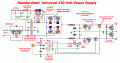
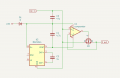
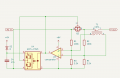
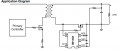
Do they use a comparator to compare the MOSFET's source and drain voltage? If so, then how is this configured in the case of higher-voltage (100V+) bridge rectifiers? Do they have the comparator supply voltages tied to the MOSFET source voltage, or do they have a comparator tied to ground?
How do active rectifier circuits prevent this from happening?
Do they use a comparator to compare the MOSFET's source and drain voltage? If so, then how is this configured in the case of higher-voltage (100V+) bridge rectifiers? Do they have the comparator supply voltages tied to the MOSFET source voltage, or do they have a comparator tied to ground?