Here is what can mess up your day!

Thread Starter

SamR

Joined Mar 19, 2019
5,491
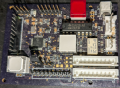
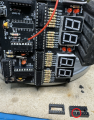
Nice little clock kit using a crystal oscillator divider and counters to display H:M:S. The minutes display was squirrely and sometimes counted correctly and sometimes jumped all over the place. Swapped out the chips driving it (kit had pulled chips in it) and same thing. Pushing on the display driver chips caused the display to get squirlley. Cleaned the back of the board thoroughly and started looking at the solder joints on the display driver chips and nothing out of the ordinary. So I started going over the entire board and noticed a few non-ideal joints and touched them up and the noticed one joint that didn't have a pin poking out. Yep, it was the counter chip for the display problem. So removed it and sure enough one pin had missed it's hole and had gotten flattened! Which is one reason I prefer machined chip sockets! Even though they are harder to insert chips into...
1717618450476.png
 

Thread Starter

SamR

Joined Mar 19, 2019
5,491
Yep, that is the one. Got it from Alix but it came without any docs. Thanks for the link with its schematic. Lots of clock kits out there but I, in particular, was intrigued with the frequency division and counting of the circuit. Kinda old school TTL chip. It pulls ~60 - 70mA. Next is to chop an old USB cable to supply 5V to the 2-terminal block power input... I've got quite a few USB wall wart chargers. I still socket all my chips. Got in the habit and never quit. Most of the boards I make myself now are mostly if not all SMD.
 

dl324

Joined Mar 30, 2015
18,336
I still socket all my chips. Got in the habit and never quit.
Same here. When I did more point-to-point wiring, it was a real PITA if a DIP component needed to be replaced. When I had to replace a 7432 in my BK501A curve tracer, I added a socket.

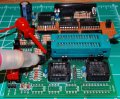
Using sockets made this Willem 4.0 EPROM programmer mod to be compatible with PCB5 easier:
W4v0ModToPCB5.jpg
I even put the ZIF socket in a socket so I could remove to use elsewhere if I wanted to.

I sometimes use machined pin sockets for transistors and relays.
 

MisterBill2

Joined Jan 23, 2018
27,571
There are two types of electronic devices: Those worth repairing and those deemed not worth repairing. but some times both kinds need to be repaired.This is where sockets save the day. Removing suspect ICs to see if they are the short circuited ones, on a double sided PCB with close fitting plated thru holes, is a huge pain.
I have an older, very expensive, Radio Shack scanner like that. No circuit information, multiple 5 volt supplies for different logic groups, and no circuit information. Obviously it was never intended to be repairable. Even at $300+ at the time.
 

nsaspook

Joined Aug 27, 2009
16,330
There are two types of electronic devices: Those worth repairing and those deemed not worth repairing. but some times both kinds need to be repaired.This is where sockets save the day. Removing suspect ICs to see if they are the short circuited ones, on a double sided PCB with close fitting plated thru holes, is a huge pain.
I have an older, very expensive, Radio Shack scanner like that. No circuit information, multiple 5 volt supplies for different logic groups, and no circuit information. Obviously it was never intended to be repairable. Even at $300+ at the time.
One repair is usually the limit on those worth repairing because it's cool instead of necessary.
https://forum.allaboutcircuits.com/threads/tek-2432-nvram-replacement.165205/post-1454665
https://forum.allaboutcircuits.com/threads/tek-2432-nvram-replacement.165205/post-1853708

1717704549602.png
 

MisterBill2

Joined Jan 23, 2018
27,571
For the TEK scope, I saw one seriously burned resistor which says probably a shorted transistor in the inverter section next to it. So the fix/scrap decision depends on who owns it and the need for a replacement. My current dual channel scope cost a dollar at the end of a swap. It did need a hand full of screws, and a re-soldered connection. About ten minutes work and a couple dollars for screws if I had not had them handy.
Now I have two other items deemed not repairable: A Heathkit SW7800 receiver that I don't know if it ever worked, and a Technics pro cassette deck that seems to have a mis-adjusted switch. That one will require some patient exploration. They were "freebees" at an estate sale.
 

nsaspook

Joined Aug 27, 2009
16,330
For the TEK scope, I saw one seriously burned resistor which says probably a shorted transistor in the inverter section next to it. So the fix/scrap decision depends on who owns it and the need for a replacement. My current dual channel scope cost a dollar at the end of a swap. It did need a hand full of screws, and a re-soldered connection. About ten minutes work and a couple dollars for screws if I had not had them handy.
Now I have two other items deemed not repairable: A Heathkit SW7800 receiver that I don't know if it ever worked, and a Technics pro cassette deck that seems to have a mis-adjusted switch. That one will require some patient exploration. They were "freebees" at an estate sale.
The decision to scrap on the second failure is easier when you have the budget (other people's money) to buy a new TEK to replace it. My likely next scope replacement job will be for some old TDS-220 models at work. Those won't be going into the recycle bin.
 

MisterBill2

Joined Jan 23, 2018
27,571
I have observed that most folks find it much easier to spend other people's money. I am one of those crazy exceptions. Just as tight with other folks money as with my own.
 

nsaspook

Joined Aug 27, 2009
16,330
I have observed that most folks find it much easier to spend other people's money. I am one of those crazy exceptions. Just as tight with other folks money as with my own.
Only if I get to keep some of other people's money by being cheap in the short term and it will never come back to me. That doesn't happen very often as the long term investment is an easy sell knowing I won't have a meeting about why X died early.
 

MisterBill2

Joined Jan 23, 2018
27,571
It is not about being cheap and skimping on what is needed. It is about not wasting resources. Doing things right the first time so that no rework is required. That is how we made so much money. Never promise what you can't deliver, and always deliver what you promise.
 

nsaspook

Joined Aug 27, 2009
16,330
Yep, that is the one. Got it from Alix but it came without any docs. Thanks for the link with its schematic. Lots of clock kits out there but I, in particular, was intrigued with the frequency division and counting of the circuit. Kinda old school TTL chip. It pulls ~60 - 70mA. Next is to chop an old USB cable to supply 5V to the 2-terminal block power input... I've got quite a few USB wall wart chargers. I still socket all my chips. Got in the habit and never quit. Most of the boards I make myself now are mostly if not all SMD.
I usually only socket the chips that will get fried during normal operation like I/O transceivers.
The parts on this prototype board design are SMD except for what's most likely to fail like the RS-232 DIP on a machined socket.
1719154122461.png
 
Last edited:

atferrari

Joined Jan 6, 2004
5,012
Using sockets made this Willem 4.0 EPROM programmer mod to be compatible with PCB5 easier:
View attachment 323968
I even put the ZIF socket in a socket so I could remove to use elsewhere if I wanted to.
Out of curiosity: how did you insert them? All ZIF I had to handle in several projects had quite wide flat pins. IIRC, the spacing didn't match the socket.

Long ago in the beginning, I soldered short wires to all and later dutifully inserted them into the socket. One of the many of my kludges. To my surprise (and genuine satisfaction!) the micro replacing the original worked like a charm.
 

dl324

Joined Mar 30, 2015
18,336
Out of curiosity: how did you insert them? All ZIF I had to handle in several projects had quite wide flat pins. IIRC, the spacing didn't match the socket.
I've seen those sockets that had the wide pins. Fortunately, all of my stock from the 1970's, everything I've bought since then, and every socket I've reclaimed from boards with the sockets have had the narrow pins.
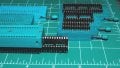
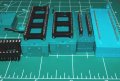
zifInDualWipeSolderTailSocket.jpg
The 3 middle sockets in this picture were soldered to the cup/pin headers:
zifWithCupHeaders.jpg
The sockets I insert the ZIF sockets into are dual wipe solder tail.
 
Last edited:

MisterBill2

Joined Jan 23, 2018
27,571
I use sockets for the ICs that would be a pain to replace. Mostly that is PCBs with small plated thru holes.
And now I am wondering about what sort of unusual dividing scheme is so interesting? I have seen "divide by ten then divide by six, and also divide by six and then divide by ten. Those work for minutes. Counting 12 hours is more complex, I am not aware of higher counting decoded ICs beyond the CD4017. A binary up counter plus decode logic can do it but still that is a multiple IC circuit, or it would require a diode "AND" decoding scheme or a small EPROM.
 
Last edited:

Thread Starter

SamR

Joined Mar 19, 2019
5,491
@MisterBill2 See the link to the schematic for it in msg 5. And it's a 24 hour display clock. All old school TTL chips albeit CMOS and a timing crystal oscillator to drive it.
 
Last edited:

Thread Starter

SamR

Joined Mar 19, 2019
5,491
I was a bit curious of the 5VDC power supply, so I hooked it up to my bench PSU. At ~3.5V and lower it runs slow. I sorted through my 2 dish tubs of wall warts and found a 4.5V 2A Linear one. It actually puts out a bit over 5V at this light of a load but the timing is spot on. I was thinking of using a USB wall wart charger but didn't want the SMPS anywhere near my bench and I have the clock mounted right between my 2 24 outlet power strips over my bench and radios. I also have an analog wall clock for Zulu time but am bad at remembering if it is now a 4 or 5 hour difference for whatever Eastern time it now is. 24 hour clocks don't bother me...
 
Top