Facebook
 Google
 GitHub
 Linkedin
Hi all,
I'm starting a new safety project and need some help planning the circuit design.
The main goal is to create a hydrogen safety alarm system. We have a custom in-house development board called a "Bus Interface" that the circuit will be based on. This Bus Interface board provides us with various power voltages, some GPIOs to work with, and a pre-existing CAN connection.
Here are the specific requirements for the circuit I need to design:
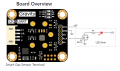
- Sensor Interface: The circuit must connect to a cabled hydrogen gas sensor. Specifically, we are using one of the DFRobot Gravity sensors (details here: Link). The sensor communicates using a digital protocol (I2C or UART), so the circuit needs to be able to read this digital data.
- Status Indication: We need a simple visual indicator (like a standard LED) that shows the sensor is connected, powered, and communicating correctly. This is just to confirm the system is "alive."
- CAN BUS Communication: The sensor information (the hydrogen concentration) needs to be communicated over our CAN BUS.Note: A key point is that we do not need to design CAN Hardware; CAN is provided by the Bus Interface! Our circuit just needs to process the sensor data and pass the information to the Bus Interface's CAN port.
-High-Current Alarm: This is the critical safety feature. If the hydrogen concentration exceeds a specific threshold (1000 ppm), a very bright visual alarm must be triggered. This LED needs to be high-intensity, requiring more than 30 mA of current.
- PCB Constraint: The final design must fit on a two-layer PCB.
I'm trying to figure out the best way to design the schematic that ties all of this together. I need to handle the digital sensor, manage the two different visual feedback LED (the low-power status light and the high-current alarm), and correctly pass the data to the CAN logic on our Bus Interface.
I'm not sure where to start with designing the schematic for the alarm driver and the sensor interfacing (I'm beginner). Does anyone have suggestions for a circuit diagram or block diagram that could accomplish this?
I'm starting a new safety project and need some help planning the circuit design.
The main goal is to create a hydrogen safety alarm system. We have a custom in-house development board called a "Bus Interface" that the circuit will be based on. This Bus Interface board provides us with various power voltages, some GPIOs to work with, and a pre-existing CAN connection.
Here are the specific requirements for the circuit I need to design:
- Sensor Interface: The circuit must connect to a cabled hydrogen gas sensor. Specifically, we are using one of the DFRobot Gravity sensors (details here: Link). The sensor communicates using a digital protocol (I2C or UART), so the circuit needs to be able to read this digital data.
- Status Indication: We need a simple visual indicator (like a standard LED) that shows the sensor is connected, powered, and communicating correctly. This is just to confirm the system is "alive."
- CAN BUS Communication: The sensor information (the hydrogen concentration) needs to be communicated over our CAN BUS.Note: A key point is that we do not need to design CAN Hardware; CAN is provided by the Bus Interface! Our circuit just needs to process the sensor data and pass the information to the Bus Interface's CAN port.
-High-Current Alarm: This is the critical safety feature. If the hydrogen concentration exceeds a specific threshold (1000 ppm), a very bright visual alarm must be triggered. This LED needs to be high-intensity, requiring more than 30 mA of current.
- PCB Constraint: The final design must fit on a two-layer PCB.
I'm trying to figure out the best way to design the schematic that ties all of this together. I need to handle the digital sensor, manage the two different visual feedback LED (the low-power status light and the high-current alarm), and correctly pass the data to the CAN logic on our Bus Interface.
I'm not sure where to start with designing the schematic for the alarm driver and the sensor interfacing (I'm beginner). Does anyone have suggestions for a circuit diagram or block diagram that could accomplish this?