Help finding parts for DIY drone - motors and propellers

Thread Starter

-live wire-

Joined Dec 22, 2017
959
I would like to go about making a drone. I know this may take a very long time, and it will not be easy or simple. I am looking at different parts to get an estimate of the cost and viability.

I am trying to find four suitable BLDC motors. There are plenty available, but I need help choosing the right ones. So I am looking for ones that don’t consume an unreasonable amount of power and can get up to 4-5kg thrust with the right propeller (each). Can anyone suggest four motors and fitting propellers that can do that, and total under $100 ($200 absolute max).
 

Thread Starter

-live wire-

Joined Dec 22, 2017
959
Thanks. They had some good looking stuff. I’ll look through more when my computer gets shipped back (thankfully they were able to fix the screen and ports without any issues).
 

jpanhalt

Joined Jan 18, 2008
11,087
One place to start on paper (not shopping) is to ball park how much power (hp or watts) you will need in terms of the static thrust. Thrust is force and hp is power but still, making assumptions about propeller rpm, diameter and pitch can allow a calculation. Propeller efficiency is usually taken as 80% to 90% for such calculations.

Here are couple of detailed studies that relate static thrust to hp :
https://ntrs.nasa.gov/archive/nasa/casi.ntrs.nasa.gov/19930091521.pdf
http://www.mh-aerotools.de/airfoils/propuls4.htm

Here is a online calculator: http://www.csgnetwork.com/directhpthrustcalc.html

Using your desired thrust value, I plugged in a 6" pitch propeller at 9000 rpm and 5 kg (11#) static thrust to get 1.5 hp . A 12" pitch prop at 8000 rpm and 5 kg give 2.67 hp, and so forth. For model aircraft, the pitch is usually less than the propeller diameter. For example a propellers (diameter x pitch) such as 9x6, 10x6, 13x8 and so forth are common. I have never looked at the propeller sizes used on drones.

Once you calculate the watts you might need, this table will give you some idea of motors, voltages, and current needs: http://neumotors.com/motor-specs/
(Neu motors home page = http://neumotors.com )

John
 

oz93666

Joined Sep 7, 2010
742
up to 4-5kg thrust with the right propeller (each). Can anyone suggest four motors and fitting propellers that can do that, and total under $100 ($200 absolute max).
This is very big thrust total lift of 20Kg.... each propeller would be close to a meter in diameter ... you may want to look at ducted fans , they are much more compact , won't chop your arm off ... this one produces 5kg thrust 100m dia , will consume three KW!!...comes with brushless motor ,$200


You may want to look at this thread I posted on an RC forum .... https://www.rcgroups.com/forums/showthread.php?3107724-Flying-dogs#post39954231 It was about a similar idea , a strap on hover suit for a dog to get it airborn, remote control from ground.
 

Thread Starter

-live wire-

Joined Dec 22, 2017
959
This is very big thrust total lift of 20Kg.... each propeller would be close to a meter in diameter ... you may want to look at ducted fans , they are much more compact , won't chop your arm off ... this one produces 5kg thrust 100m dia , will consume three KW!!...comes with brushless motor ,$200


You may want to look at this thread I posted on an RC forum .... https://www.rcgroups.com/forums/showthread.php?3107724-Flying-dogs#post39954231 It was about a similar idea , a strap on hover suit for a dog to get it airborn, remote control from ground.
Wow. That’s insane! And something like that would require a pretty big (and heavy) battery. And expensive drivers, etc.

I plan on making sort of a hybrid quad-copter/plane type of thing. It should be able to take off like a quad-copter, and hover like one, while also being able to glide and move around like a plane. The goal is for it to be able to be agile and fast, or transport a load up to a few kg. ideally 5kg, but at least 2 or 3.

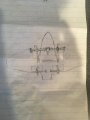
This is a rough drawing of it. I gave up on drawing the electronics.
B5BC501B-715E-4B44-BA9B-E2879EB2E883.jpeg
It would be able to do this by rotating the front two motors. I would use a high speed high torque dual shaft servo with decent precision to do that.

I know that it will not be able to accelerate strait up too fast due to the large surface area, but that’s ok. And I know there are some other flaws in the design.

So you may be wondering why I need so much thrust, and what I’m actually doing. So, I want to use a battery that weighs a few kg to get a decent battery life. At least 1-2kg. And then since I have a big frame (lift) and want it to be durable that may add another 1-2kg. Motors, controllers, antennas, and other stuff may be an additional 1-2kg. And I want to have a slightly unbalanced load of up to 3kg. So worst case scenario, that’s 9kg. With optimization, 6kg. Plus if it’s unbalanced some motors may need to lift even more. So at least 12kg thrust maximum is required to leave a safe margin.

It will mainly be flying around like a plane. So that means it would need only a fraction of that thrust to move around, saving battery life.

However, the absolute maximum power I’d be willing to supply is 1-1.5kW per motor. So can I still get 3kg thrust with that amount of power? Is there a linear relationship between thrust and power, or do the losses cause a need for exponentially more power?
 

Thread Starter

-live wire-

Joined Dec 22, 2017
959
What kind of batteries will supply 1.5 kW * 4 = 6 kW for any reasonable flight time?
It would be 4-6kW during takeoff and when hovering. It would be flying like a plane most of the time. If you have .4kWh that will last you about 5 minutes, but it will only need to do that for 2 or 3 minutes (leaving 50%).
 

BobaMosfet

Joined Jul 1, 2009
2,211
I recommend starting much smaller, to work out the mechanics, control, and so forth, on a very small budget. Will prove feasability, and allow you to solve all the issues. I myself have built a drone from scratch, based around a specific propeller I had on hand. My first task was to determine how much thrust one of these propellers could generate and at what RPM to know if it could even lift itself and the motor, let alone anything else.
 

Thread Starter

-live wire-

Joined Dec 22, 2017
959
If you use half your available power taking off and half flying around, how will you land?
I’ll use the third half. I’ll eat my cake and have it too. Actually, I will try and fly just horizontally when there is a heavier load, relying on the lift. I will try and minimize the time it is ascending and using a few kW. Landing should require a lot less power, and I may add wheels so it can also glide down.
I recommend starting much smaller, to work out the mechanics, control, and so forth, on a very small budget. Will prove feasability, and allow you to solve all the issues. I myself have built a drone from scratch, based around a specific propeller I had on hand. My first task was to determine how much thrust one of these propellers could generate and at what RPM to know if it could even lift itself and the motor, let alone anything else.
Thanks for the advice. I wanted to do that but it looked pretty difficult to make things more compact and to not spend too much on it. And with the sensors I want to use, I don’t really see how I could get them cheaper (camera, ultrasonic, etc). But given the complexity, I will try to do that. Also, I am still concerned about the issues when scaling up.

So what kind of drone did you make? Quad copter or plane type thing? And how did you deal with designing the controls for it? I know I’ll be able to work out the central hardware (motors, batteries, etc), but I am concerned about having to deal with designing advanced controls for it (PID, etc). And the coding will certainly be advanced. So do you just use a lot of libraries, or what?
 
A friend of mine spent about $200 on a commercial hobby drone with two battery packs and a charger. He gets about 20 minutes of flight time per charge and has enormous control over the drone. It will, when requested, return to the exact (within an inch) location it started from. It sends photos back to his iphone which are amazing given the location of the drone can be anywhere up to 400 ft. It gives him lots of pleasure. He does not need or want to carry a load. The whole thing is quite light, even with the battery pack.

And he doesn't need to worry about dropping a heavy object from the sky in case of a failure.
 

Thread Starter

-live wire-

Joined Dec 22, 2017
959
A friend of mine spent about $200 on a commercial hobby drone with two battery packs and a charger. He gets about 20 minutes of flight time per charge and has enormous control over the drone. It will, when requested, return to the exact (within an inch) location it started from. It sends photos back to his iphone which are amazing given the location of the drone can be anywhere up to 400 ft. It gives him lots of pleasure. He does not need or want to carry a load. The whole thing is quite light, even with the battery pack.

And he doesn't need to worry about dropping a heavy object from the sky in case of a failure.
I have a DJI phantom 3 drone that has a good battery life, is fast, and has plenty of other features. I have been able to fly it over my house and record some good footage. But I can’t fly it around with heavy loads or customize it.
 

Thread Starter

-live wire-

Joined Dec 22, 2017
959
Also, a reasonable cutoff voltage for lipos is 3V, right? There are a few sources saying that the nominal voltage or close to it is the cutoff.
 

gramps

Joined Dec 8, 2014
86
3.0v is the absolute lowest cutoff. At 3.0v you've used 100% capacity. I usually cutoff at about 80%, which is around 3.5v. Discharging 100% is hard on the batteries.

Also check out https://ecalc.ch/index.htm . Great stuff for getting batteries, esc's and motors to all work together. They want a small yearly fee, but it's well worth the price if it saves you just one mistake.
 

oz93666

Joined Sep 7, 2010
742
If you check out the flying dogs thread I linked to, I went through all the figures , as soon as you want to lift loads the flight time drops drastically , lifting a 5Kg load with 10 kg of total thrust (5kg load 5kg motors frame batteries etc) the best you can hope for is about 4 minutes flying time , many kilos of Li-po batteries . That's with ducted fans ... propellers are slightly more efficient than ducted fans , but impossible in practice.

If using propellers the frame will be very large and heavy ,each propeller around a meter dia you are basically trying to join 4 RC helicopters together , extremely unwieldy ,fragile and prone to destruction on bumpy landings.

Looking at your sketch , remember each propeller is about 1 meter dia , that makes a wingspan of 8 meters , nose to tail 5 metes , approximate weight of frame over 20 kilos!!
It can't be done ....
 
Last edited:
Top