Facebook
 Google
 GitHub
 Linkedin
Hi
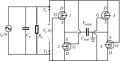
I am trying to make a simulation of a self-driven H-bridge rectifier, as a replacement for a full-bridge diode rectifier (don't want any diodes in the rectifier because of high drop). I came across this rectifier circuit in some research papers, which uses two PMOS (M3,M4) and two NMOS (M1,M2), which are driven by the AC voltage input itself.
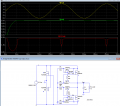
For a 100V sinusoidal input, I get just a 700mV DC output, corresponding to a ~225mV sinusoidal voltage across L2 (and 700mV sinusoidal across L3, so rectification is taking place just fine). However, my concern is the huge drop in the input voltage due to H-bridge rectifier. In absence of the rectifier circuit (the portion after 55pF cap), the voltage across L2 comes out to be 22V. Then surely there is some part of the rectifier circuit that is immensely loading the input circuit.
The load resistance is 10Meg so that shouldn't be a problem (same results for open circuit).
I need to make the circuit work for a 1V sine input, which won't be possible in this situation as the MOSFETs have a threshold voltage of ~0.7V, so they are never going to turn on.
If someone could help me with this issue it'd be great.
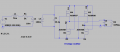
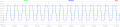
Green- voltage across L2; Blue- voltage across L3; Red- rectified voltage across C2
I am trying to make a simulation of a self-driven H-bridge rectifier, as a replacement for a full-bridge diode rectifier (don't want any diodes in the rectifier because of high drop). I came across this rectifier circuit in some research papers, which uses two PMOS (M3,M4) and two NMOS (M1,M2), which are driven by the AC voltage input itself.
For a 100V sinusoidal input, I get just a 700mV DC output, corresponding to a ~225mV sinusoidal voltage across L2 (and 700mV sinusoidal across L3, so rectification is taking place just fine). However, my concern is the huge drop in the input voltage due to H-bridge rectifier. In absence of the rectifier circuit (the portion after 55pF cap), the voltage across L2 comes out to be 22V. Then surely there is some part of the rectifier circuit that is immensely loading the input circuit.
The load resistance is 10Meg so that shouldn't be a problem (same results for open circuit).
I need to make the circuit work for a 1V sine input, which won't be possible in this situation as the MOSFETs have a threshold voltage of ~0.7V, so they are never going to turn on.
If someone could help me with this issue it'd be great.
Green- voltage across L2; Blue- voltage across L3; Red- rectified voltage across C2