H Bridge Motor Controller Burning Charge Pump IC

Thread Starter

fignewton83

Joined Nov 6, 2021
31
Greetings again. I'm back at an old project and have taken what I've learned here and arrived at a new issue.

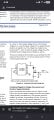
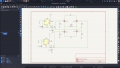
I have the below circuit with IRLZ44N for all 4 mosfets. 12v power supply. It seems to work well with bi-directional control up until about an amp from drain to source. At that point the ICL7660S charge pump IC burns up. I'm not understanding why exactly. I'm assuming there is too much current passing through the IC but I dont know why. I was tracking that mosfets are voltage operated transistors and only require a small amount of current to the gate. I went through the datasheet a couple times but I didn't see anyspecs that were being violated. I'm assuming there is some fundamental issue with my circuit design. Can someone shed some light on my issue?

Apologies for the full screen printscreen images. Recently swore off Windows and I haven't found a working equivalent to MS Paint for Linux yet to easily crop just the important parts. And go easy on me, schematics are definitely not my strong suit.
Screenshot_2026-01-03_23_21_43.png

Screenshot_2026-01-03_16_53_11.png
 
Last edited:

MisterBill2

Joined Jan 23, 2018
27,164
My guess is that as the load current increases, the voltage drop in some part of the circuit lets an excessively high voltage get fed to the charge pump IC. Without seeing the circuit schematic that is what seems like it could be..
Possibly an excessive voltage drop in a power connection.
 

Thread Starter

fignewton83

Joined Nov 6, 2021
31
My guess is that as the load current increases, the voltage drop in some part of the circuit lets an excessively high voltage get fed to the charge pump IC. Without seeing the circuit schematic that is what seems like it could be..
Possibly an excessive voltage drop in a power connection.
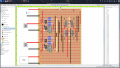
Yeah I just attached the stripboard layout above. IWas hoping that would be enough. 'll try to do up an actual schematic and post.
 

Thread Starter

fignewton83

Joined Nov 6, 2021
31
Why do you require a charge pump in the first place?
And please, do draw a schematic. Perhaps then we would understand what you are doing.
Schematic added to original post. At least that's what I think I'm doing.

My understanding is that I need something to provide appropriately high vgs to the two n channel mosfets on the high side in an h bridge configuration. Or any other n channel mosfet arranged in a high side configuration.The IRLZ44N's datasheet shows a VGS(th) min 1.2v and max 2.0. It shows RDS(on) curves from 4v to 10v. And the absolute maximum VGS of 16v. My understanding is that if I'm switching a 12v dc motor from a 12v battery I need a vgs of at least 2v above that 12v to fully turn on the mosfet. And I also understand that voltages between that 2v (above vds) fully turned on and the maximum of 16v (above vds) will decrease the resistance drain to source.

Hence the charge pumps. These ICs arranged in the positive voltage doubler config provide 23ish volts after the drop across the 2 diodes. After the 100ohm gate resistor I'm showing something like 22.1 volts at the gate. With respect to the vds that's approximately 10 volts, hopefully achieving the 0.022 RDS(on).

Unless my understanding of all this is completely wrong?
 

MisterBill2

Joined Jan 23, 2018
27,164
In the added circuit I see on the charge pump circuit that Vout is tied directly to ground. THAT could be a part of the problem. I have not looked at the data sheet for the ICL7660S charge pump, but that connection does not seem right.
 

BobTPH

Joined Jun 5, 2013
11,463
Use a high and low side gate driver. The circuit you show is putting the same voltage on both a high side and low side switch, which cannot be correct.
 

Thread Starter

fignewton83

Joined Nov 6, 2021
31
Use a high and low side gate driver. The circuit you show is putting the same voltage on both a high side and low side switch, which cannot be correct.
Ahh I see my mistake there. The 2 high side mosfets need the higher voltage but the low side ones dont.

So vgs on those two gates exceeds the maximum vgs allowed of 16v. Lets say it destroys that mosfet. I still dont see why the charge pump IC is burning up. The vout of that chip still isn't a dead short to ground. Still has the 10k resistor in its path, doesn't it?

I have the IR2110 half bridge driver ICs on hand and that's the next iteration of this project, as you recommend. But Im trying to do these incrementally to maximize learning potential. I started with wires, diodes, and switches and made a sort of h bridge in free air. Moved to strip board with insufficient vgs. Did the capacitor bootstrap circuit and saw those limitations without a square wave. And now a charge pump to keep the gate open.
 
Last edited:

schmitt trigger

Joined Jul 12, 2010
2,027
When you use a proper mosfet bridge driver, the charge pump is built into the driver itself. You only supply it with 12 volts, and the driver does the voltage bootstrapping for the upper mosfet.
 

Thread Starter

fignewton83

Joined Nov 6, 2021
31
When you use a proper mosfet bridge driver, the charge pump is built into the driver itself. You only supply it with 12 volts, and the driver does the voltage bootstrapping for the upper mosfet.
Roger that. I have a bunch of IR2110s on hand and will be using those in the next iteration.

So is it fair to say that this ICL7660 charge pump would be a viable option to drive a single n channel mosfet on the high side but not a viable option in half bridge configuration due to the single vout?
 

BobTPH

Joined Jun 5, 2013
11,463
Roger that. I have a bunch of IR2110s on hand and will be using those in the next iteration.

So is it fair to say that this ICL7660 charge pump would be a viable option to drive a single n channel mosfet on the high side but not a viable option in half bridge configuration due to the single vout?
You could probably come up with a circuit that would work, but why not use the chip that does not require that extra effort and is designed to drive both MOSFETs?
 
Top