Guessing how it works ?

Thread Starter

Externet

Joined Nov 29, 2005
2,626
Every battery powered tool is a different mystery ? Do you have some rules to discern how it works ?

Choosing a simplest example : 3 contacts on the tool :
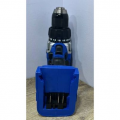
1709676398560.png

Obviously, we have pos, neg and here a mystery third... That third terminal can tell the battery that the tool is overheated; or the battery tell the tool it is overheated, or it is a 20V, or a 24V, or whatever so the tool won't work with it. The signal can be as a 'low' or a 'high' or an analog value. Never seen an explanation on any tool/battery manual.

And that is only for 3 terminals, in one brand. There is dozens of brands, dozens of models, with 4, 5, 6, 7, 8... terminals. Never seen their function explained. Some identify the pack for the charger to accept charging. While charging, direction is another: The charger interrogating the pack for its health to refuse charging or not. A multitude of unknowns :confused:
 

WBahn

Joined Mar 31, 2012
32,704
The best rule I can think of is: Since the designer of the tool has complete control over the interface between the battery pack, the tool, and the charger, the functionality of the various contacts is specified by the designer in whatever why they felt appropriate and any given one may have absolutely nothing in common with any other given one.

In general, if there are only three contacts, there is a good chance that the third one provides an analog voltage that reflects the temperature of the battery pack. The tool may or may not take advantage of that information, but the charger almost certainly will, particularly if it is designed to do a rapid charge. If you have many contacts, some of them are most likely taps to the individual cells to perform load balancing. This is if this functionality is built into the charger. Many battery packs put that functionality into the pack itself.
 

MisterBill2

Joined Jan 23, 2018
27,186
Given that battery heating is always a concern when charging any battery type, the extra terminal provides a temperature signal of some scale, slope, and polarity. There may also be a digital link to provide battery size information, I have a battery tool that has two different capacity battery packs.
 

geekoftheweek

Joined Oct 6, 2013
1,429
All of my Milwaukee tools have only two pins on the tool and four on the charger. My old Craftsman set is the same way.

A third terminal on a tool is a bit odd seeing as how the battery itself usually contains all the electronics it needs to monitor draw, temperature, charging equalizers, and what not. The charger would need extra terminals to "communicate" with the battery, but the tool not so much. Maybe an RPM signal?

Edit:
Maybe a variable voltage from the trigger to compare with the current draw on the batteries to test for stall condition or over current.
 

Ian0

Joined Aug 7, 2020
13,097
Generally, the third contact doesn't communicate with the tool at all. It communicates with the charger.
Usually it is a temperature sensor, but that was in the days of Nickel based batteries.
 

Ya’akov

Joined Jan 27, 2019
10,226
There is a lot of information about tool batteries online. If the tool is equipped with a third terminal, it is probably for the battery packs thermistor so the tool will stop in the case of overheating the battery. It is the same device as is used by the charger.

Some batteries communicate digitally with the tool, or the tool can sense the type by a resistance in a dedicated pin.

The Tool Scientist YouTube channel is a very good resource to get an idea of how these things can work. He is very meticulous in his analysis of the Milwaukee communications protocol and Makita’s discharge protection.

The Torque Test YouTube channel is also very good, and if you have an interest in rigorous testing of tool capacity, it’s practically unique. They also test flashlights, and have a lot of information on batteries.

By the way, “18V” and ”20V” and “21V” batteries are all the same 5S1P 18650 packs. The “18V” is an honest value using 3.7V per cell, the “20V“ uses a bit more fudging with 4V per cell, and the 21V (often with “max”) is the open terminal voltage of 5 perfectly charged cells (4.2V) in series.
 

Thread Starter

Externet

Joined Nov 29, 2005
2,626
The third terminal is to measure the temperature of the battery during charging. That is how fast charging works.
Hi. Thanks. Makes sense. -But not 'during charging' if the third terminal is in the tool- If it is temperature related, could tell (disable) the battery to stop 'providing' or tell the tool to stop 'consuming' - depends of direction. And can be a high/low signal in reference to the +, or to the - terminal... :confused:
 

ronsimpson

Joined Oct 7, 2019
4,647
-But not 'during charging'
During charging the battery gets hot which results in short lift and maybe fire. Many chargers charge at high current until the battery gets hot then reduce the current.

I have not seen a drill that watches the battery temperature during use. It could happen and is a good idea.
 

geekoftheweek

Joined Oct 6, 2013
1,429
If the tool is equipped with a third terminal, it is probably for the battery packs thermistor so the tool will stop in the case of overheating the battery.
At first I thought that would be something that would be easier for the battery pack itself to handle rather than incorporating into the tool which would eliminate a potential point of failure and other design issues. I also considered as more and more tools move to brushless motors that it would make more sense to incorporate that into the motor controller.
 

Tonyr1084

Joined Sep 24, 2015
9,744
My DeWALT's have five pins on the battery and four pins on the tools. Two outer most pins are larger than the next two inboard pins. I assume the larger pins are what drive the motors of the tools whereas the two smaller pins MIGHT be used to light the LED lights on the front of the tools or other indicator lights within. The center pin of the battery is not used by the tool but my charger has five pins. So that fifth pin is clearly used to communicate with the battery. Likely it's temperature feedback. My charger will flash a sequence of lights to indicate the battery is overheated and needs to cool down before charging can continue. I have only ONE tool, a drill motor, that sometimes if I nail the trigger to full speed the motor will bump and then stop. But if I increase the draw slowly it will go to full speed with no issues. By "Slowly" I mean go from zero to 100% in about half a second. Sometimes it seems like it does that more frequently when the battery is low on charge whereas a fully charged battery doesn't let the drill do that. I have three drills and two impacts. The first two tools, drill and impact, had 18V Ni-Cad's. The two newer tools, drill and impact (and this is the drill with issues) have 20V Lithium. The third drill I got at a yard sale for $3.00. I figured at that price I can't go wrong. To my surprise it works better than any of the other tools. DeWALT used to be made by DeWALT. Now they're made by someone else. Off hand I don't know the manufacturer. But the drills and impacts are smaller and don't seem to have as much power. I've bought adapters that allow plugging the 20V batteries into the 18V tools. The extra 2V doesn't seem to cause any issues. DeWALT used to be a good name brand. Now it's just a name brand.
 
Top