Glad I'm not a passenger

bertus

Joined Apr 5, 2008
23,023
From dutch media:
Zeker 68 mensen zijn om het leven gekomen. Van de 58 zwaargewonden verkeren er 15 in kritieke toestand
Een trein zou ten onrechte groen licht hebben gekregen om door te rijden, terwijl andere treinen op het spoor stilstonden vanwege een seinstoring

Translation:
At least 68 people have lost their lives. Of the 58 people who sustained serious injuries, 15 are in critical condition.

A train was reportedly given the green light to proceed by mistake, while other trains were stopped on the tracks due to a signal failure.
 

nsaspook

Joined Aug 27, 2009
16,503
https://www.nytimes.com/2026/10/28/...minister-described-what-led-to-the-crash.html

Spain’s transportation minister said a train crash that killed dozens on Wednesday appeared to result from an “inexplicable” decision by traffic control operators to tell a high-speed train to continue its journey when another train was stopped farther along the tracks.

The minister, Óscar Puente, said he spent the morning watching a reconstruction of the accident and listening to audio recordings of communications between the control center in Madrid and the trains that crashed near Toledo, and he gave a detailed account of what he said preceded the crash at a news conference.

At about 8:30 a.m. local time, an automatic train control system near the site of the crash went down because of a computer failure, Mr. Puente said.

The system — known as the Linienzugbeeinflussung or LZB — dates to the 1960s and uses external technologies, such as track circuits and axel counters, to monitor the speed and position of trains. This information allows the system to automatically calculate when and how quickly a train can safely move forward. It then changes railroad signals accordingly.

On Wednesday, the safety system was inactive along a stretch of about 39 miles, or 63 kilometers, of tracks, so six trains traveling along that section were automatically stopped as a precaution. At that point, he said, the control center in Madrid took over.

“The control center communicated with the trains that had stopped, and at 8:36 a.m., the decision was made to allow the train that eventually collided with the stationary Iryo train to resume its journey as normal,” Mr. Puente said, referring to the private rail operator of the stopped train.


WBahn

Joined Mar 31, 2012
33,310
When something seems too good to be true:

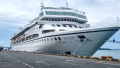
'Never-ending' cruise grinds to devastating end, stranding over 200 passengers abroad
View attachment 372789
Passengers say they were given just seven hours' notice to leave the vessel​
The idea wasn't outrageous, but the devil is certainly in the details. I don't know if it was marketed with the kind of shady tactics that "time shares" are generally sold (and the concept of a time-share is completely reasonable and doable, it's just that few are really legitimately structured and operated).

How it should have been structured, in my opinion, was as a community interest property (like a townhome complex), with a management company and a homeowners association.

Whether the initial plan was sustainable from the beginning would depend on the actual numbers involved. The article talks about people paying $300k to $500k as a one-time purchase with no ongoing expenses. That's only doable if the purchase essentially endowed a fund that could cover ongoing expenses (at least for the life expectancy of the buyers, which since they were mostly retirees, isn't that impossible). But the article doesn't say is that this was a limited offer and that the rest were lower-priced purchases with monthly fees. The purchase prices ranged from about $120k to $450k with per-person fees ranging from $2000 to $5500 per month.

Some of the residents that they interviewed showed some possibly quite naive views. One said that they hoped the residents could buy the ship and keep on cruising. The ship is probably worth about $20 million, so they would have to pony about about $100k each just to purchase the ship. But that would be the easy part. They still have to operated it. With 156 crew, that means that every 3 people would have to pay the full-time costs, including benefits, of 2 crew members. A report at the time estimated that the crew expenses would likely be around $350k/mo, but that works out to only $27k/year on average. I'm skeptical about that, but that probably doesn't include the value of lodging and meals for the crew, so who knows. But that's still about $1700/mo per resident just to staff the ship. You still have to pay for food for everyone, maintenance of the ship, all of the regulatory fees and port expenses, and fuel. Still, it might be something that they (or someone) could look into, coming up with realistic numbers of what it would take to be sustainable.

My gut impression is that the company may not have been well structured and properly funded from the beginning and so now they are just trying to bail and cut their losses. I don't know how serious they were in trying to keep operations going. If they had been, I'm guessing there were options available. They touted the $8000/mo per cabin for fuel, but also mentioned that that was for parts of Asia. So stay out of those parts of Asia, at least for now. Operate in areas where fuel is on the lower side of what's available and operate on a limited cruising basis. Find places that you can stay in port for an extended period of time, perhaps a few months, until the economic climate improves. Be up front with the residents what the situation is and what the options are to continue sailing. Point out that while they won't be visiting as many places as frequently as planned, they will have the opportunity to get the kind of immersive experience in the few places they do visit that they otherwise would not be able to have. Plus, it's temporary until the economics improve.

I think on of the residents had the right and healthy attitude. They knew it was a start-up and a new concept, and that that meant there was a lot of risk involved. So they decided that if it lasted 12 months that they would consider it a good enough deal for the experience and that anything beyond that would be a bonus. They get to walk away with a lot of good memories and no regrets.
 
Fond memories of the F4 Phantom in all of its flavors. Then too, I was Marine Air. I can't make out the pilots patch but the Navy, Marines and Air Force flew the F4 birds. Pretty cool story. :)

Ron
 

WBahn

Joined Mar 31, 2012
33,310
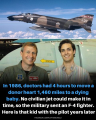
Many civilian jets could have made it. In fact, the heart was originally supposed to be transported from Fargo, ND to Stanford Medical Center in California by a civilian Learjet, but the aircraft failed to start (this was just after midnight on Christmas Eve, which is rather cold in Fargo). A couple hours later, the surgeon, Dr. Norman Shumway, called ND governor George Skinner asking for help. Skinner authorized the use of a military aircraft from the Air National Guard unit that was stationed at the same airfield, which happened to be an F-4 unit. Because the the unit maintained 24 hour alert status (this was during the cold war, so their mission was air defense against Soviet bombers coming over the pole), they had aircraft maintained in heated hangers ready to go on ten-minutes notice.. About a half-hour after the governor was called, Lt. Robert Becklund took off. The heart was placed in a picnic cooler, packed in ice, and strapped into the rear cockpit (displacing the WSO - Weapons Systems Officer).

Normally, a human heart is supposed to be transplanted within four hours of death, but the four hour window was missed and it was nearly eight hours, making it the longest period that a human heart had been outside a body and still successfully transplanted.

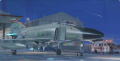
The baby, Andrew De La Pena, is now 40 years old, has a master's degree, has visited every continent and over forty countries, and speaks five languages. The pilot retired as a brigadier general. He commissioned two paintings of the F-4 used in the flight and donated them to the Fargo Air Museum's exhibit commemorating the flight:

1793406305567.png

It's my understanding (based on what I heard at the time -- I was on active duty then -- but haven't been able to confirm) that the aircraft made the flight armed with the air-to-air missiles that it had been sitting on alert with as they chose not to take the time to download them.

It was just one more example of the military rising to the occasion and going above and beyond to help individuals in trouble. Think of the time line involved. The original aircraft won't start in the bitter cold. Some amount of time elapses while they try to work the problem and they finally notify the folks at Stanford, who then spent some time trying to beat the bushes trying to find an alternative. A couple of hours pass when the head surgeon decides to attempt to ask the Governor of North Dakota for assistance. Imagine what was involved in that, in 1986. What number do you call? How do they find the Governor? Is he at home asleep? At a Christmas party? How many people were involved in making that connection. The Governor then made an immediate decision to authorize the flight and was speaking with the National Guard Adjutant General sixteen minutes later, who identified the resource needed. At this point, not only does the order have to go out and the aircraft have to be fired up, but the coordination of handing off the heart to the National Guard and deciding how it will be packed and secured has to happen. Despite that, from the time the general was called by the Governor, the aircraft was wheels up fifteen minutes later.

One interesting note. If the painting accurately depicts the aircraft, which is likely given that this appears to be a pretty standard air-defense package consisting of two 370 gallon wing tanks and four Sparrow radar-guided missiles (and no Sidewinder heat seekers), the ferry range would have been right about 1600 miles, meaning that it was probably getting close to its reserves, if not into them, when it landed.
 
Last edited:
Top