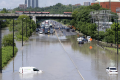
I can't stand all the bad drivers -- and their expensive cars -- on the road today.Nice launch!
"0 to -$2.5M in under 1 second"
Interestingly, and coincidentally, the FAA grounded Transair's fleet on the same day as this crash (the crash actually happened before the grounding took effect, but the order was approved before it), based on preliminary findings of poor inspections and maintenance. Eventually their Air Operator's Certificate was revoked because of dozens of flights made with engines that weren't airworthy.
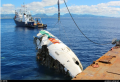
Transair flight 810, a Boeing 737 cargo plane, ditched in Mamala Bay off Honolulu, Hawaii, after experiencing an engine anomaly after takeoff. The captain sustained serious injuries, the first officer sustained minor injuries, and the airplane was destroyed.
As the aircraft climbed to an altitude of about 390 feet, at an airspeed of 155 knots, the EPR of the right engine dropped and the aircraft then began to yaw to the right. The co-pilot corrected the tendency by using the left rudder. He stated that engine number 2 (right) had failed, which was confirmed by the captain. Upon reaching 2000 feet, the first officer (who was Pilot Flying) selected flight idle thrust. In the meantime, the captain radioed Honolulu Tower that they had an emergency.
The captain then took control of the aircraft. Although it was determined immediately after takeoff that the right engine had failed, the co-pilot then noted that the left engine had failed. The captain accepted the copilot's assessment and took no action to verify the information and he moved the throttle of the right engine forward. He then instructed the co-pilot to run the engine failure checklist.
The captain then began to steer the aircraft back toward the airport. The aircraft continued to lose altitude and airspeed due to the captain using the failed engine for thrust. The aircraft impacted the water, eleven and a half minutes after takeoff, 5.5 miles southwest of Honolulu Airport. Both pilots were able to escape from the sinking plane.
The wreckage sank to a depth of about 105 meters and was salvaged in October 2021. The subsequent investigation shows that two high-pressure turbine blades of the right engine had fractured. They failed by stress rupture resulting from a loss of loadbearing material due to oxidation and corrosion.
Directors of Operations: How do your crews train in the simulator to ensure proper identification of the engine problem? Best practices also include not only identifying the problematic engine but also protecting the good engine(s) and guarding these controls, so they are not reduced or cut-off.
This accident includes:
- Technical factors (engine failure due to turbine oxidation and corrosion),
- Possible organizational factors (possible ineffective training, apparent lack of proper engine maintenance),
- Human factors (poor CRM, loss of aircraft control), and
- Environmental factors (the ocean provided the crew with a soft landing which enabled their survival).
Summary thanks to Flight Safety Foundation
Ordinary people tend to think of the FAA as too severe, or even bureaucratic. And although I have I have no doubt about it being the latter, I think that their extreme emphases for safety inspections and certifications is more than justified.Interestingly, and coincidentally, the FAA grounded Transair's fleet on the same day as this crash (the crash actually happened before the grounding took effect, but the order was approved before it), based on preliminary findings of poor inspections and maintenance. Eventually their Air Operator's Certificate was revoked because of dozens of flights made with engines that weren't airworthy.
As a young Ch. Officer in the first years of my career I harbored a secret rejection to those bureaucrats with the added bonus of being most of the time from foreign countries. In merchant vessel, the scheme to keep a vessel classified so she can go at sea with no limitations is a heavy burden for crews sometimes.Ordinary people tend to think of the FAA as too severe, or even bureaucratic. And although I have I have no doubt about it being the latter, I think that their extreme emphases for safety inspections and certifications is more than justified.
Snort was killed in a crash due to failing to properly perform the preflight inspection (a flight control lock was left installed) and failing to do the specified "flight controls free and correct" check before takeoff. Apparently, he was being rushed that day and became a bit complacent. It's an ever-present risk.
I'd agree that he got what he deserved ... but would one be able to recover said certificate if one did enough "penance" by attending extra courses and/or seminars or whatever ... or is said revocation permanent?As for the instructor that failed to even enter the event into the aircraft's log or notify the aeroclub, and then lied about it to investigators, he was fired and had his instructor's certificate revoked.
I forgot to mention that he had his commercial pilot's license revoked, too, but I seem to recall that his private pilot's license was not revoked (or maybe that was to be part of a later hearing, as I never heard anything more about him after that). My understanding is that a revoked license is permanently invalidated (unlike a suspended license which can be reinstated after the expiration of the suspension period). But, after a year, a pilot can reapply for a new license by repeating all of the exams, written, oral, and practical, and all training requirements that have time windows (such as so many hours within the two months prior to the flight exam). What I don't know is whether or not the designated examiner is allowed to take the revocation into account (or whether or not they are even made aware of it), but my suspicion is that they aren't.I'd agree that he got what he deserved ... but would one be able to recover said certificate if one did enough "penance" by attending extra courses and/or seminars or whatever ... or is said revocation permanent?
So what would've happened if he had reported the incident in the first place? ... I mean, of course I expect he wouldn't have been penalized or anything, but would he have had to pay for the repairs out of his own pocket or insurance?I forgot to mention that he had his commercial pilot's license revoked, too, but I seem to recall that his private pilot's license was not revoked (or maybe that was to be part of a later hearing, as I never heard anything more about him after that). My understanding is that a revoked license is permanently invalidated (unlike a suspended license which can be reinstated after the expiration of the suspension period). But, after a year, a pilot can reapply for a new license by repeating all of the exams, written, oral, and practical, and all training requirements that have time windows (such as so many hours within the two months prior to the flight exam). What I don't know is whether or not the designated examiner is allowed to take the revocation into account (or whether or not they are even made aware of it), but my suspicion is that they aren't.
If he had done what he was supposed to, which was to enter the damage into the aircraft's log book (which is with the aircraft when it is being flown and which pilot's are required to review for open items before doing anything else), he would have been covered. He should also have reported it to the Academy Aeroclub at the first opportunity, which would have been the next morning at about the time we were getting ready to preflight the aircraft. I don't recall if the aeroclub had an answering machine or not (that was 09 Sep 2002), but it's unlikely anyone could have gotten word to us, since cell phones were uncommon then. What I would have done, in his place, is put some kind of big note on the pilot's seat or yoke saying that the plane was grounded due to damage to wings and tail. But there was no requirement that he do that. The Aeroclub would have reported it to the Air Force and probably the FAA, since I'm pretty sure it was considered a reportable mishap.So what would've happened if he had reported the incident in the first place? ... I mean, of course I expect he wouldn't have been penalized or anything, but would he have had to pay for the repairs out of his own pocket or insurance?
The teenager, who reported the derailment to authorities, approached an investigator after the crash and asked what caused it. When the investigator said it was undetermined, he responded that “obviously a switch was flipped the wrong way,” according to court records.
He told the investigator he was a train enthusiast and showed him the video he had shot of the derailment, the records said.
| Thread starter | Similar threads | Forum | Replies | Date |
|---|---|---|---|---|
| S | Hello Everyone! Glad to Join the All About Circuits Community | General Electronics Chat | 4 | |
| J | About Parasitic Amp Draw (Battery Drain) in a passenger car. | General Electronics Chat | 22 | |
| J | Drone Hits Passenger Jet | Off-Topic | 10 | |
|
|
I am so glad I am not one minute faster | Off-Topic | 14 | |
| W | Glad I found Ya'll!! | General Electronics Chat | 15 |