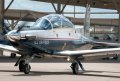
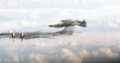
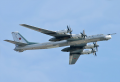
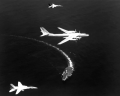
“At that time, we probably averaged two intercepts of “Bears” per week. They were the only aircraft we saw while I was there. Generally, the intercepts occurred on Fridays and Sundays, at the “Bears” flew from Murmansk to Cuba on training and, we guessed, “fun” missions. Generally, we did these barrel rolls at the request of the Soviet crewmembers. They gave us hand signals to let us know they wanted us to do it. They photographed us as well. The Cold War was winding down and the attitudes on both sides had improved,” Sihler explains.
I beg to differ. I'd gladly be a passenger in an F-4 doing a barrel roll. My kids got a flight in a PT-17 biplane for my 50th birthday. During the last 5 minutes of the flight, the pilot did some aerobatic maneuvers. Being in the cockpit I couldn't tell what he was doing, only that at one second the ground was to my left and the next it was to my right or directly in front of me. I don't think he did a roll, barrel or otherwise but it was better than any rollercoaster I've ever been on. I'd do it again in a heartbeat and don't even tease me about the F-4.
Yeah ... the contents of this thread have evolved over time. And I think it's an improvement, actually. Perhaps I should adjust its title.I beg to differ.


Kudos to the Blue Ones for their heroic actions. I don't care if it was their duty and obligation, what they did was beyond commendable ... To serve and protect indeed ... The very least that those kids can learn now are the virtues of gratitude and humility.A hard lesson for kids learned the hard way. Taking that Kia for a 'joy' ride is not cool. Kids, the consequences for your actions can be horrible.
A stolen vehicle pursuit ended abruptly when the Kia sedan cut off a semi truck on the NB 710 freeway south of Anaheim street causing the semi truck to t-bone the suspect vehicle and trap patients inside.
LBPD officers are observed pulling multiple patients out of the suspect vehicle, dragging them to safety. One female was still trapped inside the vehicle when flames were abrupting and LBPD rescued her quickly and extinguished the fire during the rescue.
This is why I never take my seatbelt off on a flight -- things like this can and do happen and they can and do happen with zero warning.
I never take it off either. But I do adjust it very, very loose so that I don't even feel it's there.This is why I never take my seatbelt off on a flight -- things like this can and do happen and they can and do happen with zero warning.
Brutal! They likely were the first ones into that nasty pocket of air over the tropics. I've been in planes from the old Clark AB to other bases that were bad but nothing like that. Usually there is a warning of possible turbulence ahead. In the old days the pilot(s) would say 'we have reports of' from other pilots or the controller giving time to prep before we hit it. So scary!This is why I never take my seatbelt off on a flight -- things like this can and do happen and they can and do happen with zero warning.
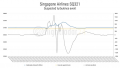
Just heard a report on the radio that the plane dropped 6000 ft in four minutes as a result of the turbulence it encountered.Brutal! They likely were the first ones into that nasty pocket of air over the tropics. I've been in planes from the old Clark AB to other bases that were bad but nothing like that. Usually there is a warning of possible turbulence ahead. In the old days the pilot(s) would say 'we have reports of' from other pilots or the controller giving time to prep before we hit it. So scary!
You're right as usual.Just heard a report on the radio that the plane dropped 6000 ft in four minutes as a result of the turbulence it encountered.
I'm actually pretty doubtful that this is the case -- severe turbulence is generally a short-lived transient event as you cross the boundaries between airmasses moving in different directions at different speeds, or encounter vertical windshear in/around convective cells. If you have sustained turbulence lasting minutes, it generally leaves you at roughly the same altitude -- air just simply doesn't have a lot of vertical space to work with. So if they really did drop that much over that long a time, I'm willing to bet that it was a deliberate and controlled action on the part of the pilots. A descent rate of 1500 ft/min for an airliner isn't extreme at all, in fact, it's on the shallow end of normal descent rates even on normal descents into an airport terminal area. The usual descent rate is intended to achieve a 3° angle of descent, which would equate to an airspeed of 28,600 ft/min, which is only 282 kts. The plane was likely cruising at nearly twice that speed, so anything up to about 3000 ft/min rate of descent would have been simply normal.
Since severe turbulence tends to be somewhat localized in altitude, the flight crew probably initiated a gentle descent to try to get underneath it and stopped the descent when it appeared they had done so. The alternative, climbing to get above it, would also have been a potential option, but if they were at a typical cruising altitude, they may not have had enough available altitude left to get above it and their climb rate would have been increasingly impacted by the thinning air.


Lt Colonel Charles "Chuck" Pitman said:If you're going to be a Marine, you've got to do what you've got to do.
| Thread starter | Similar threads | Forum | Replies | Date |
|---|---|---|---|---|
| S | Hello Everyone! Glad to Join the All About Circuits Community | General Electronics Chat | 4 | |
| J | About Parasitic Amp Draw (Battery Drain) in a passenger car. | General Electronics Chat | 22 | |
| J | Drone Hits Passenger Jet | Off-Topic | 10 | |
|
|
I am so glad I am not one minute faster | Off-Topic | 14 | |
| W | Glad I found Ya'll!! | General Electronics Chat | 15 |