Glad I'm not a passenger

nsaspook

Joined Aug 27, 2009
16,359
That thing is a mobile mental asylum filled with lunatics.
The local workers need to drive or take public transportation to a zombie land so who can blame them for not going downtown.
 
Last edited:

Thread Starter

cmartinez

Joined Jan 17, 2007
8,789
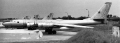
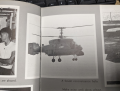
Designing and adapting the Tu-95 for its new role was a significant engineering challenge.

The most obvious was the weight and size of the nuclear reactor. Early nuclear technology was anything but compact, and the reactor, along with the shielding needed to protect the crew from radiation, added significant weight to the aircraft.
 

SamR

Joined Mar 19, 2019
5,502
What the heck were they doing down there? I read the script for the clip and it mentions Haulover Inlet! No way in hell a sub is going through that inlet even though that looks like a smaller sub! It probably couldn't even navigate under the bridge over it. Haulover is the manmade "shortcut" from the ocean to inland waters and not used by commercial vessels going into port. When they come and go from the Trident Base @ Saint Mary's it's a major security event with Coast Guard warnings to navigators and closures with armed escorts in and out of harbor.
 

WBahn

Joined Mar 31, 2012
32,946
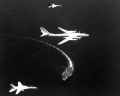
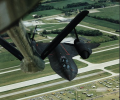
So the clip starts off telling the viewers that "the fete was dangerous enough, but performing it near one of the Soviet Unions' favorite strategic bombers was even more perplexing."

Yet we eventually learn that the the barrel rolls were performed habitually, that they were not dangerous at all, and that they were done at the request of the Soviet crews.

Talk about needless sensationalization.
 

nsaspook

Joined Aug 27, 2009
16,359
So the clip starts off telling the viewers that "the fete was dangerous enough, but performing it near one of the Soviet Unions' favorite strategic bombers was even more perplexing."

Yet we eventually learn that the the barrel rolls were performed habitually, that they were not dangerous at all, and that they were done at the request of the Soviet crews.

Talk about needless sensationalization.
I give them credit for having the actual guy explain what happened so he could explain the wild stunts both sides did (usually with agreement on both sides) during the cold war.
1712363576257.png
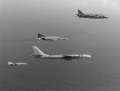
Coral Sea (CV 43) steaming in the North Arabian Sea near GONZO station. I've seen these guys come in below the radar clutter at sea. Our guys would sit right above the cockpit of the bear until the bear waved wings to depart the show.
Rules: No target radar locks or countermeasures by either side during games. Hand signals.

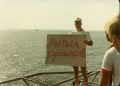
This guy got a little too close.
1712364332631.png
So our signal to him was a 'Moon' shot.
 
Last edited:

WBahn

Joined Mar 31, 2012
32,946
I give them credit for having the actual guy explain what happened so he could explain the wild stunts both sides did (usually with agreement on both sides) during the cold war.
I'll definitely give him points for that.

Coral Sea (CV 43) steaming in the North Arabian Sea near GONZO station. I've seen these guys come in below the radar clutter at sea. Our guys would sit right above the cockpit of the bear until the bear waved wings to depart the show.
Rules: No target radar locks or countermeasures by either side during games. Hand signals.
For the most part, yes. Neither side wanted an incident, and that went for the national leadership on both sides all the way down to the aircrews involved, which had much more immediate and personal motivations. Plus, the aircrews that were chosen to tease the other sides defenses and the intercept crews were usually not chosen randomly, and so the same aircrews tended to see each other repeatedly and developed a rapport with each other.

None-the-less, despite usually successful efforts by the aircrews on both sides trying to maintain a low key atmosphere, it was a serious business and both sides were trying to map out the actual protocols of the other side, and both sides wanted the other side to figure out some of those protocols while keeping other protocols close to the vest. My understanding (and I could be wrong) is that the Soviets tended to push things harder when penetrating U.S. airspace than they would when playing games with the U.S. Navy, primarily because the Navy wasn't in a position to tolerate as much of an imminent threat as a land mass could. So they would play games like not being able to understand English or the hand signals or they wouldn't quite turn to the heading they were told to. They were trying to gauge at what distance the reaction stepped up, not only because this gave them tactical planning information, but it also leaked information about the tenor of our forces, as opposed to the public statements of the politicians. But, if they pushed things hard enough, the intercepting aircraft would tone the bombers -- and the exact distance from the U.S. coast (or whatever they were trying to get near) at which this happened was one of the things that we generally didn't want them to know, so the aircrews has a min and max distance at which they would/could do this and they randomly picked a distance between those limits.

But there were times, when tensions were high (such after the Soviets shot down KAL-007) that things got more interesting. My understanding, based on what an intercept pilot told me a few years after the event, was that the first time that a Bear teased the east coast after that shoot down, the two F-15 that intercepted it immediately took up firing positions and established a radar lock -- at which point the landing gear of the Bear came down so fast that it was evident the pilot had been flying with his hand on the gear handle (extending landing gear is an internationally-recognized sign of submission).
 
Top