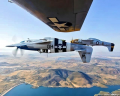
Glad I'm not a passenger

Thread Starter

cmartinez

Joined Jan 17, 2007
8,788
1701206969639.png

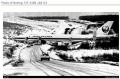
"The aircraft slid off the north side of the east-west taxiway of Anchorage International Airport while taxiing out for a takeoff on runway 06R. The Boeing weathercocked about 70° to the left and slid backward down a snow-covered embankment with an average slope of - 13°. The aircraft came to rest on a heading of 150° on a service road approximately 250 feet from, and 50 feet below, the taxiway surface."
 

WBahn

Joined Mar 31, 2012
32,935

"The aircraft slid off the north side of the east-west taxiway of Anchorage International Airport while taxiing out for a takeoff on runway 06R. The Boeing weathercocked about 70° to the left and slid backward down a snow-covered embankment with an average slope of - 13°. The aircraft came to rest on a heading of 150° on a service road approximately 250 feet from, and 50 feet below, the taxiway surface."
Impressive photo.

First thought was, "Man, how long ago was that? Look at those cars!" It was 1975.

Second thought was, "What the heck is that thing near the front of the tail?" Took a couple seconds to realize that it's the escape slide. Must have hit the rise in the ground right there and been deflected straight up. Looks like it's blocking the exit when, without it, people could probably just step out onto the ground right there. Probably not a situation the designers envisioned. Of course, there's things they could have done if they had really, really needed to use that exit. I don't know how easy it would be to detach the slide from inside (or if it is even possible, depends on if the slide is also meant to be a life raft -- that doesn't look like it). Cutting the slide to deflate it is also a possibility, but even with a very study knife, that is not the easiest thing to do -- those slides are damn tough.
 

WBahn

Joined Mar 31, 2012
32,935
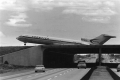
View attachment 308745

Stapleton Airport. Denver, Co.​
Yep! I seldom got out that far east on I-70, but when I did I always looked forward to approaching the runway tunnels, hoping to see a plane landing or taking off just as I approached them. Only happened a few times, but it was definitely impressive when it did.

But the best experience I had was when I was a fairly new private pilot flying eastward from Jeffco airport to Arapahoe airport, which was a bit further east and immediately south of I-70. The controllers vectored me first directly over the north-south runways at Stapleton and then over the north-south runways at Buckley ANG base. It was cool in the extreme to watch a 747 landing immediately below me as I flew over Stapleton and then the same thing with a two-ship of F-16s at Buckley -- and here I was in a little Cessna 172 puddle jumper. Would have loved to been able to video it, but that was long before the age of cell phones and Go-Pros -- that would have been in the early 1990's.
 

WBahn

Joined Mar 31, 2012
32,935
I strongly disagree, too. Thank you Hollywood for giving the Average Joe yet another firmly half-baked idea that has become firmly baked-in.

Just ask anyone that has ever tried to make an approach in a small aircraft, with an instructor right next to them telling them exactly what to do. Almost no one would be successful on their first flight (which is not to say that it hasn't happened, but the number of times it has happened is overshadowed by the number of times it has resulted in "no survivors" -- speaking of incidents were a passenger has had to take the controls for one reason or another).

Now, to some degree, large aircraft are actually easier to land than small aircraft. Their very mass makes them much less prone to being moved around by wind gusts and they are heavier on the stick. But even if they got you onto a nice, stabilized approach perfectly on the glide slope, few beginners would properly manage the flare.

With the hours I have and with an instrument rating, I think I would stand a fair chance of pulling it off, provided I had enough time to get familiar with and comfortable with the basic controls in relatively smooth air. Would probably need at least a half hour, with an hour much preferred. The real tricky part, because it couldn't be more than talked through in advance, would be the post-landing actions of bringing the aircraft to a safe stop, particularly if thrust reversers were needed. If the runway were long enough that I could just roll out with the engines pulled back to idle and then apply the brakes after it had slowed naturally, I would be much less likely to not put it off to the side of the runway when I applied the brakes.
 

nsaspook

Joined Aug 27, 2009
16,353
https://www.forbes.com/sites/ericte...in-the-middle-east-is-now-capturing-avionics/

Humphreys attributes this flaw in modern commercial avionics to the impulse to achieve the best performance in a navigation system working in “normal” (non-disrupted) operating conditions. This approach is seen in the emphasis on connected systems rather than the federated systems of the past.

“You get the connectivity when you let your guard down – when different systems accept the data they get from each other as if it was vetted.”

But in the current environment in which aviation and other navigational systems exist, expecting normal conditions to prevail is tantamount to rolling the dice.
 

WBahn

Joined Mar 31, 2012
32,935
https://www.forbes.com/sites/ericte...in-the-middle-east-is-now-capturing-avionics/

Humphreys attributes this flaw in modern commercial avionics to the impulse to achieve the best performance in a navigation system working in “normal” (non-disrupted) operating conditions. This approach is seen in the emphasis on connected systems rather than the federated systems of the past.

“You get the connectivity when you let your guard down – when different systems accept the data they get from each other as if it was vetted.”

But in the current environment in which aviation and other navigational systems exist, expecting normal conditions to prevail is tantamount to rolling the dice.
This is a tale that has played itself over and over in so many venues. The people designing a system tend to always assume that everyone plays nice and by the rules.

You would think, in this day and age, that there would be at least a few grown-ups involved that would at least consider what happens when malicious actors come into play.

I hate to think of the kinds of things the bad guys WILL dream up as autonomous vehicles become more and more prevalent. I'm willing to bet a fair amount that they will be able to trick them into doing all kinds of things they shouldn't. It's the classic case of offense vs defense. The good guys have to win every time, the bad guys only have to win once.
 
Top