Glad I'm not a passenger

WBahn

Joined Mar 31, 2012
32,934
Uh... huge difference between the two. In the first, all passengers and crew were on supplemental oxygen because the aircraft was unpressurized. In the latter, he is almost certainly on supplemental because regulations require it under certain circumstances. In the U.S. FAR 91.211 requires one pilot to be on oxygen when the aircraft is above FL350 (basically 35,000' MSL) if the cabin altitude exceeds 14,000' MSL but relaxes this if there are two pilots at the controls and both have a quick-donning mask. But, above FL410 (basically 41,000' MSL) at least one pilot to be on supplemental oxygen, which is one of the reasons that airlines generally avoid operating that high.
 

joeyd999

Joined Jun 6, 2011
6,337
Uh... huge difference between the two. In the first, all passengers and crew were on supplemental oxygen because the aircraft was unpressurized. In the latter, he is almost certainly on supplemental because regulations require it under certain circumstances. In the U.S. FAR 91.211 requires one pilot to be on oxygen when the aircraft is above FL350 (basically 35,000' MSL) if the cabin altitude exceeds 14,000' MSL but relaxes this if there are two pilots at the controls and both have a quick-donning mask. But, above FL410 (basically 41,000' MSL) at least one pilot to be on supplemental oxygen, which is one of the reasons that airlines generally avoid operating that high.
The photo I posted was a still from one of the videos of the Missionary Bush Pilot YouTube channel that I subscribe to.

His Kodiac is unpressurized, and he and his passengers are required to be on oxygen when his altitude exceeds 12,000 ft.

He operates in Papua New Guinea.
 

nsaspook

Joined Aug 27, 2009
16,353
https://nypost.com/2025/06/30/lifes...-off-tsa-alarm-at-airport-security-passenger/
Passenger flagged by TSA after ‘swamp crotch’ sets off alarm — and it’s happening to others, too

https://www.tsa.gov/news/press/releases/2025/07/08/dhs-end-shoes-travel-policy
WASHINGTON—Homeland Security Secretary Kristi Noem announced a new policy today which will allow passengers traveling through domestic airports to keep their shoes on while passing through security screening at TSA checkpoints.

The new policy will increase hospitality for travelers and streamline the TSA security checkpoint process, leading to lower wait times.

“Ending the ‘Shoes-Off’ policy is the latest effort DHS is implementing to modernize and enhance traveler experience across our nation’s airports,” said Secretary Noem. “We expect this change will drastically decrease passenger wait times at our TSA checkpoints, leading to a more pleasant and efficient passenger experience.
 

Thread Starter

cmartinez

Joined Jan 17, 2007
8,788
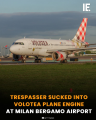
On July 8, 2025, a 35-year-old man breached security at Milan Bergamo Airport and was tragically sucked into the engine of a Volotea Airbus A319 during a pushback maneuver. The aircraft was preparing for departure to Asturias with 154 passengers and six crew, all unharmed. The victim was not a passenger or airport employee. Flight operations were suspended for nearly two hours, causing multiple cancellations and delays. Authorities have launched an investigation into how the trespass occurred.

1752107804802.png
 

Thread Starter

cmartinez

Joined Jan 17, 2007
8,788
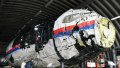
In a landmark ruling on July 9, 2025, the European Court of Human Rights (ECHR) held Russia responsible for the 2014 downing of Malaysia Airlines Flight MH17.

This historic decision marks the first time an international court has held Moscow accountable for the act.

The ECHR combined four complaints from Ukraine and the Netherlands while addressing the MH17 disaster.

The court confirmed that a Russian-supplied Buk missile shot down Flight MH17 on July 17, 2014, killing all 298 passengers and crew, including 196 Dutch nationals.


1752257297938.png
 

WBahn

Joined Mar 31, 2012
32,934
Things are definitely getting narrowed down and, I imagine, the investigation is becoming much more focused.

Accepting, for now, that one pilot did cutoff the fuel, the question becomes why? Lots of possible reasons. Did he do it accidentally, thinking he was doing something else entirely? That would jive with the report that, when asked by the other pilot why he did it, he stated that he hadn't. It could also be that the pilot that asked the question had made a similar mistake and then assumed that the action had been taken by the other pilot. In any event, there is going to be some hesitation and thought that goes into reversing the action, especially if neither pilot recalls moving them to cutoff, because the answer to why fuel was cutoff informs whether or not the action should be reversed. Sadly, at that speed and altitude, even a reasonably quick decision making loop can run the available clock out. Of course, they will also have to consider whether the action was deliberate on the part of one of the pilots with the intention of crashing the plane. I figure that that's unlikely, but it must and will be looked into.

Assuming that this cause hold up, the main questions will likely become:

(1) What caused one of the pilots to cutoff the fuel.
(2) Should the pilots have been able to restore power and prevent the crash, given the speed and altitude at which the event started?

These will then lead to a host of other considerations. Could different control layouts and/or normal procedures have prevented an inadvertent fuel cutoff in flight (keeping in might that there are situations in which the aircrew has to be able to quickly shutoff fuel to one, or even both, engines in flight)? Was it a situation that reflects a hole in pilot training, either to avoid the situation in the first place, or to recover afterward in the available window? If so, is the problem with inadequate training and procedures, or with inadequate aircrew proficiency in dealing with emergency situations. If the latter, is the problem systemic, or was it largely specific to this particular aircrew.

Unless it turns out to either have been a deliberate act, or a case of ineptitude and carelessness, I hope people will remember that these pilots had literally seconds to recognize that something was wrong, evaluate the situation, formulate a plan of action, and implement that plan. In doing so, they drew upon all of their training, their knowledge, their skills, and their instincts and they made a decision -- a decision that they so firmly believed in that they literally bet their lives (and everyone else's) on it. Before anyone condemns them (which you KNOW is going to happen), I hope we will consider whether we could (and would) really have done that much better, given that situation, that level of stress, and that time window to work within. I'm far from certain that I could have.
 

WBahn

Joined Mar 31, 2012
32,934
The odds are high IMO for mass murder/suicide.

One was the killer while the other tried to stop it.
Certainly can't rule it out, but I'll give them the benefit of the doubt until there's real evidence to the contrary. Which is not to say that I think the investigators should do so. Quite the opposite. They need to approach everything from many different angles. In some of them, they have to assume that the pilots were completely above board. In others, they have to assume that both were willing conspirators. In yet others, they have to assume the captain was the bad guy and in others that the co-pilot was. They would be being negligent if they either gave them an automatic pass or always assumed that the plane was deliberately crashed.

One of the problems for the deliberate-crash theory is going to be why they chose this method. Doing so created a window during which the plane might have been recoverable by the other pilot. Ab much surer way to do it would have been to simply nose the plane over almost immediately after take-off, giving the other pilot no change at all to do anything prior to impact.
 

WBahn

Joined Mar 31, 2012
32,934
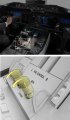
You can't bump these types of switches on/off by accident.
No, but you most certainly can get confused and turn them off when you meant to interact with a different switch. Muscle-memory will lead you to move the switches up out of the detent position without thinking about it because that is what you have done with those switches time and time again during engine shutdown. The investigators will certainly be looking for what what supposed to be happening at the time that those switches were manipulated to see how possible it was that one of the pilots was supposed to flip one set of switches and, instead, flipped these.
 

Thread Starter

cmartinez

Joined Jan 17, 2007
8,788
I keep thinking of two other (although unlikely, I must admit) possibilities:

a) A weird electrical fault, or
b) An early case of Alzheimer's or dementia

Perhaps the how of this accident has already been solved. But I think it's the why that might never be completely clarified.
 

nsaspook

Joined Aug 27, 2009
16,353
Certainly can't rule it out, but I'll give them the benefit of the doubt until there's real evidence to the contrary. Which is not to say that I think the investigators should do so. Quite the opposite. They need to approach everything from many different angles. In some of them, they have to assume that the pilots were completely above board. In others, they have to assume that both were willing conspirators. In yet others, they have to assume the captain was the bad guy and in others that the co-pilot was. They would be being negligent if they either gave them an automatic pass or always assumed that the plane was deliberately crashed.

One of the problems for the deliberate-crash theory is going to be why they chose this method. Doing so created a window during which the plane might have been recoverable by the other pilot. Ab much surer way to do it would have been to simply nose the plane over almost immediately after take-off, giving the other pilot no change at all to do anything prior to impact.
Why choose that method? For exactly the reason we are talking about it, plausible denial. A calculated act requires the least amount of swiss cheese.

My selection of deliberately crashing the plane is from the principal of least action. Sure, it could be the brain-fart from hell but muscle memory works both ways, the things you do by deliberate routine, you do perfectly, without thinking. Deviation is what makes the mind notice, as one pilot did here.
 

WBahn

Joined Mar 31, 2012
32,934
Why choose that method? For exactly the reason we are talking about it, plausible denial. A calculated act requires the least amount of swiss cheese.

My selection of deliberately crashing the plane is from the principal of least action. Sure, it could be the brain-fart from hell but muscle memory works both ways, the things you do by deliberate routine, you do perfectly, without thinking. Deviation is what makes the mind notice, as one pilot did here.
Why would someone intent of crashing the plane care whether or not they could deny trying to do it when they had a simpler and quicker option available to them that no one could have prevented?

Plus, there's been plenty of pilots, with thousands of hours of flight time, of small aircraft that have operated the flaps instead of the landing gear, or vice versa, despite the handles being shaped completely differently -- one in the shape of a wheel and the other in the shape of a flap. Similar things have happened on airliners, too.

So let's wait and see what the investigation reveals. They have access to far more information than we do.
 

nsaspook

Joined Aug 27, 2009
16,353
Why would someone intent of crashing the plane care whether or not they could deny trying to do it when they had a simpler and quicker option available to them that no one could have prevented?

Plus, there's been plenty of pilots, with thousands of hours of flight time, of small aircraft that have operated the flaps instead of the landing gear, or vice versa, despite the handles being shaped completely differently -- one in the shape of a wheel and the other in the shape of a flap. Similar things have happened on airliners, too.

So let's wait and see what the investigation reveals. They have access to far more information than we do.
I don't know why but it happens. There is nothing that I can see what would make one confuse isolated (placed low and out of normal work-flow sequence at a take-off) and guarded shut-off toggle switches (not one but TWO) at the exact time when they are critical (low probability of recovery from a two switch, total fuel switch off). Look at the flight that ended up in the drink in the IO. The Pilot could have killed them all with a nose-dive at takeoff but instead had an specific plan to evade radar and fly into infinity. Trying to make sense of the insane is a lost cause IMO. Unfortunately, I've read plenty of official death reports of suicides (mainly young Marines) while at sea as a communicator. Very few make logical sense.

I've done lots of critical procedures that become routine (HJ cryptographic code changes on tens of machine every day at Zulu time for years and years) I've never even hit the disable (slice that cards in the reader) gear button by mistake even while hungover or sick and I damn sure never lost one. The only time there have been issues with cards has been from deliberate criminal activity.

IMO the factual investigation is effectually over. Much like the I/O Pilot murder-suicide, there will always be questions and no absolute proof because those that know for sure are dead.

You can wait and I can express my opinion (not saying I'm right or wrong) on the current facts. Malice looks very likely to me.
https://www.ndtv.com/india-news/air...cide-angle-amid-air-india-crash-probe-8864239
 
Last edited:

nsaspook

Joined Aug 27, 2009
16,353

Cockpit video limited to only takeoff, landings and critical alarm sequences would be very useful in cases like Air India. I don't think that younger pilots would care much anymore, seeing how most are posting stuff on social media daily.
 
Top