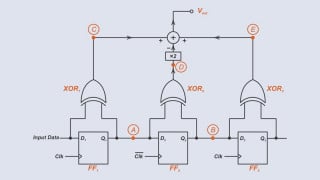
Gain Testing at 3 steps

Thread Starter

watsongrey

Joined Oct 31, 2014
94
If you test the output voltage at 3 different input voltages, the gain ratio should be the same for each step?
Does this apply to gain circuits that has mixers, parallel paths, multiple feedback paths, summing points?
will this gain test be true to test circuits for gain issues?
 

shteii01

Joined Feb 19, 2010
4,644
It sounds like you have multiple circuits. Only one of those circuits provides gain. If you want to investigate gain, you test that one circuit. If you can not test that one circuit or don't have access to that one circuit, then you are way over your head and you need to contact professional.
 

MrChips

Joined Oct 2, 2009
34,810
What he is saying, the gain should be constant over all input levels. This is true if the system is linear.
If the gain is not constant then the system is non-linear.
 

Thread Starter

watsongrey

Joined Oct 31, 2014
94
What he is saying, the gain should be constant over all input levels. This is true if the system is linear.
If the gain is not constant then the system is non-linear.


Yes,
I'm asking if parallel paths, multiple feedback paths, mixers/summing points make a linear gain circuit into a non-linear gain circuit?

Also If you didn't know if a circuit's gain is linear or non-linear. Would this "gain test" tell you if a circuit is linear or non linear?
 

Papabravo

Joined Feb 24, 2006
22,082
The gain test only deals with one aspect of linearity. Go back to the definition and see if you can figure out what else is required. There is no progress without struggle.
 

Thread Starter

watsongrey

Joined Oct 31, 2014
94
Gain Testing at 3 steps:
You inject a voltage on the input of an unknown circuit and measure the output voltage, you raise the input voltage twice as much and then measure the output voltage, now lower the voltage to half of what the input voltage you started with and now measure the output voltage.

The unknown circuit can have multiple parallel paths, mixing/summing input/output points/, feedback paths

How would you know if this unknown circuit is linear gain or non-linear gain?
 

Papabravo

Joined Feb 24, 2006
22,082
The name is all lower case. Can't be Billy....
I'd prefer a bot with Alzheimer's disease that keeps repeating itself.
 

Papabravo

Joined Feb 24, 2006
22,082
Your gian test does not provide a basis for drawing any conclusions about weather the circuit is linear, or the gain is linear, or much of anything else. It just gives you three datapoints and that is all. What were you expecting? Magic beans?
 

Thread Starter

watsongrey

Joined Oct 31, 2014
94
If you had unknown circuit boards that you're testing, how would you know if the gain is linear or non-linear, what kind of gain test would you do please?
 

Papabravo

Joined Feb 24, 2006
22,082
I don't think testing unknown boards is something I would do. If I did not understand the design and had no schematic I don't think it would make much difference what I did. Testing strategies have always come from a deep understanding of the underlying design. What you seem to be doing is outside of my experience. Just because you want there to be something you can do doesn't mean that there is. What do you do with a board that has an unmarked blob with an undocumented custom chip inside from an unknown manufacturer? You throw it away.
 

vk6zgo

Joined Jul 21, 2012
677
Say, you increase the input level by 3dB, and the output increases by 3dB .
If you do this over a number of steps,it will give you an indication of the linearity of the DUT.

It is the sort of test you would do with a piece of equipment which is in service,just to see if it has any gross anomalies.rather than to characterise a new piece of equipment.

If it's designed to exhibit non-linearity,or is faulty,this should still be evident from the test.

A better test would increase the number of test levels.& use a Spectrum Analyser to determine the level of any distortion products.

No matter what circuitry is inside the DUT,if it has a single input port & a single output port,& you have an understanding of what it is supposed to do,you can test it.

If it has,say, 50 Ohm input & output connectors,plus power supply connections,it is probably an active RF device---same input & output connectors & no power supply connections,-------it is a passive RF device.
 

Thread Starter

watsongrey

Joined Oct 31, 2014
94
Say, you increase the input level by 3dB, and the output increases by 3dB .
If you do this over a number of steps,it will give you an indication of the linearity of the DUT.


Yes
You increase the input level by 3 db each time and if the output increase by 3dB the circuit is linear
But if the circuit has multiple parallel paths, mixing/summing input/output points/, feedback paths the output's voltage/gain won't be linear?
The multiple parallel paths, mixing/summing input/output points/, feedback paths makes a voltage/gain linear circuit into a non linear circuit?
 
Top