Facebook
 Google
 GitHub
 Linkedin

Hi,
I read yesterday about fluid lens that is controlled by a voltage source. I mean applying a voltage you can change a focal length what means you can "zoom" an image. It's used in indsutry because it's quite fast but it's not about I'd like to ask.
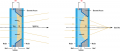
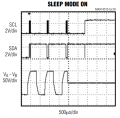
Water (H2O) can be attracted od repelled by a voltage source. It's a famous physical experiment, you can see here on YouTube. The thing that's obvious for me, a water is attracted by STATIC voltage source and that's what a man in the video says. However, I've found in Fluid Lens Datasheet recommended Luquid Lens Drivers such HV892DB1 or MAX14574. Both of them can generate about 60 Volts at output, but everywhere it's written it's 60 V Rms and it's sound like it is AC Voltage, not DC (Static) Voltage. Even in Maxim datasheet there's a chart that presents turning on sleep mode and there's visible Va-Vb (output voltage) and it's like 50V AC not DC.
Can anyone explain why in dedicated Drivers, a voltage that controls fluid lens is AC not DC? Did I miss something?
I read yesterday about fluid lens that is controlled by a voltage source. I mean applying a voltage you can change a focal length what means you can "zoom" an image. It's used in indsutry because it's quite fast but it's not about I'd like to ask.
Water (H2O) can be attracted od repelled by a voltage source. It's a famous physical experiment, you can see here on YouTube. The thing that's obvious for me, a water is attracted by STATIC voltage source and that's what a man in the video says. However, I've found in Fluid Lens Datasheet recommended Luquid Lens Drivers such HV892DB1 or MAX14574. Both of them can generate about 60 Volts at output, but everywhere it's written it's 60 V Rms and it's sound like it is AC Voltage, not DC (Static) Voltage. Even in Maxim datasheet there's a chart that presents turning on sleep mode and there's visible Va-Vb (output voltage) and it's like 50V AC not DC.
Can anyone explain why in dedicated Drivers, a voltage that controls fluid lens is AC not DC? Did I miss something?