Fase Dimming with MOSFET. VOLTAGE dip?

Thread Starter

Daan1997

Joined Sep 13, 2017
16
Hello,

Iam currently designing a mosfet fase dimmer. The dimmer has to dim LED drivers (which are specified for fase dimming) but for ease i have some hallogen light bulbs connected.

The design should have a minimum current of 4A. When iam switching a cold rectified mains signal with a mosfet i get voltage/current dips over the output. I have tried a small snubber but that didn't make a visual change. The whole system is connected to a variac because of the galvanic isolation while testing. If i test outside the variac the automatic fuses turn off all the power. Currently i use a Toshiba K9J90E.

When iam switching like 20 watts nothing happens and it works like it should. When i raise the power to like 50 watts the voltage drop happens and confuses my zero cross detection.

Does someone know how i can resolve these voltage dips?
Do i need to add a way bigger snubber? Do i need to use a inductor coil to smooth out the current with a diode (So the current can flow through the inductor itself while the switch is closed)?


Thank you,

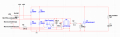
(the schematic is just a visualization of how i made my circuit. Some components could be different from the onces in the schematic.)
(the 4 diodes are in one package, U4 is a mosfet driver, the optocoupler is not a 4n25 and the mosfet is a Toshiba K9J90E)
(the snubber was optional and values gambled)
 

Attachments

Last edited:

bertus

Joined Apr 5, 2008
22,931
Hello,

Where does the 12 Volts come from?
It must be isolated from the mains.
Where is the zero crossing detection done?
What is the load?
Is it inductive?

Bertus
 

Thread Starter

Daan1997

Joined Sep 13, 2017
16
Hi Bertus,

#The 12V comes from a lab bench power supply.
As far as i know the ground should connect. This is wrong?
#The zero crossing is done over the line voltage. This is done over the switching device and the load. (other schematic but not relevant to the switching dips) (optocoupler with resistor and internal timer in the uController (yes timing is right)).
#The load is not the same everytime because all kinds of led drivers will be connected. Depending on the led's that need to be testen. But they are all as far as i know LC drivers at 220-240 VAC 0,17A (but the whole circuit has to switch at least 4A (because multiple drivers in parallel)).

Daan
 

Thread Starter

Daan1997

Joined Sep 13, 2017
16
Maybe my explanations where a bit unclear.
These voltage dips are over the mains voltage. So 230VAC. Not over the driving circuitry and not caused by the zero crossing.
If i take out the zero crossing and just pwm mains voltage this voltage dip occurs too.

Bump

Stil have the problem

Nobody? :(
 
Last edited by a moderator:

panic mode

Joined Oct 10, 2011
5,011
zero crossing is integral part of design. without seeing it we cannot comment on it.
what do you mean when you say "mains voltage dip"? mains is supposed to be SOLID...
if it is not, you have a problem with wiring in your house or utility company.... or your zero detect circuit is messed up (in series with load?)
 

Thread Starter

Daan1997

Joined Sep 13, 2017
16
The whole system is connected to a variac because of the galvanic isolation while testing. If i test outside the variac the automatic fuses turn off all the power.
The dip is because of the galvanic isolation from the variac (big inductor). If i connect it directly to the mains the fuses blow out.

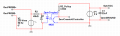
Below you can see a schematic of the zero cross detector. It doesn't detect it precisely on the zero cross point but the PSoC controller uses a precise timer to count up to that point. I have tested this seperate of the switching and this works. (i also tried with a extra 1,7MOhm resistor between the controller and the optocoupler).

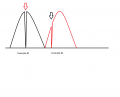
On the other image i quickly draw what is seen on the oscilloscope over the input voltage. Yes the mains is solid, But not over a variac i guess? It is supposded to operate directly onto the mains voltage but because of prototyping we put it temporarly on a variac on 230V.
 

Attachments

panic mode

Joined Oct 10, 2011
5,011
variac is not providing galvanic insulation. did you ever consider that your variac may be a problem? (loose connection, poor contact).

you fail to provide information how this fits together, how (where) you measure voltage etc. that graph is NOT mains (it is not a sine wave, that is pulsing DC). connecting scope as you do will likely blow something up... (is your scope galvanically isolated from mains?)
 

Attachments

Last edited:

Thread Starter

Daan1997

Joined Sep 13, 2017
16
did you ever consider that your variac may be a problem?
Yes. Without the variac the bench's fuses blow out.

how (where) you measure voltage etc
In the zero crossing detection schematic i put 2 connectors called OSCProbe+ and OSCProbe-

that graph is NOT mains
They are a drawn example of 2 positive waves. NO its not a full sine wave but twice half a period. Thats why i call them Example #1 and Example #2.


(Setting my oscilliscope up etc takes allot longer)

the problem.
#1 Mosfet switching rectified mains through a variac on 230VAC -> Voltage drops over the full 230VAC on the output of the Variac.
#2 Mosfet switching rectified mains without a variac in between on 230VAC -> Hughe current from the mains that blows the fuses while switching.

mosfet full open or full closed? No voltage drop/ high currents.
mosfet in switching? voltage dip/high currents.

The zero crossing has nothing to do with the bad switching. Why? Because just PWM'ing the sine wave has the same switching results.

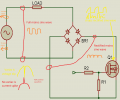
Below another image....
 

Attachments

Thread Starter

Daan1997

Joined Sep 13, 2017
16
Hello ppl.

An update. The osciloscope was the problem. For some reason when it was turned on it would blow the fuses downstairs. When i put my circuit on the mains and not through a variac it would blow the fuses but if the osciloscope was on the variac it worked. Bas osciloscope
 
Top