Experimenting with Voltage Regulators

MisterBill2

Joined Jan 23, 2018
27,684
Using a step-down transformer is usually the most efficient scheme,but sometimes the most expensive choice. And only in a recent post did I see that the drop was from 5 volts to 1.5 volts, while earlier I saw comments about a "huge voltage drop", but no mention of what it would be. Unfortunately, it may be that the LM317 is not a good choice for a low supply voltage and lower output voltage. I have not seen any application where it had a supply voltage less than 12 volts. There may be a problem as the reason for that.
 
Interesting ideas. I may add a wire transformer as well to drop down to 1.5V directly.
- The thing is, for all of them, I dont have them, for the task specific of 1.5V drop. And the drop is not that high, is from 5V DC and in my head it should have worked with my LM317. On another hand, I dont have the knowledge to build buck converters specifically to 1.5V. And if you tell me to buy them, well, I will a few in the future, since I have none in my hands, but it will be very cool to be able to build them as well, from a lot of scrapped components I have.
- I never heard of off-line switcher ! This is my first encounter with them. Or [off line regulator] in wikipedia pages where I read a very short description and by "off the mains voltage line" part of their explanation I believe they refer to the off as "from" or "directly" mains voltage line. Very interesting and is a chip. It will be interesting to be able to build circuits with them.
If you are going from 5Vdc to 1.5Vdc, there are many suitable buck converter chips available. An off-line switcher would be more suitable to 115-240 VAC conversion to a lower DC voltage. The circuits for most switch mode power supply (SMPS) are a bit more complex and are most easily built with a dedicated chip used to control the SMPS rather than from scratch. If the 1.5Vdc you need is low current, (under 100mA ??) then the linear regulator approach is usable although not power efficient. Also - EBay is your friend for getting components on the cheap IMO.
 

Thread Starter

q12x

Joined Sep 25, 2015
2,227
Brain fade... The circuit will let the current be set to 4A. There will be some complications at that current.
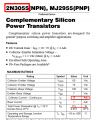
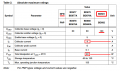
not 4 but 15A for 2N3055(NPN) ! And the power is very high. I do NOT have this tr !
1705434353217.png1705434545692.png
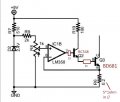
Unfortunately the biggest and strongest I have is a darlington BD681 ! (see picture) @ 40W and THIS is at 4A as your description. 4A is the maximum, this means somewhere around 3 and something Amps in reality.
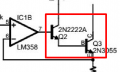
Being a darlington I can (most probably) replace these 2: 1705434729297.png with only 1x BD681 ! Is my thought. I can add a bc547 instead of that 2N2222 if it really needs one, no problem.

If the 1.5Vdc you need is low current, (under 100mA ??) then the linear regulator approach is usable although not power efficient.
No, I need 1A to 1.3A at 1.5VDC.
From what I understand your off-line switcher is rectifying AC into DC and also regulating to a lower voltage. But in my case here I have a 5VDC, so your off-line switcher will not work. Will work to make a new power source with it. Again, it is a very new component for me. Can I make a 1.5V at 1.3A with one off-line switcher ? Down from 240VAC mains? Very interesting if it can !
Also, put here your recommendations of the chips you use (or used) for your off-line switcher that you made. Also a circuit with that chip as well. If you want of course. Im always interested in new things to learn and make !
 

dl324

Joined Mar 30, 2015
18,386
not 4 but 15A for 2N3055(NPN) ! And the power is very high. I do NOT have this tr !
The maximum current is set by the 1k pot and the 0.2 ohm sense resistor, so the maximum current that can be set is 0.8V/0.2 ohms = 4A. The transistor I selected has some head room. At 10A, the beta for 2N3055 drops to 5. That's going to make Q2 work hard.
Being a darlington I can (most probably) replace these 2:
1705434729297.png
with only 1x BD681 ! Is my thought. I can add a bc547 instead of that 2N2222 if it really needs one, no problem.
The problem with a traditional Darlington is that it will increase the voltage drop. I chose a split Darlington configuration so that the power transistor can saturate if needed.

You're going to have problems with a traditional Darlington if you're going to use the current sink on a 1.5V supply.

I breadboarded the circuit and used 2N3442 instead of 2N3055 because it was handy. I also substituted a generic house marked NPN for the 2N2222. The higher current capability of the 2N2222 is only needed for higher currents when the power transistor beta drops.

I tried a couple amps on a 1.5V supply, but I only monitored current; not what Q2 was doing.
I can add a bc547 instead of that 2N2222 if it really needs one, no problem.
BC547 isn't much better than the generic NPN I used. Maximum collector current is 100mA and that won't be high enough if the power transistor wants to saturate.
 
Last edited:

Thread Starter

q12x

Joined Sep 25, 2015
2,227
I put 5*1ohm resistors in // (paralel) to obtain that 0.2R for R6.
I also added some protection 1k resistors in the base of each tr. Especially for BC548 that gets full output voltage of ~8-9V when LM358 output is High.
If you see anything that must be corrected, tell me now.
Screenshot_2.jpg
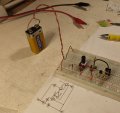
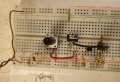
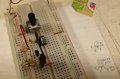
20240116_231341.jpg20240116_231358.jpg20240116_231451.jpg
-What next from this point?
I guess, to make the LM317 voltage regulator cct and test it with this load. This means I will have to use a secondary breadboard for that cct. Also powered from 5V as before. I believe.... the negative rails from both circuits must be connected to be at the same 0V potential, correct? And the Colector of BD681 is the LOAD input for LM317 LOAD positive rail, while both grounds are connected together. Is how I see it... correct me if Im wrong. This is the first time Im making such circuit !
 

dl324

Joined Mar 30, 2015
18,386
If you see anything that must be corrected, tell me now.
The extra resistors are unnecessary and will affect circuit operation adversely.

Q2 isn't needed if Q3 is a Darlington.
I believe.... the negative rails from both circuits must be connected to be at the same 0V potential, correct?
Yes
And the Colector of BD681 is the LOAD input for LM317 LOAD positive rail, while both grounds are connected together.
Yes, and the power transistor should be on a heat sink.
 

dl324

Joined Mar 30, 2015
18,386
you dont think the applied voltage over the open base's will fry the transistors?
No. The opamp output will only be high enough to support the desired sink current.

Actually, the opamp will try to set its output to whatever voltage is required to make the input differential voltage zero.
 

Thread Starter

q12x

Joined Sep 25, 2015
2,227
BC547 isn't much better than the generic NPN I used. Maximum collector current is 100mA and that won't be high enough if the power transistor wants to saturate.
these are all my brand new tr I have. You choose something more -enough- for the power tr to saturate.
1705443744583.png
 

dl324

Joined Mar 30, 2015
18,386
these are all my brand new tr I have. You choose something more -enough- for the power tr to saturate.
View attachment 312890
The current required from Q2 depends on the sink current and the collector-emitter voltage of Q3. When current in Q3 increases, its beta drops for currents above a few hundred mA (for 2N3055). It also drops as Vce decreases.

2N3904 has a max collector current of 200mA (why don't your two 2N3904 have the same maximum current?) and will be better than BC548 (why are your BC549 marked BC548?). I chose 2N2222 because it's rated for 800mA.

If you're using a Darlington for the power resistor, you don't need Q2. But you're going to have problems with the collector-emitter voltage if you're testing 1.5V supplies.

BTW, I suggest that you set the pot to its minimum value until you connect a supply to be tested. Otherwise, Q2 will try to supply enough current through the sense resistor to make the opamp's input differential voltage zero.
 

LowQCab

Joined Nov 6, 2012
5,101
.................. What next from this point?
I guess, to make the LM317 voltage regulator cct and test it with this load.
This means I will have to use a secondary breadboard for that cct.
Also powered from 5V as before. I believe.... the negative rails from both circuits must be connected to be at the same 0V potential, correct? And the Colector of BD681 is the LOAD input for LM317 LOAD positive rail, while both grounds are connected together. Is how I see it... correct me if Im wrong. This is the first time Im making such circuit !
.
The LM317 may drop as much as ~2 to ~3 Volts before regulation starts,
this makes it almost unusable for a 5-Volt Power-Supply Input-Voltage.
.
.
.
 

dl324

Joined Mar 30, 2015
18,386
I dont have the knowledge to build buck converters specifically to 1.5V
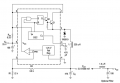
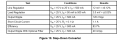
MC34063A switching regulators are often used in inexpensive items. It's an old design and has a lot of output ripple compared to newer switching regulators.

You could modify the voltage divider consisting of R1 and R2 to change the output voltage. The junction of R1 and R2 will be at 1.25V. If you change R2 to 1/5 of R1, that will set the output voltage to 1.5V.
1705462570073.png

1705462737317.png
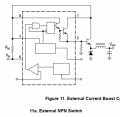
The regulator can provide up to 1.5A. Add an external pass transistor for higher current.
1705462989547.png
 

crutschow

Joined Mar 14, 2008
38,549
To avoid the 2-3V drop across LM317, you can use an LDO (Low Drop Out) type.
For example, the LM1117 800mA regulator has a dropout of 1.2V.
Others are available with even lower dropout.
 

Thread Starter

q12x

Joined Sep 25, 2015
2,227
The LM317 may drop as much as ~2 to ~3 Volts before regulation starts,
this makes it almost unusable for a 5-Volt Power-Supply Input-Voltage.
If it was unusable for 5V, then I should not have got the 1.5V after it's output !
Please remember that the regulator works fine for very low currents, like less than 100mA, but as long as I increase the CURRENT - not the Voltage!!! - it starts to heat up and the output is fading in voltage as the current increases. It is having a threshold that I didnt find it yet. Thats why Im trying the current variator with @dl324 to "hopefully" pinpoint exactly this threshold or at least the range when is working fine and when is not. It is not keeping a strong 1A at 1.5V like others who experiment it, but it is dropping the voltage on the LOAD (or Vout) to Gnd to 0.52V in my last test in #48
 

Thread Starter

q12x

Joined Sep 25, 2015
2,227
MC34063A switching regulator
I know its the internal diagram of the MC34063A IC !
but all those circuits you show, can I make it from discrete components I have around? It looks like I could. Im asking first.
Its a very interesting cct !
In your pictures, Vin is 25V (not AC or DC)... hmm... I need Vin ~240VAC.
I always had problems understanding and making L - bobbin/coil and its (most probably) ferrite special shape core.
I also have a lot of scrapped L's (coils and transformers) from other SMPS's - cheap and expensive.
But if the coil can be made manually with your help... then everything else looks fine to me. I should probably take some ICs to smallify the space but until then I am up for a discrete component "blow up" and exposed cct like those in the pictures.
Very cool indeed.
 

LowQCab

Joined Nov 6, 2012
5,101
If it was unusable for 5V, then I should not have got the 1.5V after it's output !
Please remember that the regulator works fine for very low currents, like less than 100mA,
but as long as I increase the CURRENT - not the Voltage!!! -
it starts to heat up and the output is fading in voltage as the current increases.
It is having a threshold that I didnt find it yet.
Thats why Im trying the current variator with @dl324
to "hopefully" pinpoint exactly this threshold
or at least the range when is working fine and when is not.
It is not keeping a strong 1A at 1.5V like others who experiment it,
but it is dropping the voltage on the LOAD (or Vout) to Gnd to 0.52V in my last test in #48
.
You are describing the exact reasons why an LM317 is not workable with a 5-Volt Input-Voltage.
It doesn't matter if it kinda-sorta-works at 100ma, because it WON'T work at 1.5-Amps.
An LM317 Input-Voltage needs to be AT LEAST ~3-Volts above the expected Output-Voltage.
Some models will be slightly more, and others will be slightly less.
And, it will definitely change when it gets Hot.
.
.
.
 
Top