ESD clarification

Thread Starter

nightswim

Joined Jan 28, 2024
14
Hey there for hobby synth circuit building looking for some advice regarding ESD , I have a table with an unfinished plywood top and metal legs , on a wood floor, with an ESD mat and wrist strap, what would be the best bet for a chair just be unfinished wood? This is also probably a silly question but if I'm on a wood table and the mat Isnt the full size of the table but I'm at the same potential as the mat via a wrist strap it doesnt matter if I the mat is smaller than the table right just keep the parts on the mat and I'm good to go ?

For storing stuff is using metal out ESD bags in a regular plastic bin from a big box store is fine ? Just transport it to the desk in the ESD bag and open the bag once I have the wrist strap on and ESD bag on the mat to dissipate the charge form walking over ?

Thanks !
 

dl324

Joined Mar 30, 2015
18,326
Welcome to AAC!
what would be the best bet for a chair just be unfinished wood?
If you're using a mat and strap that are connected to earth ground, or each other, it doesn't matter what the chair is made of. It's relative voltages that you need to be concerned about. If you and the mat are at the same potential, there's no ESD risk to components you're touching or are on the mat.
if I'm on a wood table and the mat Isnt the full size of the table but I'm at the same potential as the mat via a wrist strap it doesnt matter if I the mat is smaller than the table right just keep the parts on the mat and I'm good to go ?
As long as the components are on the mat or you're touching them, they're okay.
For storing stuff is using metal out ESD bags in a regular plastic bin from a big box store is fine ?
You should be thinking in terms of relative voltages. When the parts are in ESD bags, the static dissipative property of the bags will protect the components from damaging discharges.
Just transport it to the desk in the ESD bag and open the bag once I have the wrist strap on and ESD bag on the mat to dissipate the charge form walking over ?
You should only handle components in an ESD safe way. That doesn't require the use of ESD mats or straps. It just requires that you prevent the build up and discharge of charges high enough to cause damage.
 

Ya’akov

Joined Jan 27, 2019
10,235
Welcome to AAC.

You might be making more of the ESD problem than is warranted. While CMOS devices are definitely very vulnerable, in the absence of bas conditions (e.g.: flooring or carpeting favorable to triboelectric charging, very low humidity, some unfortunate choice for a benchtop, &c.) effective ESD protection is not very hard.

The key elements are:

  • Controlled humidity—this might be hard in winter when the cold outdoor temperatures lead to depletion of the moist in the indoors air. Ideally, you want about 50% but it is really a concern when it drops to ~20% or less. It’s a health concern as well!

  • Avoid synthetic fiber clothing, carpet, and cloths as well as non-conducting plastic work surfaces. Your wooden bench is fine, and even if you only have a mat big enough to work on its fine.

  • A good, low impedance earth ground—mitigation depends of this, and you can’t assume the green wire in your outlet is appropriate. If you test the path to ground via the outlet and find it wanting, you‘ll need to work out your own. This isn’t too hard—unless you are on an upper floor. It gets more and more difficult the higher up you get, but you might be able to leverage the cold water system, if you have metallic pipes and not PEX.

  • Your work mat needs to be grounded, as does your wrist strap. However both need to be grounded through a 1MΩ resistance! Do not make a direct connection to ground—particularly for the wrist strap. Generally, I advise not to wear a wrist strap except when working with very vulnerable components like CMOS, RAM, &c. Instead, discharge yourself by touch something grounded before you start to handle parts.

  • Make sure your soldering iron‘s tip is grounded.

  • Wrist strap safety is very important. As I said above, the connections to earth need to be through a large resistance—1 megohm is standard. This is because if the connection is low impedance a momentary lapse could mean mains or higher voltage finding earth though you. The resistor limits the current to something very safe it such a mistake is made.

  • Testing the connection is also important. In industrial settings, a tester is always present and confirming the proper resistance is in place is required. Unfortunately, though hobbyists lack the economy of scale, we still have the requirements for safety. A commercial tester is expensive, but you might find one on eBay cheap—it’s worth looking. Failing that you can use a DMM by measuring from the back of the snap on the band to the banana plug at the end of the strap.

    You should see about 1MΩ of resistance for a good strap. I just looked around the web to see what advice was being given, very sadly the testing was framed as for the protection of the devices, not the user. There was not even any mention of the hazard of connecting yourself to ground like that. Very unsettling.

You can informally survey your room and furniture by trying to get static shocks on items like the bench, Alternatively, you can talk a small neon bulb (NE2) and use it to check for discharge—this hurts less, and you can buy devices cheaply that are just this, an NE2 in a clear tube with metal caps on the ends.

If you are finding a lot of discharges you need mitigation and protection. If not, just take the normal precautions such as discharging yourself before handling things, using a mat, and wearing a wrist strap when dealing with sensitive components. And, apparently, don’t count on advice from the general web to be useful—my brief survey of articles on ESD related topics on semi-technical sites proved depressing.
 

Thread Starter

nightswim

Joined Jan 28, 2024
14
Awesome I appreciate everything I have one of those weird leviton outlets with no central screw just the mounting screws at that top from installing them I believe it's all one big plane the mounting ears and the ground bus, would the best way to test the screws suitability as a place to attach a ring terminal for the mat be to check continuity between the ground "hole" in the receptacle and the mountig screw ? If so would it be sufficient to use as a point to attach the mats ring terminal ?

You should only handle components in an ESD safe way. That doesn't require the use of ESD mats or straps. It just requires that you prevent the build up and discharge of charges high enough to cause damage
So in regards to this even if they are in regular old plastic boxes as long as they are in static shielding bags when I go to get them and are placed on the mat and I make sure I'm at the same potential of the mat before opening and handling them I'm good to go ?

Once open on the mat should they be handled any specific ways? Touching all the pins or by the plastic body for ICs

Are there any preferences for metal in vs out static shielding bags ?
 

Thread Starter

nightswim

Joined Jan 28, 2024
14
Welcome to AAC.

You might be making more of the ESD problem than is warranted. While CMOS devices are definitely very vulnerable, in the absence of bas conditions (e.g.: flooring or carpeting favorable to triboelectric charging, very low humidity, some unfortunate choice for a benchtop, &c.) effective ESD protection is not very hard.

The key elements are:

  • Controlled humidity—this might be hard in winter when the cold outdoor temperatures lead to depletion of the moist in the indoors air. Ideally, you want about 50% but it is really a concern when it drops to ~20% or less. It’s a health concern as well!

  • Avoid synthetic fiber clothing, carpet, and cloths as well as non-conducting plastic work surfaces. Your wooden bench is fine, and even if you only have a mat big enough to work on its fine.

  • A good, low impedance earth ground—mitigation depends of this, and you can’t assume the green wire in your outlet is appropriate. If you test the path to ground via the outlet and find it wanting, you‘ll need to work out your own. This isn’t too hard—unless you are on an upper floor. It gets more and more difficult the higher up you get, but you might be able to leverage the cold water system, if you have metallic pipes and not PEX.

  • Your work mat needs to be grounded, as does your wrist strap. However both need to be grounded through a 1MΩ resistance! Do not make a direct connection to ground—particularly for the wrist strap. Generally, I advise not to wear a wrist strap except when working with very vulnerable components like CMOS, RAM, &c. Instead, discharge yourself by touch something grounded before you start to handle parts.

  • Make sure your soldering iron‘s tip is grounded.

  • Wrist strap safety is very important. As I said above, the connections to earth need to be through a large resistance—1 megohm is standard. This is because if the connection is low impedance a momentary lapse could mean mains or higher voltage finding earth though you. The resistor limits the current to something very safe it such a mistake is made.

  • Testing the connection is also important. In industrial settings, a tester is always present and confirming the proper resistance is in place is required. Unfortunately, though hobbyists lack the economy of scale, we still have the requirements for safety. A commercial tester is expensive, but you might find one on eBay cheap—it’s worth looking. Failing that you can use a DMM by measuring from the back of the snap on the band to the banana plug at the end of the strap.

    You should see about 1MΩ of resistance for a good strap. I just looked around the web to see what advice was being given, very sadly the testing was framed as for the protection of the devices, not the user. There was not even any mention of the hazard of connecting yourself to ground like that. Very unsettling.

You can informally survey your room and furniture by trying to get static shocks on items like the bench, Alternatively, you can talk a small neon bulb (NE2) and use it to check for discharge—this hurts less, and you can buy devices cheaply that are just this, an NE2 in a clear tube with metal caps on the ends.

If you are finding a lot of discharges you need mitigation and protection. If not, just take the normal precautions such as discharging yourself before handling things, using a mat, and wearing a wrist strap when dealing with sensitive components. And, apparently, don’t count on advice from the general web to be useful—my brief survey of articles on ESD related topics on semi-technical sites proved depressing.
I believe that mat I have is like this https://elimstat.com/products/mat-kits/

I will make sure to check from the snap on the back of the strap to the end of banana jack where it plugs into that little black unit on the snap for about 1 meg ohm

What would be the best way to check the viability of the outlets path to ground to make sure it's suitable ?

I'll be ordering a haako 951 soldering iron I think I believe the cartridge tips are grounded if I remember correctly from a tear down video
 

dl324

Joined Mar 30, 2015
18,326
would the best way to test the screws suitability as a place to attach a ring terminal for the mat be to check continuity between the ground "hole" in the receptacle and the mountig screw ?
That's one way. Another is to use an outlet wiring tester.
If so would it be sufficient to use as a point to attach the mats ring terminal ?
If it's actually grounded.
So in regards to this even if they are in regular old plastic boxes as long as they are in static shielding bags when I go to get them and are placed on the mat and I make sure I'm at the same potential of the mat before opening and handling them I'm good to go ?
If you're wearing a ground strap, placing them on the mat isn't necessary.
Once open on the mat should they be handled any specific ways? Touching all the pins or by the plastic body for ICs
I generally avoid touching leads as much as possible. If the package is large enough (e.g. 0.6" wide DIP), I avoid touching the leads.
Are there any preferences for metal in vs out static shielding bags ?
I'm not sure what you mean by metal in or out. The antistatic coating on the bags only does good if it's on the inside.

I need to do some research to find out if the antistatic properties are permanent. I suspect they're not.

I have had some bad experiences with black antistatic foam and have a number of components from the 70's-80's that have corroded leads because of the foam. I removed them from the foam, scraped bits of foam and corrosion off the leads, put them in antistatic bags, and put them back in the plastic drawers. I had a dozen or so components that had most of their leads gone.

I put all of the microprocessor related chips and some clock chips in antistatic tubes.

One last thing. Regular tape can generate static electricity. I bought a dozen or two rolls of antistatic tape to use on antistatic bags.
 

Thread Starter

nightswim

Joined Jan 28, 2024
14
That's one way. Another is to use an outlet wiring tester.
If it's actually grounded.
If you're wearing a ground strap, placing them on the mat isn't necessary.
I generally avoid touching leads as much as possible. If the package is large enough (e.g. 0.6" wide DIP), I avoid touching the leads.
I'm not sure what you mean by metal in or out. The antistatic coating on the bags only does good if it's on the inside.

I need to do some research to find out if the antistatic properties are permanent. I suspect they're not.

I have had some bad experiences with black antistatic foam and have a number of components from the 70's-80's that have corroded leads because of the foam. I removed them from the foam, scraped bits of foam and corrosion off the leads, put them in antistatic bags, and put them back in the plastic drawers. I had a dozen or so components that had most of their leads gone.

I put all of the microprocessor related chips and some clock chips in antistatic tubes.

One last thing. Regular tape can generate static electricity. I bought a dozen or two rolls of antistatic tape to use on antistatic bags.
Awesome yeah I bought zip lock style anti static bags with the like snap together style closure ,oh static shielding bags metal out is closer to the outside metal in its closer to the inside seems everyone uses metal in so I'll stick with that.

Would the outlet wiring tester help with if that screw is grounded or not though or just if the outlet itself is wired properly ?


And about the plastic storage by boxes doesn't matter if they are esd safe or not as long as the bags the ICs are in inside the boxes are esd shielded ?


I wouldn't be wearing the grounding strap while I go get them but I'm assuming it still wouldn't be needed to place them on the mat first because if I sit down holding them and attach myself to the grounded wrist strap then the bag of components and I are at the same potential anyway right ?

Thanks !
 

Ya’akov

Joined Jan 27, 2019
10,235
What would be the best way to check the viability of the outlets path to ground to make sure it's suitable ?
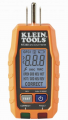
As @dl324 suggested, an outlet tester is probably sufficient. I really like this one, from Klein. The kit comes with an excellent NCV (Non Contact Voltage detector) that includes a low voltage range—you can also get it alone, though the NCV tester is good to have.

1706549671221.png

I'll be ordering a haako 951 soldering iron I think I believe the cartridge tips are grounded if I remember correctly from a tear down video
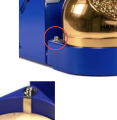
The FX-951 is an excellent station, I have one. It is properly grounded but be sure to ground the iron holder's tip cleaner—there is a screw on the left side that holds a contact that connects to the container of the bronze wool. The holder is electrically isolate from the main unit and isn't grounded other wise.


1706550748911.png
grounding screw (top), exposed contact (bottom)


Thread Starter

nightswim

Joined Jan 28, 2024
14
As @dl324 suggested, an outlet tester is probably sufficient. I really like this one, from Klein. The kit comes with an excellent NCV (Non Contact Voltage detector) that includes a low voltage range—you can also get it alone, though the NCV tester is good to have.


The FX-951 is an excellent station, I have one. It is properly grounded but be sure to ground the iron holder's tip cleaner—there is a screw on the left side that holds a contact that connects to the container of the bronze wool. The holder is electrically isolate from the main unit and isn't grounded other wise.


View attachment 313909
grounding screw (top), exposed contact (bottom)


Would running a wire with a ring terminal on each side to a screw on the outlet plate be sufficient to ground that iron holes properly ?
I have that exact tester if that says my ground is good and there is continuity from the ground hole to the mounting screw on the receptacle plate I'm good to use that screw to attach my ring terminal for the mat and iron holder ?

The mat that I bought from elimstat has a 1 meg ohm resistor listed in the specs for the wire with the ring terminal/wrist strap soi should be good there ?

Thanks for the help so far
 

Ya’akov

Joined Jan 27, 2019
10,235
Would running a wire with a ring terminal on each side to a screw on the outlet plate be sufficient to ground that iron holes properly ?

I have that exact tester if that says my ground is good and there is continuity from the ground hole to the mounting screw on the receptacle plate I'm good to use that screw to attach my ring terminal for the mat and iron holder ?
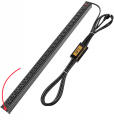
That should work well enough. I make my ESD ground using the screws that hold the end caps on to the aluminum extrusion that makes up the housing of the 48” power strip that is the main power on the bench. I find this convenient because the ground wire can be short and doesn‘t have to leave the bench. You could try something similar—but the plate screw should be
fine.

1706559924551.png
The mat that I bought from elimstat has a 1 meg ohm resistor listed in the specs for the wire with the ring terminal/wrist strap soi should be good there ?
Yes, it sounds like they are perfectly good items.

Thanks for the help so far
You are most welcome, that’s why (most of us) are here. Maybe you will be able to help others as you gain experience and in particular with your area of special interest—we get a few questions about synthesizers and I haven’t touched them since about… 1980 or so!
 

Thread Starter

nightswim

Joined Jan 28, 2024
14
That should work well enough. I make my ESD ground using the screws that hold the end caps on to the aluminum extrusion that makes up the housing of the 48” power strip that is the main power on the bench. I find this convenient because the ground wire can be short and doesn‘t have to leave the bench. You could try something similar—but the plate screw should be
fine.


Yes, it sounds like they are perfectly good items.


You are most welcome, that’s why (most of us) are here. Maybe you will be able to help others as you gain experience and in particular with your area of special interest—we get a few questions about synthesizers and I haven’t touched them since about… 1980 or so!
Oh yeah synths are everything to me especially old analog ones which is why I want to build in particular.

Would a good way to test if the screw on the iron holder is sufficiently grounded when attached to the screw on the plate be to check the continuity between the screw on the iron holder and the screw on the plate or the ground hole on the receptacle ?
 

Ya’akov

Joined Jan 27, 2019
10,235
Oh yeah synths are everything to me especially old analog ones which is why I want to build in particular.

Would a good way to test if the screw on the iron holder is sufficiently grounded when attached to the screw on the plate be to check the continuity between the screw on the iron holder and the screw on the plate or the ground hole on the receptacle ?
The easiest way to be sure would be to test continuity to the wrist strap’s snap, or any equipment ground on the bench.
 

Thread Starter

nightswim

Joined Jan 28, 2024
14
The easiest way to be sure would be to test continuity to the wrist strap’s snap, or any equipment ground on the bench.
Got it wrist strap snap, but theoretically the snap and the screw on the outlet since that's where the common point ground that the wrist strap is attached to is tied into would be the same right ?

I checked the outlet with an outlet tester as above everything checks out (green light and correct appears so I think that would mean the ground is good to go) a

Then I checked continuity between the ground hole on the receptacle and both mountig screws and there is continuity to both so they should be good too?

Just to be sure
 

Thread Starter

nightswim

Joined Jan 28, 2024
14
The easiest way to be sure would be to test continuity to the wrist strap’s snap, or any equipment ground on the bench.

Side note since I have one of those two banana jack common point grounds on the mat (the little black button snap with two spots for banana jacks) one has my wrist strap plugged in via banana

To get the soldering iron holder grounded would it be ok to use either a banana jack hooked into the common point ground that terminated in an alligator clip clipped onto the screw for the iron holder ?

Or something like this https://www.amazon.com/Sumnacon-All...GOUC8WRk7ziL71OccBc3YGjFm00VkjUBoCDR8QAvD_BwE

Using the spade connector end ?

When connecting the soldering iron holder to the common point ground I don't have to worry about a 1 meg ohm resistor for that cable so I? Since my wrist strap already has one or am I wrong there and it's unsafe for the cable from common point ground on the mat that my wrist strap is plugged into to be connected to the iron holder without a resistor on that cable as well?

Just so I know what to buy
 

Thread Starter

nightswim

Joined Jan 28, 2024
14
The easiest way to be sure would be to test continuity to the wrist strap’s snap, or any equipment ground on the bench.
Do you have any thoughts on which of the items linked below would be the best solution for grounding the iron holder ?

Either alligator clip on holder screw to banana jack on the mats common point ground

Ring terminal on iron holder screw to ring terminal on outlet screw (I'd have to make that and figure out what gauge wire to use)

Or the Amazon item with a banana jack to common point ground and then the other end has a spade terminal for the iron holder screw

This is the common point ground included here
https://elimstat.com/products/mat-kits/

Thanks again !
 

Ya’akov

Joined Jan 27, 2019
10,235
Grounding the iron holder isn't necessary.
It’s not the holder, it’s the bronze wool cleaner’s container, it has a grounding strap built in with a screw for connecting it to earth.

It’s not strictly necessary but it’s designed to have it done. Nothing fancy is required—just run a wire from the strap screw to your ground.
 

Ya’akov

Joined Jan 27, 2019
10,235
Pretty sure he said "iron holder".

Weller didn't include a grounding point for my holder or sponge. Not at all concerned about that causing any ESD events...
If you look back at the thread, you can see exactly what he is talking about. I am the one that brought it up and there are photos showing the nature and location. The iron holder includes a cast portion on the front for a sponge or bronze wool tip cleaner. The bronze wool has a grounding strap (which may also serve as a shim). It has a domed washer of the type intended to retain a wire or fork terminal.

This could be there just by chance—but since that entire section is both conductive and otherwise electrically isolated, it appears to be a way to make it a potential discharge point for ESD. I doubt it is critical, but it is easy to ground and offers yet-another-discharge opportunity before or while handling components.
 

Tonyr1084

Joined Sep 24, 2015
9,744
Holder or other, the iron's TIP should be internally grounded. If not - grounding the holder will do nothing. If so - grounding the holder is a moot point. It's the tip of the iron that comes into contact with your work. I've seen a grounded solder station plugged into ground introduce a pathway for 65VAC through a highly sensitive component to ground and blow it out. In fact, that single incident was cause of much trouble in trying to figure out what was going on. They grounded the operator (as they would have done normally anyway, just mentioning it so nobody asks), they grounded the mat. They even grounded the module. But nobody checked to see the ground was in good condition. The 65VAC was induced through a test cable from a computer. It was at the plug the computer was plugged into. But the soldering iron was plugged into a different ground, one that was solid. Hence, the 65VAC found a pathway from the computer to ground through the tip of the iron. So it's the tip that must be grounded.

40 years in manufacturing. 30 of those years in quality control. 30 years experience with ESD. Have given classes on controlling ESD. In short, been around it a long time. Grounding the holder, or even the brass wool will do virtually nothing to aid in ESD control. That's why in the IPC-610-A rev (no rev) to revision G ESD grounding requirements require the operator to be grounded and the work surface (mat) to be grounded. PROPERLY!

Some have gone so far as to install conductive flooring and requiring employees to wear heel straps or ESD conductive approved footwear. That's a good idea for standing at a station or for transporting sensitive electronics. Still others have put grounding chains on their chairs and carts to dissipate any potential accumulated ESD from the cart or chair to ground. It helps, but it's not a requirement. At least not in the last revision of the 610 I saw, rev E. Note: Each revision goes up two steps. From E to F was preliminary. From F to G is what became the latest rev. It started with the initial release. Then rev A. Then C, then E. Now G. And I've been there the entire time.
 
Top