"error message" from IGBT?

Thread Starter

RickSmit

Joined Sep 13, 2024
76
Hello guys.
This Will be a Stupid question, one i can't find solution to on google.
If schematics are needed it will follow if don't know how to fix it.
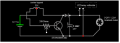
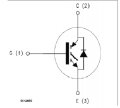
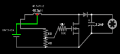
In short I have a center-tap inductor connected to STGW38IH130D Igbt(it's the only chip i have that worked with the powersupply i had, a acdc 17v 1A adapter)... Accross the Collector-Emitter there is a diode and a 2.2mF 25V electrolitic cap, all in all to make a booste circuit to run a motor, with a potentiameter at the Gate to change the switching speed of the igbt(i guess) to change the output voltage to run a motor... It works beautifully.
Now my question:
I swopped to a 19V 3.42A adapter, it runs the motor just fine normally, but when i switch to the boost circuit, the igbt just turns on an off at 1hz, seems like error message from the chip, since my igbt is a 1.3kV Vce & 33A Ic chip the problem must be at the Gate voltage, Is the oscillating voltage in the inductor too much for the Gate, or what? Why is it going on off at 1hz. It's NOT shitching.
I did add a 19V(16v+3v) zenor diodes in series with the Gate and potentiameter but now neither power supplies work.

What is the error message from the chip?
How do i fix it?

Note: i can't edit the circuit much except at the bottom side where the wires are since top side of the thread board is glued closed.
1726224967439.png
I hope someone can share some light on this.
 

Thread Starter

RickSmit

Joined Sep 13, 2024
76
Untitled.pngUntitled2.pngUntitled3.png
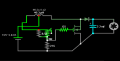
Note: The inductor is not 1H it's 46.3uH x2 forgot to draw tht correct

*This circuit runs great, i can boost steady and fast upto 22V and in increments thanks to the potentiameter.
*But when i swap out the power supply for a 19V 3.42A then the igbt turns off and on once a second and when it comes on my vots shoot past 25V sot it does do its own switching. it just turns on an off at 1Hz...
*Does anyone know why?
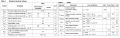
*In the igbt details we see i don't need any resisters, and the base already has one. so is the base getting too much transient inductor voltage or what?

Please help.
*
 

Attachments

ronsimpson

Joined Oct 7, 2019
4,647
A Junction Transistor is very different than an IGBT. You can't just replace one with the other.
The transistor in the black schematic is turned on by Base current.
The IGBT is turned on by Gate voltage.
This "Micky Mouse" circuit is very dependent on the specs of the transistor. Minor changes in transistor will cause the circuit to fail.
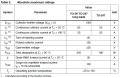
In the IGBT circuit the Gate has about 34 volts on it but the part breaks above 25V.
 

Thread Starter

RickSmit

Joined Sep 13, 2024
76
A Junction Transistor is very different than an IGBT. You can't just replace one with the other.
The transistor in the black schematic is turned on by Base current.
The IGBT is turned on by Gate voltage.
This "Micky Mouse" circuit is very dependent on the specs of the transistor. Minor changes in transistor will cause the circuit to fail.
In the IGBT circuit the Gate has about 34 volts on it but the part breaks above 25V.
Thanks for the reply.
Yeah i knew igbt are turned on by voltage, that is why i speculated in my main question if it is too much volts inside my inductor "ringing" at the gate, i don't have an oscillescope so i cannot see the inductor voltage and measuring it with multimeter only gives me the "load" voltage.
*my scematic in the black doesnt have settings for igbt so i just used normal transistor
*May i ask how do you know or calculate that the volts are at about 34v
*
i did try to add a 19V zenor in series with Gate AFTER the potentiometer, but it doesn't work...should i add the zener BEFORE the potentiometer in series or what should i do?

please advise.
 

ronsimpson

Joined Oct 7, 2019
4,647
how do you know or calculate that the volts are at about 34v
The inductor is center tapped. Assume the transistor is perfect. When on it has zero volts across it. Assume the inductor is perfect, there is zero ohms of wire in it. There will be 17V from center tap to transistor. Because of transformer effect there will be another 17 volts from center tap to the other end. 17+17=34 volts from end to end.

I find this circuit difficult to make work.
 

Thread Starter

RickSmit

Joined Sep 13, 2024
76
The inductor is center tapped. Assume the transistor is perfect. When on it has zero volts across it. Assume the inductor is perfect, there is zero ohms of wire in it. There will be 17V from center tap to transistor. Because of transformer effect there will be another 17 volts from center tap to the other end. 17+17=34 volts from end to end.

I find this circuit difficult to make work.
ok i get it. i just thought that the volts in the inductor stays the same on both sides as its center tapped, i always make me center taps equal turns both sides as i thought the transformation is one to one, i never thought that they ADD up like that. That's new. thanx. i'll do my best to remember, i guess that's why commercial tapped windings has the lower turn side going to bases and gates. now all make sense.
*okay so why didnt my zener in series with base an resistor work? it didnt even turn on?
*Also how would have done things, as a professional?
 

Thread Starter

RickSmit

Joined Sep 13, 2024
76
ok i get it. i just thought that the volts in the inductor stays the same on both sides as its center tapped, i always make me center taps equal turns both sides as i thought the transformation is one to one, i never thought that they ADD up like that. That's new. thanx. i'll do my best to remember, i guess that's why commercial tapped windings has the lower turn side going to bases and gates. now all make sense.
*okay so why didnt my zener in series with base an resistor work? it didnt even turn on?
*Also how would have done things, as a professional?
i realized i said something stupid there with the volts adding up, i mean duuuuh its a "BOOST" circuit, what i meant was i thought it only adds at the capacitor side, COMPLETELY escaped my mind that it doubles in the inductor also.
a) realizing this, i guess a small turn ratio on base/gate side should also add volts to the doubled volts due to transformertive coupling,or what?
b) guess a voltage divider is only option, so should i aim for low Amp or high Amp in the divider because i take it the potentiometer can still be in series with Gate to increase or decrease speed of motor?

please advise
 

schmitt trigger

Joined Jul 12, 2010
2,027
Where did you find the schematic?
A series resistance on the gate to control the motor's voltage, specifically a resistance of such a high value, is preposterous.
Normally the gate resistors are very low, in the order of 10 ohms or whereabouts. The datasheet clearly indicates this RG value.
Otherwise the IGBT will operate in linear, unsaturated mode, and eventually may destruct.

Figure 17 shows a 1 k0hm gate resistor, but they are seeing the Vge rise to determine gate charge. This is not an operational mode.
Would you like to reliably vary the motor's speed? Get a proper IGBT-driver IC and a suitable PWM source.
 

Thread Starter

RickSmit

Joined Sep 13, 2024
76
Where did you find the schematic?
A series resistance on the gate to control the motor's voltage, specifically a resistance of such a high value, is preposterous.
Normally the gate resistors are very low, in the order of 10 ohms or whereabouts. The datasheet clearly indicates this RG value.
Otherwise the IGBT will operate in linear, unsaturated mode, and eventually may destruct.

Figure 17 shows a 1 k0hm gate resistor, but they are seeing the Vge rise to determine gate charge. This is not an operational mode.
Would you like to reliably vary the motor's speed? Get a proper IGBT-driver IC and a suitable PWM source.
Thank you for the reply. unfortunately i don't have what u are suggesting "proper IGBT-driver IC and a suitable PWM source." all i can make is a slayer circuit, none of my other transisters nor mosfets can handle my power supply... my circuit is all i could do...

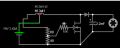
i tried adding a volt divider with 60ohms connected to the high side and to the ground/negative i connected a 40ohm with the base potentiometer in the middle, the math say the gate before potentiometer should get 22.4volts, its below the gate maximum and yet it still doesnt work with the 19volt power supply, and the 17volt source works now but the speed change with the potentiometer does not work anymore... and i tried adding volt divider on motor side for speed, but did not work,unless i was doing it wrong.

can someone please help me, and without critisizing my ameteur electronics, how am i supposed to learn if all i get is criticism.Untitled4.png

This is the new circuit edit...
Do u think i need to make the divider resisters equal to keep it at 19v instead of 22.4 from the 38V total inductor voltage? or what must i do to make it work?
 

Attachments

Thread Starter

RickSmit

Joined Sep 13, 2024
76
Nobody is criticizing your circuit to humiliate you or make you feel bad. That’s not the intention. At least not me.
Thank you for replying.:)
I have not gotten help yet, i stated in beginning ALL i have that can take my powersourse is this igbt, i asked for help to know and understand why my igbt turns off and on @1Hz and while on it still switches but then goes off again, but does not do so on 17v powersourse... but none gave me even an inkling of help, i only get told how wrong i made it and need proper stuff (i appretiate the suggestions, but ameteurs start SOMEWHERE, i dont have professional things, im using old laptop and phone charger adapters as powersourses, thats how ameteur i am in my "what i have to use") but no help nor explination was given to my dilemma.

I want to learn and understand, thats why im here...:(

and yes Without a PWM and Gate driver IC i do want to control my cooling fan speed, reliably if possible, but i did before add a volt divider with potentiameter at motor end to try and control the speed, it didn't even turn on. But i heard(inductor squeeling) and saw igbt switching speed change with Gate potentiameter resistance change, so i kept it and worked on 17v. but not on 19v

these chip's characteristics confuse the hell out of me, the basics i got down but all these other things that also play a role throw me off. the most difficult things for me to understand (so far) are these 3 semiconductor chips types(transistors,mosfets,igbt plus all n and p types) and how to properly use them. i didnt study electrical engineering, i dont know what u guys know. i need advice in my circuit. please.:)
 

Thread Starter

RickSmit

Joined Sep 13, 2024
76
Thank you for replying.:)
I have not gotten help yet, i stated in beginning ALL i have that can take my powersourse is this igbt, i asked for help to know and understand why my igbt turns off and on @1Hz and while on it still switches but then goes off again, but does not do so on 17v powersourse... but none gave me even an inkling of help, i only get told how wrong i made it and need proper stuff (i appretiate the suggestions, but ameteurs start SOMEWHERE, i dont have professional things, im using old laptop and phone charger adapters as powersourses, thats how ameteur i am in my "what i have to use") but no help nor explination was given to my dilemma.

I want to learn and understand, thats why im here...:(

and yes Without a PWM and Gate driver IC i do want to control my cooling fan speed, reliably if possible, but i did before add a volt divider with potentiameter at motor end to try and control the speed, it didn't even turn on. But i heard(inductor squeeling) and saw igbt switching speed change with Gate potentiameter resistance change, so i kept it and worked on 17v. but not on 19v

these chip's characteristics confuse the hell out of me, the basics i got down but all these other things that also play a role throw me off. the most difficult things for me to understand (so far) are these 3 semiconductor chips types(transistors,mosfets,igbt plus all n and p types) and how to properly use them. i didnt study electrical engineering, i dont know what u guys know. i need advice in my circuit. please.:)
suggestion, will i be able to control the speed AND have my igbt NOT turn off and on if i add a potentiometer to the diver insted of the gave?
like this?
Untitled5.png

i want to make the top part of the divider with 470Ω (to make that my potentiameter max value) i only have that value in high watts resistors, and 60Ω after the potentiameters, to protect it, they like burning when i put them on zero.lol. now it wont be zero

are my ohms low enough for the igbt as was stated before?

assuming the inductor doubles input volts to 38V the math i use says the divider for the Gate will be @60Ωmin = 7.7V.....@530Ωmax = 26.3V

will this work to change the speed?
 

schmitt trigger

Joined Jul 12, 2010
2,027
Short answer, that I had already given: no.
Again: no.
The circuit’s basic principle is all wrong. Because you are operating it in the linear region. The slayer inductor is also a mystery, with no specification of any type. But even if we had them, the circuit is still wrong, there is no way to patch it to make it work. We have already told you as much. Yet you continue on a dead end path.

Are you familiar with the 555? Do you know that you can make a DC motor PWM controller with it? Sample circuits are a Google away.
An example. https://www.pcbway.com/project/shar..._DC_motor_using_PWM_with_555_IC_24169d4c.html
 

Thread Starter

RickSmit

Joined Sep 13, 2024
76
Short answer, that I had already given: no.
Again: no.
The circuit’s basic principle is all wrong. Because you are operating it in the linear region. The slayer inductor is also a mystery, with no specification of any type. But even if we had them, the circuit is still wrong, there is no way to patch it to make it work. We have already told you as much. Yet you continue on a dead end path.

Are you familiar with the 555? Do you know that you can make a DC motor PWM controller with it? Sample circuits are a Google away.
An example. https://www.pcbway.com/project/shar..._DC_motor_using_PWM_with_555_IC_24169d4c.html
Thank you for the reply.
no one has told me "no" except you just now, people just say whats wrong... i tried 555 before with LEDs i was too stupid, dnt know if i have a 555.. i will check.

thank u for the direct answer and help, however i do not know what u meant by "linear region." nor do i know what it actually means with the chip... i looked at figure17, i didnt know what those test circuits are. like i said im a novice. i did not study electrical engineering so i don't have your understanding of the thing...

Also please say why is my circuit wrong? where?
also what is the linear region and why is it bad? how long will the chip last?
 
Last edited:

panic mode

Joined Oct 10, 2011
4,864
linear region is where you can still control output as analog values. this is "mildly driven" transistor.

saturation mode is "madly driven" regime when transistor is always fully on or fully off (like a switch).

each regime has its uses. when driving large loads it is common to use saturation mode because power loses in transistor are tiny compared to what it would be in linear operation. so much so that in many cases heatsink may be omitted.

dissipated power is P=V*I
in saturation mode either current is zero (transistor not conducting) or voltage is near zero (transistor conducting). now look at that equation and deduce what the power is if either V or I are near zero all the time, even if the other value is large.

but in linear region, V or I are practically never at zero. so their product will be power that is considerable.

example:

transistor off, V=17V, I=0.0A, P = 0.0W
transistor on, V=0.1V, I = 2A, P=0.2W
so on average power dissipation is some 0.1W

compare that with
transistor in linear region, where average may be V=9V, I = 1A, P = 9W
that is 9000% of the previous one. guess which one is less suited for applications involving transfer of power.


I find this circuit difficult to make work.
i think this also answers your last question.

on the other hand using conventional PWM to control motor has been proven (like example in post #17). not only it works, but it is efficient, robust and easy to make working
 
Last edited:

Thread Starter

RickSmit

Joined Sep 13, 2024
76
linear region is where you can still control output as analog values. this is "mildly driven" transistor.

saturation mode is "madly driven" regime when transistor is always fully on or fully off (like a switch).

each regime has its uses. when driving large loads it is common to use saturation mode because power loses in transistor are tiny compared to what it would be in linear operation. so much so that in many cases heatsink may be omitted.

dissipated power is P=V*I
in saturation mode either current is zero (transistor not conducting) or voltage is near zero (transistor conducting). now look at that equation and deduce what the power is if either V or I are near zero all the time, even if the other value is large.

but in linear region, V or I are practically never at zero. so their product will be power that is considerable.

example:

transistor off, V=17V, I=0.0A, P = 0.0W
transistor on, V=0.1V, I = 2A, P=0.2W
so on average power dissipation is some 0.1W

compare that with
transistor in linear region, where average may be V=9V, I = 1A, P = 9W
that is 9000% of the previous one. guess which one is less suited for applications involving transfer of power.


i think this also answers your last question.

on the other hand using conventional PWM to control motor has been proven (like example in post #17). not only it works, but it is efficient, robust and easy to make working
Thank you veeeeerrryyy much for explaining it. help thats helpfull:)
so i'm driving in linear region 'coz im using it as a switch and at full power i guess 'coz im using it as a slayer exciter right? switching speed pretty much dependant on inductor(max switching)(faster switching=more losses), seeing now where the pwm comes in... ok...but doesnt a boost circuit require super switching to build up more volts before used? doesnt matter so much now.
a)so circuit is wrong coz i have huge power losses and it's not ideal?

unfortunately i can't add a pwm like 555 as my power supply is higher than than what 555 support(volt divider i guess) and circuit is glued. i will just have to hope my massive heatsink can keep my igbt safe long enough untill im done. atleast i have 2 in parallel... guess ill just have to eiter only use 17v power supply where switching control was achieved or add a volt divider to bring down my volts so i can atleast USE my 19v.
b) nobody has yet answered CLEARLY why my 19v makes my igbt turn on and off at 1Hz and while on still switches but then goes off, too much Gate voltage?

c) If needed can someone please reference or advise a high power pwm, or show me a circuit diagram on how i can make my own SIMPLE ONE with my own equiptment(unable to buy).

Please can someone answer my last 3 questions. :)
 
Top