Electrostatic problem

Thread Starter

Tryui

Joined Sep 20, 2021
202
Good evening gentlemen, this was a question from the engineering test. So as always happens when we apply a voltage to a conductor, in this case an iron tube, the tube lets the current pass, precisely because it is a neutral conductor. But if before applying voltage to the tube, we charge it positively or negatively through electrostatic induction, what happens if we apply a voltage? Does the current undergo any changes?
 

Thread Starter

Tryui

Joined Sep 20, 2021
202
In che modo il tubo trattiene l'induzione elettrostatica prima che venga applicata la tensione? AC o DC? Come mantiene la carica?
Cosa c'entra un "conduttore neutro"? Come è diventato "neutro"?
Sono questi i compiti?
[/CITAZIONE]


Risultati di ricerca
Risultato della traduzione

Italiano
Inglese


Carico il tubo con induzione elettrostatica per caricarlo positivamente o negativamente e quindi viene applicata una tensione tramite 2 cavi, CA o CC. Ecco, come si comporta il passaggio di corrente quando il tubo è carico? Scorre più velocemente? si diffonde di più? per neutro intendo che non è carico di energia elettrostatica
 
Last edited by a moderator:

Thread Starter

Tryui

Joined Sep 20, 2021
202
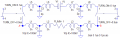
Scopri come la corrente che attraversa il tubo è influenzata dalla tensione di carica:

View attachment 305060
[/CITAZIONE]
no forse il circuito è sbagliato perché non mi sono spiegato bene, nel tuo circuito il tubo viene chiamato resistore, si carica per induzione elettrostatica tramite un van der graaf (e quindi l'induzione non richiede contatto fisico), e quindi, dopo che il tubo è stato caricato elettrostaticamente, viene applicata una tensione CA o CC tramite 2 cavi, quindi come viene influenzato il passaggio di corrente dalle cariche elettrostatiche del tubo? va più veloce? si diffonde meglio? Non lo so
 

Danko

Joined Nov 22, 2017
2,135
no maybe the circuit is wrong because I didn't explain myself well, in your circuit the tube is called a resistor, it charges by electrostatic induction through a van der graaf (and therefore induction does not require physical contact), and then, after the tube has been electrostatically charged, an AC or DC voltage is applied via 2 wires, so how is the passage of current affected by electrostatic charges of the tube? does it go faster? does it spread better? I do not know
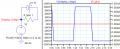
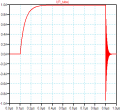
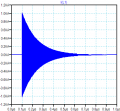
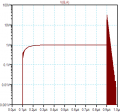
OK, capacitance between tube and Earth is 100pF.
Tube is charged to 500 kV voltage.
Then we ON and OFF voltage on tube.
Result is the same:

1697410199066.png
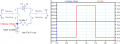
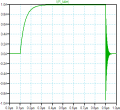
ADDED:
Exactly as TS asked - "after the tube has been electrostatically charged, an AC or DC voltage is applied via 2 wires"

1697412925238.png
https://testbook.com/physics/charging-by-induction
 
Last edited:

MisterBill2

Joined Jan 23, 2018
27,186
How does this question relate to anything in the real world??Iron pipes are not used for conductors except for safety grounding in old buildings. And does "neutral conductor" imply being connected to the mains neutral side???
 

Thread Starter

Tryui

Joined Sep 20, 2021
202
How does this question relate to anything in the real world??Iron pipes are not used for conductors except for safety grounding in old buildings. And does "neutral conductor" imply being connected to the mains neutral side???
I used the iron tube as an example because it is a conductor and has a good lateral surface but any conductor is fine
 

Thread Starter

Tryui

Joined Sep 20, 2021
202
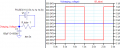
OK, capacitance between tube and Earth is 100pF.
Tube is charged to 500 kV voltage.
Then we ON and OFF voltage on tube.
Result is the same:

View attachment 305070
ADDED:
Exactly as TS asked - "after the tube has been electrostatically charged, an AC or DC voltage is applied via 2 wires"

View attachment 305073
https://testbook.com/physics/charging-by-induction
I didn't understand the result of your answer, so what happens to the current flowing through the charged conductor?
 

MrAl

Joined Jun 17, 2014
13,667
Good evening gentlemen, this was a question from the engineering test. So as always happens when we apply a voltage to a conductor, in this case an iron tube, the tube lets the current pass, precisely because it is a neutral conductor. But if before applying voltage to the tube, we charge it positively or negatively through electrostatic induction, what happens if we apply a voltage? Does the current undergo any changes?
Hi,

I am thinking that maybe you should supply a drawing showing exactly what setup you are talking about. That way members would know what you are asking more exactly.
 

Thread Starter

Tryui

Joined Sep 20, 2021
202
CIAO,

Sto pensando che forse dovresti fornire un disegno che mostri esattamente di quale configurazione stai parlando. In questo modo i membri saprebbero cosa stai chiedendo più esattamente.
[/CITAZIONE]
no but I think I solved it, I understood from Danko's diagrams
 

MisterBill2

Joined Jan 23, 2018
27,186
This seems like a trick question: :" when we apply a voltage to a conductor, in this case an iron tube, the tube lets the current pass, precisely because it is a neutral conductor. But if before applying voltage to the tube, we charge it positively or negatively through electrostatic induction, what happens if we apply a voltage? Does the current undergo any changes? ".
If the pipe is "a neutral conductor", meaning connected to "ground", there will remain no charge after whatever induced voltage ends. So any current will be as determined by Ohms Law: I=V/R.
 
Top