Edison is dead and now so is his Lightbulb!

WBahn

Joined Mar 31, 2012
33,075
Most if not all of the commercial LED bulbs are bad in that they eventually add to the gross amounts of electronic waste being generated. LED lighting should involve a separate robust power supply that will last many years and a replaceable LED that is only LED(s).
While new-install systems can take this approach -- and there are a plethora of low-voltage lighting systems that basically do this -- it is not a very practical one for a huge fraction of existing applications in which you need something that can screw into the socket meant for a standard incandescent bulb and have it work like a standard incandescent bulb.
 

Ya’akov

Joined Jan 27, 2019
10,278
Edison made improvements to the Nickel-Iron battery which is currently being looked into as possibly useful in conjunction with intermittent sources of electricity such as photo-voltaic.

https://getpocket.com/explore/item/...efore-its-time?utm_source=pocket-newtab-en-us
NiFe batteries could not compete with PbSO₄ batteries primarily because of energy density. That article's romantic invocation of Edison fails to describe anything but his promotion of the chemistry against the Lead-based and higher capacity technology that was also available. This is reminiscent of the DC vs. AC battle where Edison chose to back an option that had no real advantage over the eventual winning technilogy—except I terms of his own profits.

As are as the current research mentioned, the article is very misleading. The production of hydrogen due to electrolysis of water will be very familiar to anyone involved with PbSO₄ batteries—which do exactly the same thing. As these batteries were improved, recombiners were added so a battery being float charged would not be run dry by the effect. It is simply what happens to the water once the current has converted all of the active chemicals in the cells, that is, fully charging it. The difference is, while PbSO₄ batteries do produce the H and O, NiFe produce more and the electrolyte used is not consumed in the process where PbSO₄ batteries will alter their electrolyte and self limit H and O production.

NiFe batteries, are not, could not be, somehow immune to being run dry by the electrolysis of water that happens in precisely the same way as the Lead-based competition. You can't produce H and O from... nothing. It is a process of conversion, and the water that is converted has to be coming from somewhere. In the style of typical popular science reportage, the important facts are lost trying to tell a compelling story.

It is not surprising that, concentrating on the impact of the story on the reader and the lack of expertise in the subject matter itself, an author could be confused by the fog of repeated, counterfactual accounts when researching. It is to the credit of the author of the linked article that they mention the patent upon which Edison relied, and not that folklorish claim seen elsewhere that Edison was actually the inventor.

But, concerning the possible advantages of NiFe, there are at least of couple of things that make them useful in specialized applications, where their disadvantages are worthwhile trade-offs. However, before the advent of practical Li-Ion cells, a different Nickel-based chemistry was the leading candidate for electric car applications: NiMH* (Nickel Metal Hydride).

*In fact, NiMH was used in the first hybrids and is still in use in the models that follow in that same line. NiMH adoption, or really the lack of it is a story not of battery chemistry but of an automotive industry organization intended to prevent the rise of the electric car while masquerading as a research group looking for the best battery to build them. It involves patents, and law suits, and deliberate suppression of a very promising technology. It's outside the scope here, but worth looking into.

Figure 1 is a table comparing four battery chemistries according to several (though not all) cogent characteristics. The "winner" for each of these is in green.

CharacteristicNickel-Iron (NiFe)Nickel-Metal Hydride (NiMH)Lead-Acid (PbSO₄)Lithium-Ion (LiIon)
Energy DensityLow (~20-40 Wh/kg)¹ Moderate (~60-120 Wh/kg)Low (~30-50 Wh/kg)High (~150-250 Wh/kg)
DurabilityExtremely durable; >50 years possibleModerate; around 500-1000 cyclesModerate; around 300-500 cyclesGood; 500-3000 cycles, depending on type
Self-DischargeVery high; ~30% per monthModerate; ~20-30% per monthLow; ~5% per monthLow; ~1-5% per month
Low-Temperature PerformanceGood; stable in very low temperaturesPoor; struggles below -10°CModerate; works down to -10°CGood; works down to -20°C
MaintenanceHigh; requires periodic wateringLow; generally maintenance-freeHigh; requires periodic wateringVery low; maintenance-free
Environmental ImpactLow toxicity, uses caustic KOH electrolyteGenerally safe; minimal toxicityHigh; contains lead, requires recycling² Moderate; needs proper recycling for metals
CostHigh initial cost; low over lifespanModerate costLow initial cost, moderate over lifespanHigh cost, but decreasing with tech advances
Charging EfficiencyLow; ~50-60% due to gassingHigh; ~80-90%Moderate; ~70-85%Very high; ~90-95%
Table 1: Comparing Chemistries
1. there are reports of research program results achieving as much as 100Wh/kg, but as far as I know, there are no practical batteries outside the 20-40 range.
2. while lead is very toxic, thanks to the application of PbSO₄ batteries in cars, the lead recycling infrastructure is extremely robust and nearly all lead is recycled.

Considering the downsides of NiFe chemistry, and even the downsides of the feature touted in this article, the focus of these researcher was electrolysis itself—that is, the production of hydrogen by electrolysis as a means of storing excess capacity of renewable energy sources such as wind turbines. In this context, the NiFe battery might be a "twofer" since storage in the batteries would be easier to use immediately than the storage as hydrogen. But not only is that a very niche application, it also remains to be seen how they would deal with problems like high self-discharge which would mean losses that would have otherwise be compensated by a high conversion rate (that is stored vs. available energy).

I was prompted to write this long reply for two reasons: the failings of popular science reporting which in the process of trying to serve two masters most often bows to the demands of "popular" over "science"; and the continued treatment of Edison—who was clearly a very sharply focused and exceptional person—as some sort of super-insightful individual who "invented" all sorts of things in his brilliant prescience.

The truth is, Edison was a driven and apparently tireless businessman who did involving himself in innovation and invention to be sure but as he himself said, “Genius is one percent inspiration and ninety-nine percent perspiration.” This is not an insight into genius as a general thing but into what he perceived as genius—latching on to an idea and then iterating over it with a dogged determination, and not necessarily with insight-directed evolution, until a product results (see: accounts of his invention of the light bulb, a brute force effort, and his immunity to the import of the observations in his notes that he received a shock from a wire that happened to be imbedded in the glass envelope near the filament and accessible outside—completely missing the chance to patent a vacuum tube.

In comparison we can take a true genius of the same period, Edwin Armstrong, inventor of the superheterodyne receiver that revolutionized the usefulness of the Audion the first triode tube. Lee De Forest who held the patent, was much like Edison. He was very hard working, and while he had more insight into electrical engineering than Edison, really didn't understand his own invention where Armstrong did.

Armstrong's insight-to-sweat ratio clearly had a much larger insight component. He was a very hard worker, but his work was directed by a clarity concerning the fundamentals of the problem at hand and not the brute force churning that made his results entirely unavailable to De Forest, or Edison, and is the sort of genius that I believe needs more examination and praise for general consumption to ignite interest in those capable of seeing the value of truly understanding the nature of what they are working with.
 

Tonyr1084

Joined Sep 24, 2015
9,744
Most if not all of the commercial LED bulbs are bad in that they eventually add to the gross amounts of electronic waste being generated. LED lighting should involve a separate robust power supply that will last many years and a replaceable LED that is only LED(s).
As a kid I found a 12 volt incandescent lamp that could be screwed right into the standard lamp. I always wondered why in the house we didn't have a 12 volt lighting system. Over the years I've revisited that thought and how, if I were to build my own house from the ground up, I'd wire all the lighting to be based on a low voltage system. Low voltage circuit breakers would control the flow of power to the lights. Now, if we were to substitute a regular 120VAC LED bulb with a 12VDC based automotive LED bulb we could have something that doesn't require all that expensive PWM power source stuff and have a battery based backup emergency lighting system. But that now leads us to decide which type of battery and its charging system. As with everything, there are trade-off's.
 

AnalogKid

Joined Aug 1, 2013
12,238
As a kid I found a 12 volt incandescent lamp that could be screwed right into the standard lamp. I always wondered why in the house we didn't have a 12 volt lighting system.
Cost of copper.

The problem with adapting a higher voltage technology to a lower operating voltage is that the current increases so much that I2R losses become significant. For the same light output, a 12 V incandescent bulb draws 10 x the current of a 120 v bulb. For the same resistive power loss in the wiring, the wire diameter has to increase by over 3.16 x.

An inherently low voltage tech such as LEDs changes everything.

ak
 
Last edited:

MisterBill2

Joined Jan 23, 2018
28,021
WOW!!! A whole lot of insight in the last few posts. Addressing first the topic of 12 volt DC lighting: The harsh reality is that power(watts)=volts X amps. That is inescapable, and for lighting, the light intensity is always proportional to power. Then the unfortunate part is the voltage drop(equal to wasted power) in the connected wiring.
And A.K. has beaten me to reminding us of that.
So 120 volts AC became the compromise solution here in the USA, while in the UK the compromise is 220 VAC.

AND, once again, I remind folks that almost always there are secondary effects of any change that is made, and I will point out that the cry of "It seemed like a good idea at the time" is always given in regrets of a poor decision.
If I am in a real hurry, I can drive 100 MPH in a 25MPH zone, but almost always this will lead to very unfortunate results. Thus every solution has secondary effects that may not be so very obvious.

Consider the size of the distribution wires if the same power to houses were 12 volts instead of 120 volts.
The only way to keep the same size would be for everybody to use only one tenth of the power.
BUT given the push by some well meaning folks to eliminate any heating by means of combustion, how would that happen??? I really do not wish to live in a cave and eat uncooked food as an alternative life style. Others are free to choose it, no problem, but it is not my choice.

So we do need to know about those secondary effects of our decisions that may be proposed fro time to time.
And I will be quite willing to let the folks in California decide how THEY will live, BUT they may not decide how I must live. That is part of basic freedom.
WOW!!! This thread has wandered!!
 
Last edited:

schmitt trigger

Joined Jul 12, 2010
2,174
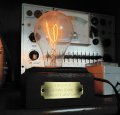
Visiting the Edison museum in West Orange, NJ, I purchased one of these carbon filament replicas.
Its orangeish glow is soothing, but definitely the light output is quite low.

BTW, if you find yourself in the area, a trip to the museum is highly recommended.
 

Attachments

nsaspook

Joined Aug 27, 2009
16,438
https://www.thetimes.com/uk/environ...15m-lampposts-see-how-it-would-look-rjt86b9dh
Britain to axe up to 1.5m lampposts — see how it would look
Lampposts will remain in place in many locations where they are necessary, such as in cities where CCTV cameras rely on good lighting.

The first ones scheduled to be removed are in Hayton, a small Yorkshire village on the A1079 road between York and Hull. Starting in December, 30 street lights on each side of the main road are to be switched off and later removed. Around 300 more will be switched off and removed on a 19-mile (30km) stretch of the road.


Rather than plunge the village into complete darkness, the pavements that run alongside the road will be fitted with dedicated footway lights for the first time. On one side they will be on bollards with lights attached. On the other side, they will be on 3m-high columns, also with lights attached.
1730155947237.png
 

MisterBill2

Joined Jan 23, 2018
28,021
So how will there be any illumination when it is needed?? I have read about the theory that total inky darkness tends to reduce crime because than those using illumination will be more obvious. But consider that the blind folks have been dealing with that for years and have a great deal of ability to work around the "darkness". So others will certainly how to do it. Then What???
We will hear that classic lament again: "It seemed like a good idea at the time."
 

nsaspook

Joined Aug 27, 2009
16,438
I sure hope the replacements turn out to be vandal-proof
I'd worry more about people but the government says it's perfectly safe to be out at night on dark streets. ;)

Motorways. Pedestrians MUST NOT be on motorways or slip roads except in an emergency (see Rule 271 and Rule 275).
Laws RTRA sect 17, MT(E&W)R 1982 as amended, reg 15(1)(b) & MT(S)R reg 13

There is no need to carry any ‘defensive’ equipment*. Attacks on lone pedestrians do happen, but are extremely rare.

*Carrying any incapacitant spray (Pepper, Mace CS Gas etc) or weapon of any kind is thoroughly illegal in the UK and will end badly for you.
 

PeteHL

Joined Dec 17, 2014
585
While new-install systems can take this approach -- and there are a plethora of low-voltage lighting systems that basically do this -- it is not a very practical one for a huge fraction of existing applications in which you need something that can screw into the socket meant for a standard incandescent bulb and have it work like a standard incandescent bulb.
The Philips Dubai Bulb (post # 125 by Ya'akov) could be very easily configured with the power supply in a base that fits into the standard incandescent screw socket and the base having some other type of socket for connecting the LEDs to the power supply.
 

MisterBill2

Joined Jan 23, 2018
28,021
I stay prepared for the unfortunate instance that I get an excessively tough steak at the restaurant, and they do not provide a suitable utensil for politely cutting it. Of course, I have not had to visit the UK for quite a few years, so I don't know if that rule would apply or not.
 

Ya’akov

Joined Jan 27, 2019
10,278
(Sorry, I got a little carried away writing this fiction piece… or… at least it should be fiction…)

‘The Home Secretary faces tough questioning by Parliament on the Government‘s inability to stem the flow of cheap imported night vision devices that are ending up in the hands of street criminals across the UK.

‘The Shadow Home Secretary called for an investigation into what she termed “an apparent conspiracy between this government and the lowest sort of criminals“ suggesting the opposition was considering a vote of no confidence…

‘Today the government announce the introduction of sweeping legislation prohibiting the possession and use of night vision devices. The government takes the safety of our citizens seriously as can be seen by the comprehensive nature of this act.

The bill, called the Violent Crime Reduction Act of 2026, had first reading this week. The Speaker announced an aggressive schedule to ensure quick implementation, with second reading due Monday displacing all other business.

The Home Secretary, commenting to several media outlets, emphasized how seriously the government takes the problem of night vision being used against innocent people.

‘Highlights of the bill include stiff penalties for ”the intentional importation of devices prohibited by this act”, including fines exceeding £100, and the issuance of an FSBO. When asked about custodial sentences, the secretary suggested the idea ”is being seriously considered”.

The act would prohibit “any device designed to, or capable of, increasing the ability for its user to perceive the presence or movement of objects or people whether under automatic or manual control“.

‘This will include traditional night vision devices as well as digital cameras that are capable of operating in low light and producing an image which is more clearly visible than the naked eye.

‘Flashlights will also fall under the act, with the carrying of smartphones—usually incorporating both a camera and flashlight—strictly prohibited.

‘The secretary was quick to add that ‘the government understands that reasonable accommodation of peaceful use of prohibited devices is necessary, to that end we have limited the prohibition on the possession of these devices to the hours between dusk and dawn, and permitted the carry of flashlights up to 97 lumens for those who can provide a need as part of their employment…’
 

cmartinez

Joined Jan 17, 2007
8,833
(Sorry, I got a little carried away writing this fiction piece… or… at least it should be fiction…)

‘The Home Secretary faces tough questioning by Parliament on the Government‘s inability to stem the flow of cheap imported night vision devices that are ending up in the hands of street criminals across the UK.

‘The Shadow Home Secretary called for an investigation into what she termed “an apparent conspiracy between this government and the lowest sort of criminals“ suggesting the opposition was considering a vote of no confidence…

‘Today the government announce the introduction of sweeping legislation prohibiting the possession and use of night vision devices. The government takes the safety of our citizens seriously as can be seen by the comprehensive nature of this act.

The bill, called the Violent Crime Reduction Act of 2026, had first reading this week. The Speaker announced an aggressive schedule to ensure quick implementation, with second reading due Monday displacing all other business.

The Home Secretary, commenting to several media outlets, emphasized how seriously the government takes the problem of night vision being used against innocent people.

‘Highlights of the bill include stiff penalties for ”the intentional importation of devices prohibited by this act”, including fines exceeding £100, and the issuance of an FSBO. When asked about custodial sentences, the secretary suggested the idea ”is being seriously considered”.

The act would prohibit “any device designed to, or capable of, increasing the ability for its user to perceive the presence or movement of objects or people whether under automatic or manual control“.

‘This will include traditional night vision devices as well as digital cameras that are capable of operating in low light and producing an image which is more clearly visible than the naked eye.

‘Flashlights will also fall under the act, with the carrying of smartphones—usually incorporating both a camera and flashlight—strictly prohibited.

‘The secretary was quick to add that ‘the government understands that reasonable accommodation of peaceful use of prohibited devices is necessary, to that end we have limited the prohibition on the possession of these devices to the hours between dusk and dawn, and permitted the carry of flashlights up to 97 lumens for those who can provide a need as part of their employment…’
Modern politician's minds have been turned upside down ... and inside-out ...
 
Top