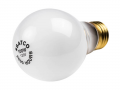
Edison is dead and now so is his Lightbulb!

strantor

Joined Oct 3, 2010
6,875
For a true negative resistance load, use a switching DC/DC converter. Something like 12 V or 24 V in, and 5 V out.

1. Assume a conversion efficiency that is relatively constant with variations in input voltage.

2. Assume a constant load on the converter output.

3. With a constant load on the output, the converter draws a constant power as its input voltage is varied. Input current is inversely proportional to the input voltage, the definition of a negative resistance. Thus, a DC/DC converter as a load is one way to test the control loop stability of whatever is powering it, such as another switching power supply going through design verification.

ak
When I get a hankering to see a negative resistance I just put my meter on ohms and place it across an energized DC circuit.
 

strantor

Joined Oct 3, 2010
6,875
Didn't we already have an overly dramatic, unduly politicized word battle on this topic a few years ago? If I remember correctly it turned into the this forum's longest running blatantly political post and when the dust settled some folks were missing. Let's not do that again. Like it or not, incandescent is out and will never come back. By the time some other president comes in and tries to overturn this, the factories will be shut down and the people who worked there will have other jobs. Hopefully jobs making LEDs. Hopefully the incandescent bulb factories can stay open and just re-tool for LED production.

Anyway I was already converting all my stuff over to LED and this will just accelerate the process. I'm not happy it went down this way but it is what it is.
 

Sensacell

Joined Jun 19, 2012
3,787
For a true negative resistance load, use a switching DC/DC converter. Something like 12 V or 24 V in, and 5 V out.

1. Assume a conversion efficiency that is relatively constant with variations in input voltage.

2. Assume a constant load on the converter output.

3. With a constant load on the output, the converter draws a constant power as its input voltage is varied. Input current is inversely proportional to the input voltage, the definition of a negative resistance. Thus, a DC/DC converter as a load is one way to test the control loop stability of whatever is powering it, such as another switching power supply going through design verification.

ak
It has a high degree of positive resistance change with temperature but no negative resistance.
Isn't it a negative resistance if the current decreases when the applied voltage increases?
Sure, it's highly non-linear and has a loooong time constant, but ignoring this fact?

I once ran across demonstration in the halls of UC Berkeley that showed an oscillator made from an L and a C and a light bulb.
It was a negative resistance oscillator akin to a tunnel diode oscillator.

What I enjoy is the fact that this simple and ubiquitous component seems at face value to violate ohms law.
Love watching students faces when they measure the resistance and start calculating...
 

Hymie

Joined Mar 30, 2018
1,347
Of course, it was actually a certain Mr. Swan who invented the incandescent light bulb – but Mr. Edison somehow got the credit.
 

billnow

Joined Aug 4, 2010
23
I think of incandescent vs LED as being similar to vacuum tube vs transistor. Each technology has its place. For example, vacuum tubes have a niche in guitar amplifiers and incandescent bulbs have a use in Easy-Bake ovens.
 

AnalogKid

Joined Aug 1, 2013
12,238
Like it or not, incandescent is out and will never come back.
Correct.

By the time some other president comes in and tries to overturn this, the factories will be shut down and the people who worked there will have other jobs. Hopefully jobs making LEDs. Hopefully the incandescent bulb factories can stay open and just re-tool for LED production.
Overturn - No.

Retool - No.

The last incandescent factory in the US was closed *** 7 years ago ***, when Sylvania voluntarily moved the production to China. 99% of incandescent and LED light bulb production already is off-shore, and has been for years. Note that contrary to the political ranting, neither the US government nor China had anything to do with this. The various companies moved their production all by themselves. China didn't steal any jobs, and the US didn't force anyone to do anything. If anything, the US enabled, and possibly encouraged the moves offshore by doing nothing, mainly because of that pesky Constitution. In a fight between the government and a multi-national board of directors, the board ***always*** wins. For reference, see Trump versus Westinghouse in Indiana.

ak
 
Last edited:

strantor

Joined Oct 3, 2010
6,875
Correct.


Overturn - No.

Retool - No.

The last incandescent factory in the US was closed *** 7 years ago ***, when Sylvania voluntarily moved the production to China. 99% of incandescent and LED light bulb production already is off-shore, and has been for years. Note that contrary to the political ranting, neither the US government nor China had anything to do with this. The various companies moved their production all by themselves. China didn't steal any jobs, and the US didn't force anyone to do anything. If anything, the US enabled, and possibly encouraged the moves offshore by doing nothing, mainly because that pesky Constitution. In a fight between the government and a multi-national board of directors, the board ***always*** wins. For reference, see Trump versus Westinghouse in Indiana.

ak
I didn't realize we haven't been making bulbs here. Thanks for the info.
 

crutschow

Joined Mar 14, 2008
38,680
Isn't it a negative resistance if the current decreases when the applied voltage increases?
Yes.
But an incandescent bulb's current always increases with voltage, it's just a non-linear increase.

A common-example of a negative resistance is a switching regulator.
For a fixed output load, the input current will decrease with an increase in current.
Edit: The should be with an increase in voltage.
 
Last edited:

AnalogKid

Joined Aug 1, 2013
12,238
Yes. Why not let the market decide instead of using force.
The corporate boards who decide what the market will decide already decided - back in the 1990's. As already pointed out, this is a largely symbolic move.

The buying power in the US is in the hands of the second generation raised in the post-1981 era. This is completely irreversible, and will only get worse.

The IBM PC changed the centuries-old relationship between price and performance; each year, computers got better and cheaper, a kind of macro-economic negative-resistance. No one *** in the world*** will pay $10,000 for a smart phone, it's true value in 1980 dollars, and yet we constantly demand more features and performance for the same or lower price, in a country with a minimum wage that is 100x higher than what is necessary to make that happen. Plus all of that non-poisonous water stuff. We want our things, we want them cheap, and we don't care who dies as long as they are somewhere else. Note that somewhere else sin't always far away. Flint - lead. Kentucky - Teflon. Any mining state - heavy metals. Etc.

"The government" (of either/any political bent) did not force the end of domestic light bulb production, or TV production, or phone production, or washing machine production. We did.

ak
 

Audioguru again

Joined Oct 21, 2019
6,826
My city converted all the street lights to LEDs. But the lights are never turned off and are on all day long. Each light has a modem antenna on top but the modems do not work. Maybe the lights were bought from ebay?

The parks all have LED lighting that turns off correctly during daylight but at night they are way too bright.
Oh, the parks are closed at night then why do they have very bright lighting?.
 
Say Goodbye to Incandescent Light Bulbs (msn.com) It has finally come to pass, at least in the US! I wonder what they are going to do about all the existing devices that use them like vehicles, flashlights, panel indicators, etc.
This has been the case for a while in the EU. We've not had Edison bulbs for years, only low energy and led. It's been about 15 since you could get a 100W bulb and bayonet fixtures are also getting hard and harder to find.
 

Thread Starter

SamR

Joined Mar 19, 2019
5,526
We haven't had 100W E26 for years either in the US. Not sure when the PAR flood lamp bulbs changed but also now LED.
 

ThePanMan

Joined Mar 13, 2020
945
WOW! Three pages already. Well, here's my 2¢:
I've been using LEDs totally in my home for several years and have had only one burn out that was on for basically 24 hours a day for couple years.
Last year I purchased a four pack of LED bulbs. This month I had one of the three fail. I've had a number of failures. Fortunately one of the more expensive bulbs to have failed was warranty'd replaced at no cost. While the LED lasts 10 years, the electronics that power them don't. They're not lying about that. But they're not telling you the whole truth either. They allow for inference - where the buyer makes the assumption that they'll never have to replace the bulb again, OR that they won't have to bother with it for 10 years minimum. That's where they get you.
Some rob you with a gun, some with a fountain pen...
Funny, I get a ton of scam calls and emails. The phone calls have been less lately because when I see a number I suspect to be a scammer I answer "Los Angeles Police Department. This conversation is being recorded. How may I direct your call?" Then I hear a click as the would be scammer who probably knew my name hangs up. Perhaps among scammers they let each other know not to call THAT number again, thinking they found by accident the LA Police.

Just to let you all know, I've only read the first page of comments thus far. I WILL be reading the rest later today but the wife is pushing me to go to the gym today. Again.
 

nsaspook

Joined Aug 27, 2009
16,433
Only general propose bulbs are being banned. You will still be able to buy specialty bulbs like a GE Lighting 40-Watt A15 Appliance Bulb. Niche bulbs will still be on the market.

What a great example of excessive governmentese in documents.
https://www.regulations.gov/document/EERE-2013-BT-STD-0051-0079
b. Exemptions Maintained
As stated previously, DOE is proposing to maintain 14 exemptions from the definition of GSIL. DOE found that medium screw base incandescent lamps that are appliance; black light; bug; colored; infrared; left-hand thread; marine; marine signal service; mine service; plant light; sign service; silver bowl; showcase; and traffic signal lamps had low sales data thus indicating that these are low volume products. DOE estimates that 12 of the 14 exemptions have annual unit sales of 1 million units or less. The remaining two exemptions, appliance lamps and colored lamps, are estimated to have less than 3 million annual unit sales and less than 2 million annual unit sales, respectively. DOE has also tentatively concluded that several of these exempted lamp types are unable to serve in general lighting applications and cannot provide overall illumination. Specifically, black light; bug; colored; infrared; and plant light lamps produce radiant power in specific wavelengths of the electromagnetic spectrum that would prevent these lamps from serving in general lighting applications. Further, DOE believes that proposing definitions for these exempted lamp types will help to prevent them from becoming loopholes. (See section II.B for a discussion of the definitions proposed for exemptions.)

DOE requests comment on the 14 GSIL exemptions proposed to be maintained in this proposed rule. In particular, DOE requests comment on the estimated annual unit sales, potential for lamp switching, and any other factors that DOE should consider. DOE also requests any additional sales data from stakeholders that could be considered when determining whether to maintain or discontinue the GSIL exemptions.

c. Proposed Definition for GSIL
Based on these preliminary determinations, DOE is proposing to include in the definition for GSIL the following:

General service incandescent lamp means a standard incandescent or halogen type lamp that is intended for general service applications; has a medium screw base; has a lumen range of not less than 310 lumens and not more than 2,600 lumens or, in the case of a modified spectrum lamp, not less than 232 lumens and not more than 1,950 lumens; and is capable of being operated at a voltage range at least partially within 110 and 130 volts; however this definition does not apply to the following incandescent lamps—

(1) An appliance lamp;

(2) A black light lamp;

(3) A bug lamp;

(4) A colored lamp;

(5) An infrared lamp;

(6) A left-hand thread lamp;

(7) A marine lamp;

(8) A marine signal service lamp;

(9) A mine service lamp;

(10) A plant light lamp;

(11) An R20 short lamp;

(12) A sign service lamp;

(13) A silver bowl lamp;

(14) A showcase lamp; and

(15) A traffic signal lamp.

As noted previously, GSILs are included in the definition of GSL. (42 U.S.C. 6291(30)(BB)(i)(I)) Thus, any lamp that meets the proposed definition of a GSIL would consequently also be a GSL. DOE requests comment on the proposed definition for GSIL.
Thank goodness there is an exemption for lefties.
https://www.bulbs.com/product/100A-LHT-LEFT-HAND-THREAD
Satco 100W 130V A19 Left Hand Threaded Bulb E26 Base

1651338149386.png
LHT lamps are exempt from lamp bans here in the USA. Find some left handed fixtures and you're good to go.
 
Top