Edison is dead and now so is his Lightbulb!

ElectricSpidey

Joined Dec 2, 2017
3,355
That never occurred to me.
Seems rather odd.
So how does it get power when the bulbs are lit?

You could perhaps wire across the bulb with a resistor to provide sufficient power to the circuit (probably could be a fairly high resistance), allowing the use of LEDs.
I don't really know how the systems get power when the bulbs are lit, but I do know that the minimum bulb wattage is 25, so perhaps there is enough voltage drop across the system to power it.

As far as jury rigging the systems, that is out of the question.
 

nsaspook

Joined Aug 27, 2009
16,430
I'm really surprised that a person of your apparent intelligence would even ask such a question.
It implies that the market always will do what's best for the country.
Do you really believe that?
Or should we just do away with all laws that regulate capitalism, and let the market run amuck?
Sure, someone has to be dumb to think this is a abuse of government power . Here the market is being short circuited. I've no problem with regulations but this ban is just not smart or needed to drive people to use more efficient bulbs when justified.
 

crutschow

Joined Mar 14, 2008
38,674
Sure, someone has to be dumb to think this is a abuse of government power .
So how do you feel about vehicle gas mileage requirements or limits on tail-pipe emissions?
Are those also an abuse?
this ban is just not smart or needed to drive people to use more efficient bulbs when justified.
What does "when justified" mean?
So you believe that there are not enough incandescent light bulbs still in use to require banning of them for energy conservation?
It is estimated that there are still 1.5 billion of them in use in the US.
 

Tesla23

Joined May 10, 2009
560
The traditional incandescent bulbs are an example of market failure.

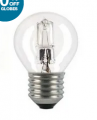
Here in Aus we introduced efficiency requirements years ago that the standard incandescent couldn't meet. There was a move to CFLs and LEDs, however, it turns out that the lighting industry knew how to make a more efficient indandescent, but they didn't make it. I presume this is because they thought they couldn't sell it. The quartz halogen incandescent is about 30% more efficient that the standard incandescent with the same lifetime (there is a basic trade-off of lifetime vs efficiency). So we can now buy these:

1651271024718.png

which you can see is a Q_H bulb in a conventional bulb. These are maybe 75c more expensive than the original incandescent. However, if you consider a typical 60W bulb that lasts 2000 hours, you need to pay for 120kWHours to wear it out. Here in Sydney that costs about $30 in electricity. Moving to Q-H bulbs costs 75c more but saves $9 over the life of the bulb.

Why didn't the market see these things earlier? My guess is that the consumer doesn't engage on that level and isn't interested in the the 'complicated' argument. This is a market failure due to asymmetric information.

Of course now you can get an LED bulb for $5 that will save you $25 of that electricity, AND will last 15,000 hours or so - so replace your next 7 incandescent lamps as well (saving you $25 on each) without climbing a ladder.

Where lighting decisions are made pragmatically - in offices / factories, you don't see many incandescents unless there are particular technical reasons. (And - for the comment on the heating 'benefit', most office building here find a significant load on their air conditioners is the heat generated by the lights, and where you do need heat, a heat pump if far more efficient.)

We have carve outs for particular bulbs - pilot lamps etc..

I think we are slowly moving toward raising the efficiency level above the Q-H bulb.
 
Last edited:

Thread Starter

SamR

Joined Mar 19, 2019
5,526
It is estimated that there are still 1.5 billion of them in use in the US.
I'm not surprised that there are plenty still in use but it seems a bit inflated. 500/person? That's a lot of City Lights! I do notice that I can't see the Milky Way as clearly as when I was a child. I don't think it is all due to age and cataracts though...
 

billnow

Joined Aug 4, 2010
23
I'm not surprised that there are plenty still in use but it seems a bit inflated. 500/person? That's a lot of City Lights! I do notice that I can't see the Milky Way as clearly as when I was a child. I don't think it is all due to age and cataracts though...
Check your math.
 

Thread Starter

SamR

Joined Mar 19, 2019
5,526
I never particularly liked quartz halogen due to color. Their light is shifted further into the blue range of the spectrum and at night under their light red objects appear brown to me and very disconcerting. Always like metal-halide, everything else looked odd to me other than incandescent or LED. Now I'm seeing LEDs that have adjustable spectrum ability.
 

Sensacell

Joined Jun 19, 2012
3,787
I still have one incandescent 100w floodlamp that has become a prized possession, I use it to teach students about the negative resistance of tungsten lamp filaments.

Just when they are getting the hang of ohms law, I toss them the lamp and a DMM and ask them to measure the resistance and calculate the current draw.

Fun is had by all during this valuable lesson.
 

sparky 1

Joined Nov 3, 2018
1,218
The lighting industry was accepted and became sustainable.
The industry hired and supported electrical science that in turn developed the spin off technologies.
The history should be respected. Cancel culture calls it dead.
 

AnalogKid

Joined Aug 1, 2013
12,238
I still have one incandescent 100w floodlamp that has become a prized possession, I use it to teach students about the negative resistance of tungsten lamp filaments.
For a true negative resistance load, use a switching DC/DC converter. Something like 12 V or 24 V in, and 5 V out.

1. Assume a conversion efficiency that is relatively constant with variations in input voltage.

2. Assume a constant load on the converter output.

3. With a constant load on the output, the converter draws a constant power as its input voltage is varied. Input current is inversely proportional to the input voltage, the definition of a negative resistance. Thus, a DC/DC converter as a load is one way to test the control loop stability of whatever is powering it, such as another switching power supply going through design verification.

ak
 
Last edited:
Top