Dual Tracking Power Supply

Thread Starter

Ed Bray

Joined Feb 1, 2017
46
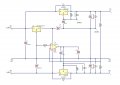
I have been looking for a Dual Tracking Power Supply circuit to build and the schematic below was recommended as an upgrade to a circuit on the JoeBrown.org.uk website. I understand the schematic was designed by Harry Brunts.

dual%20variable%20supply%20schematic_1.jpg

The OpAmp's tested have been either an LM108 or an LF351 but as I don't have either of those to hand could I use a different type?

I've got available: RC4136N, TL071, 072, 074, 082, NE5532P, LM833N, LM1458N, LM358P & 4560D, which of these would be the best match for this circuit? If one of these are used would I need to change anything else to get a similar end result (perhaps need a different regulator than the 78L08)?

I have almost everything required apart from the 15-0-15 50VA Transformer, but I do have a 18-0-18 50VA Transformer. All the Electrolytics will be 50V versions aside from the two 4700uF which are only 35V. I have the 4 resistors required as 1W 1% and have selected those closest to the required values, the two 10K resistors are both identical giving the same readings on each of my meters.

I have lots of 1N4001s, 1N4003s & 1N4007s so will use 1N4007s for the six diodes.

I cannot find a C2, has the author just miss counted or should there be another Capacitor in there somewhere?

Hoping you can advise, you have given me good advice to date so looking for more. :)
 

dl324

Joined Mar 30, 2015
18,328
I have been looking for a Dual Tracking Power Supply circuit to build and the schematic below was recommended as an upgrade to a circuit on the JoeBrown.org.uk website. I understand the schematic was designed by Harry Brunts.
Kudos to you for giving proper attribution.
The OpAmp's tested have been either an LM108 or an LF351 but as I don't have either of those to hand could I use a different type?
Those opamps were overkill for a circuit like this; military grade or JFET inputs are unnecessary. If the author was concerned about slew rate, the circuit would have settled quickly enough with a generic opamp.
I've got available: RC4136N, TL071, 072, 074, 082, NE5532P, LM833N, LM1458N, LM358P & 4560D, which of these would be the best match for this circuit? If one of these are used would I need to change anything else to get a similar end result (perhaps need a different regulator than the 78L08)?
Any generic opamp will do. For single supply opamps such as LM358, I don't think you need to worry about crossover distortion, so you don't need a resistor to the negative supply. Check the maximum operating voltage for the opamps and make sure the one you select will tolerate what you'll be subjecting it to.
I have almost everything required apart from the 15-0-15 50VA Transformer, but I do have a 18-0-18 50VA Transformer. All the Electrolytics will be 50V versions aside from the two 4700uF which are only 35V. I have the 4 resistors required as 1W 1% and have selected those closest to the required values, the two 10K resistors are both identical giving the same readings on each of my meters.
Cap voltages are okay for either transformer. Resistors could be 1/4W.
I cannot find a C2, has the author just miss counted or should there be another Capacitor in there somewhere?
There is no C2. If it were me, I'd have relabeled the part numbers to be in a logical order to avoid the problem you experienced.

You should note that the ground terminal on the 78L08 is mislabeled as ADJ.

Current and power dissipation in the regulators are going to be issues. The regulators will require heat sinks at low output voltages and the rectifier diodes are only rated for 1A.

Have to give the author credit for studying the datasheet and putting in every recommended cap and diode.

One concern is the low unloaded current. The datasheet calls for 10mA to guarantee correct operation. If you find it isn't regulating correctly, add a 10mA load to each regulator.
 

crutschow

Joined Mar 14, 2008
38,507
It would appear that the minimum output voltage of that circuit is about ±1.25V.
Is that okay for your purposes?
If not, a simple mod could generate a 1.25V negative bias for U1's ADJ pin pot reference, allowing it to go to 0V.
The negative voltage reference for this can provided by an LM337 regulator or a TL431 reference.
One concern is the low unloaded current. The datasheet calls for 10mA to guarantee correct operation. If you find it isn't regulating correctly, add a 10mA load to each regulator.
If you change R4 to 120Ω and add a 120 ohm resistor from the output of U4 to its ADJ pin, then the 10mA minimum current load is satisfied.
For the same voltage adjust range also change the 4K7 pot to 2kΩ.
 
Last edited:

Thread Starter

Ed Bray

Joined Feb 1, 2017
46
Wow, thank you both, what great info, Will take it all into consideration.

I have been playing a bit with various reverb and delay circuits and they regularly need a ± supply, anything from ±9-15V depending on the circuit, doubt very much I would need anything as low as ±1.25V though, although never say never :)

I do like the R4 mod so will definitely be doing that, that will sort out the unloaded current issue.

I am a little concerned about the current through the diodes as you say they are only rated to 1A, I do have some 1N5399 (1.5A) or 1N5408 (3.0A) if they would be better and make the system more robust? If so which ones should I change or would it just be a case of changing them all?

Thanks again, appreciate the time you have taken to reply. Ed.
 

Thread Starter

Ed Bray

Joined Feb 1, 2017
46
Thank you, could you be a little more specific please, this is all new to me?

The Bridge rectifier KBPC602 is rated to 6A so do you mean D5 & D6?
 

dl324

Joined Mar 30, 2015
18,328
The Bridge rectifier KBPC602 is rated to 6A so do you mean D5 & D6?
My mistake. The 6 diodes around the regulators can be 1N4001. For some reason, I thought you were also using discrete diodes for the bridge rectifier.

I didn't look up the reverse breakdown voltage for the bridge rectifier. It should handle a 36V CT transformer, but make sure.
 

Thread Starter

Ed Bray

Joined Feb 1, 2017
46
Thank you, I was getting a bit worried there.

Peak Repetitive Reverse Voltage 200V
Working Peak Reverse Voltage 200V
DC Blocking Voltage 200V

Non-Repetitive Peak Forward Surge Current 8.3ms
Single half sine-wave superimposed on rated load is 125A

Okay, now all I have to do is work out what goes to each pin of the opamp :)
 

crutschow

Joined Mar 14, 2008
38,507
My LTspice simulations of that circuit indicated a possible instability and oscillation with the op amp.
If you find that in the actual circuit, a 1nF cap from the op amp output to the inverting (-) input should suppress it.
 
Last edited:

Thread Starter

Ed Bray

Joined Feb 1, 2017
46
Thanks for all the help so far, I am struggling to find a symbol as the 4k7 (variable) resistor anywhere. I have found some that are classed as trimmers which are similar, but have not found an exact match to the one drawn in the schematic.

If it is a variable resistor, what is the idea of the rectangle inside the rectangle? Also where is the wiper connected to? Are not most potentiometers connected with all three contacts going somewhere.

I suspect it is a specific type of variable resistor, but having looked at dozens of pages of symbols I cannot find its like anywhere. I cannot find a symbol with the rectangle inside another rectangle or a symbol for a resistor with a diagonal arrow which has a straight piece on its end, I am at a loss here.

Please help, I am almost in a position to build the circuit. :)
 
Last edited:

dl324

Joined Mar 30, 2015
18,328
I suspect it is a specific type of variable resistor, but having looked at dozens of pages of symbols I cannot find its like anywhere.
It's just a different style of drawing a pot. I prefer to show a pot as a 3 terminal device. In this case, the wiper would be connected to one of the other terminals. Standard convention is to have clockwise rotation to increase the voltage, and for counter clockwise to decrease it.
 

Thread Starter

Ed Bray

Joined Feb 1, 2017
46
Thank you again, it's a pity there is not a standard set of symbols used worldwide, I suspect that that is too easy though. :)
 

dl324

Joined Mar 30, 2015
18,328
it's a pity there is not a standard set of symbols used worldwide, I suspect that that is too easy though.
What we have now is about as good as it's going to get. I use Eagle for drawing schematics and some component families have EU and US libraries.

Add to that people who don't know how to draw schematics, and you have even more of a mess. Take the schematic you referenced as an example. It is inconsistent in it's use of connection dots, there are unnecessary wire jogs, the positive and negative regulators aren't drawn symmetrically, a couple of the polarized caps don't show polarity (or it's too far away, e.g. C3), using colors that aren't meaningful is dumb.

Eagle uses colors in schematics. When I post them, I print to PDF first and clip an appropriately sized portion.
 
Last edited:

Thread Starter

Ed Bray

Joined Feb 1, 2017
46
Thank you for your input.

I have spent a while today playing with KiCad and redone the circuit as I will be making it, I have attached the schematic below.

If the more knowledgeable could check it out for me that would be great. I have removed the transformer and bridge rectifier from the schematic as I could not work out how to get KiCad to recognise the bridge rectifier, however the transformer will be a 18-0-18 60VA transformer (no load output is ±20.4V), and the bridge rectifier will be the KBPC602 discussed previously above.

Dual Tracking Supply with changes.jpg

TIA, Eddie.
 
Top