driver "tends" to be unstable question

Thread Starter

yef smith

Joined Aug 2, 2020
1,459
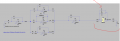
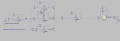
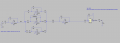
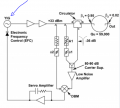
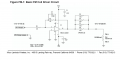
Hello , I have built a driver exactly as written in the manual shown below.
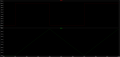
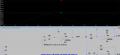
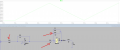
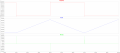
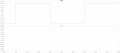
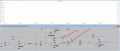
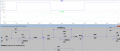
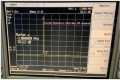
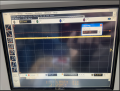
However I notices that if i change C3 feedback capacitor from 1p to 10p i get oscilations as shown below.
In my PCB anything parcitic can cause rise in capacitance its very worring that a change from 1p to 10p makesthe driver unstable.
Maybe its the spice model of the THS3121DG?
why on the slitest change it starts oscilting?
I dont want to have 1pF feedback capacitance because the paracitics will be getting it out of stability.

I managed to make it stable with 1nF capacitance. but how can I know that my PCB wont ruin and make it oscilate with paracitic capacitance.

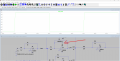
Ltspice files are attached.
https://www.microlambdawireless.com/resources/driverappnote2.pdf
1748935597814.png
1748933960983.png
1748933842417.png

1748937075582.png

1748940103544.png
 

Attachments

Last edited:
Hi Yef,
The problem is not in THS3121, it is just becoming visible there.
The instability is in the previous amplifier (U8) and the way it is driven.
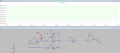
If you insert a resistor to reduce the gain of U8, it will become stable (see below). Reducing the value of this resistor will show instability increasing and at values <100R the circuit becomes unstable.
I would review the stages on the left and the way they drive U8.
To test the THS3121 itself, you can apply the signal from voltage source directly and you will see that it is stable for the same waveform.
1748955325267.png
 

Thread Starter

yef smith

Joined Aug 2, 2020
1,459
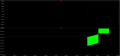
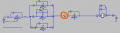
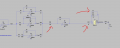
Its intresting how it works,If the load current is unstable then I see the oscilation even in the starting point shown in the red arrow.
if the out put current is stable then its all good to all the stages.

Why oscilations in later stages makes previos stages to oscilate?
How can I know the problematic stage.
(its PID stucture connected to currect driver)
Thanks.

1748957183571.png
 
Last edited:

panic mode

Joined Oct 10, 2011
4,983
why did you change C3 from 1.8pf to 1nF? that is practically short circuit at 100MHz (1.6 Ohm) and that is going to kill gain. and increasing R14 to 1.5k makes things only worse (not that it matters at this point). what is your board layout? at those frequencies all connections must be very short.
 

ronsimpson

Joined Oct 7, 2019
4,693
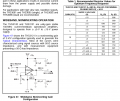
The THS3121 is very fast and a little hard to make work. You need to use the right feedback resistor. There is a table in the data sheet. I did not find any comment in the data about using a gain smaller than 1. Many of this type of amplifier are not happy with a gain of 0.5 for example.
 

Thread Starter

yef smith

Joined Aug 2, 2020
1,459
The THS3121 is very fast and a little hard to make work. You need to use the right feedback resistor. There is a table in the data sheet. I did not find any comment in the data about using a gain smaller than 1. Many of this type of amplifier are not happy with a gain of 0.5 for example.
Hello could you please say what gain table did you mean for THS3121?
Is it good now?
https://www.ti.com/lit/ds/symlink/ths3120.pdf?ts=1748942776104&ref_url=https%3A%2F%2Fwww.google.com%2F

1748961206665.png
 

Thread Starter

yef smith

Joined Aug 2, 2020
1,459
Its intresting how it works,If the load current is unstable then I see the oscilation even in the starting point shown in the red arrow.
if the out put current is stable then its all good to all the stages.

Why oscilations in later stages makes previos stages to oscilate?
How can I know the problematic stage.
(its PID stucture connected to currect driver)
Two different things: first, the simulation has conditions when it oscillates (the resistor I mentioned either fixes it or points to a solution); second, the real application is probably different to the simulation: the presence of PID regulator indicates that it is a closed loop regulator. If you see the oscillations on the input that means they get there from your feedback loop.
The way to solve this is to disconnect feedback loop (pretty much have a circuit as it is shown in your simulation) and make sure the operation is stable (currently it is not). Then connect the feedback.
Tuning the PID regulator would be another thing as it also can oscillate, but for different reasons and frequency of oscillations would probably be much lower.

Increasing capacitor C3 is not fixing the problem, the larger it gets more unstable it gets. But adding capacitor across R12 will help, but only if you added resistor as I mentioned before.

Good luck!
 

Thread Starter

yef smith

Joined Aug 2, 2020
1,459
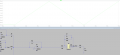
Hello Olexandr, I added the resistot before U8,I just want the current to have the behavior as in the plot without oscilations.
How can I see if there are some sources for problem on the left side for oscilations?
Ltspice files are attached.
1748962476101.png
1748962429687.png
 

Attachments

ronsimpson

Joined Oct 7, 2019
4,693
See table 1. Resistor values for best frequency response.
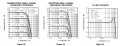
Graph of frequency response of amp with different gains and a good Rf choice. If the Rf is wrong you will get a bump at high frequencies. See the graph on the right. In that graph the bump is only 0.1db. Pick a resistor that is wrong and that point will be much larger or may dip down.
1748990943536.png
 

0ri0n

Joined Jan 7, 2025
173
I have built a driver exactly as written in the manual shown below.
However I notices that if i change C3 feedback capacitor from 1p to 10p i get oscilations as shown below.
In my PCB anything parcitic can cause rise in capacitance its very worring that a change from 1p to 10p makesthe driver unstable.
The THS3121 is a CFA (current feedback amplifier). With CFAs avoid having any capacitor from the inverting input to anywhere, especially to the output. A capacitor across the feedback resistor will lead to peaking and at a certainly point the amplifier will oscillate.

The THS driver in the app note is already over-compensated (= lower bandwidth) through the use of larger (1k) than nominal resistor values. I don't know why the designer felt that he needed an additional 1.8pF capacitor.
 
Remove C3. As 0ri0n said, any additional capacitance can make it unstable because it is a current feedback OpAmp. Adding capacitor across R12 helps: AD8034 is a voltage feedback OpAmp and reducing bandwidth can make it more stable.
Also in simulation the first stage produces some spikes. Adding 100p to 1n capacitor across R7 removes them.
At least in simulation all this helped.
 

Thread Starter

yef smith

Joined Aug 2, 2020
1,459
Hello Olexandr,I removed C3 because the advice regarding the current feedback is very important.
Also I looked at the AC responce and I saw that my BW is very very low.
I guess that the source of the BW limitation is the integrator C1=50nF
my intertator turns square wave into trienge
When I tried to reduce C1=1nF then my output is no longer triangle but square because it get clipped very fast.
mabe the integrator is not supposed to have 1MHz BW?
How can I increase the BW so it will be at least 1Mhz without getting oscilations?
Ltspice file is attached.
1749306560278.png
1749304193933.png1749303435779.png1749303363287.png
1749306599436.png
 

Attachments

Last edited:
Your circuit is a PID regulator, so the input signal to it is an error. The regulator will be trying to keep it at zero. Your simulation has no feedback and you are forcing the error signal to go up and down (V1 source), obviously integrator will turn it into triangle (with those parameters). The required time constant of integrator should be based on the parameters of the system you are regulating. All this would be part of PID tuning. You need to figure out if this time constant suitable for your application or needs to change. Don't confuse it with total bandwidth: for example, your Proportional part has bandwidth 10MHz.
 

Thread Starter

yef smith

Joined Aug 2, 2020
1,459
Hello Oleksandr,my controller needs to solve a problem in my YIG.
My YIG has two coils one called TUNE and the other FM.
FM coil is the coil I am connecting the driver for the loop.
TUNE is a bigger coil which is being driven outside of the PLL by a steady DC.
The problem with this device is the the TUNE coil drifting causing a slow change in the "mixer" error signal by 20mV or 2MHz.
So I see this ass accumulative error.
Thats why I am using integrator to cancel the drift.
Do you think its a good idea?
Thanks.

1749556052601.png
1749556112046.png
1749556772436.png
1749556835123.png
 
Top