Driven Right Leg Feedback

Thread Starter

Secan

Joined Sep 20, 2024
205
drl use.jpg


I read a lot about Driven Right Leg lately but there is some clarification I need to ask:

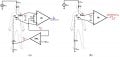
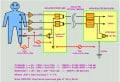
Let's say the DRL amplifier feeds the inverse waveform to the body (on left above vs right illustration which doesn't have DRL). So the body shouldn't have the common mode voltage already. But why is Zel1, Zel2 or the upper electrodes continued to have common mode EMI and send Vcmi to the IA and into DRL chip? Isn't it when the common mode in body is suppressed, there should be no common mode Vcmi coming out of upper Zel1, Zel2 already?

Or does it mean Vcmi is still being continually emitted by upper electrodes and the only thing that happens is the impedance of Zb2 in the right leg is much lessened. So it's like the only purpose of DRL is to decrease the impedance between ground electrode to right leg and not really lowering the common mode voltage in the body? Because if the common mode is lowered, the Vcmi coming from the upper electrodes should be lowered or suppressed already, isn't it.
 

panic mode

Joined Oct 10, 2011
4,866
Let's say the DRL amplifier feeds the inverse waveform to the body ...
nope... it does not feed back the signal waveform.... it feeds back the waveform... but that is the waveform of the common mode. those two are not the same thing so circuit attempts to separate them. if successful, you will only see the signal - without common mode. and common mode can be much larger than the signal. if it was the other way around (signal much larger than common mode), nobody would care about rejecting common mode.

human body is a bag of chemicals (tons of ions) surrounded by EMI (AC hum, radio waves etc.). and each patient has different "content" (volume, temperature, pulse, breathing...) and movements (breathing, shivering, spasms...). and any movement generates static charge of the clothing (even if all you move is an elbow). so you are trying to observe faint light of a firefly while ignoring a backdrop of raging wildfire. this would be so much easier if the intense backdrop would wanish somehow...

something like this:

1755870339673.png
 

Thread Starter

Secan

Joined Sep 20, 2024
205
nope... it does not feed back the signal waveform.... it feeds back the waveform... but that is the waveform of the common mode. those two are not the same thing so circuit attempts to separate them. if successful, you will only see the signal - without common mode. and common mode can be much larger than the signal. if it was the other way around (signal much larger than common mode), nobody would care about rejecting common mode.

human body is a bag of chemicals (tons of ions) surrounded by EMI (AC hum, radio waves etc.). and each patient has different "content" (volume, temperature, pulse, breathing...) and movements (breathing, shivering, spasms...). and any movement generates static charge of the clothing (even if all you move is an elbow). so you are trying to observe faint light of a firefly while ignoring a backdrop of raging wildfire. this would be so much easier if the intense backdrop would wanish somehow...

something like this:

View attachment 354600
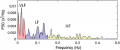
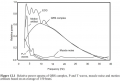
Pls share FFT of common mode from 0Hz to 1000Hz. I want to know the distribution whether it only increase the noise floor at lower frequency or at all frequency.
 

drjohsmith

Joined Dec 13, 2021
1,549
the human body is a big sack of electrical conductive liquid.
it make a great antenna.
this is shown in your diagram as Vpwr, being capacitive coupled in to the patient,
this is very simplified, but mains and its harmonics is the biggest signal you pick up,
as an experiment, see how much you pick up, if you have a proper oscilloscope, with a 1 Mohm input impedance, se how much noise a probe picks up, then touch the probe with your finger and you will see a significant increase in pickup,

as you have seen on other posts, you must not conduct the patient to ground , so you run the equipment in equipotential mode.,

in your diagram, the IA is going to be receiving the same interference on both its inputs,
and swamped by that, is the small difference voltage between the two leads you want.
the common mode voltage received by the IA , is inverted by the DRL , and feed back, thus canceling the common mode .
this common mode voltage is variable . Go back to the scope test above, as you move around, the trace on the scope changes, the same is true for the Vpwl you will pick up.

as the DRL is low current , low voltage, and uses medical grade power supplies and medical grade circuit design and approvals , the circuit is safe .

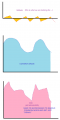
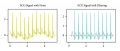
the IA in the right hand picture is by the looks of things , receiving the Vpwl, and overloading, giving a square wave out at the Vpwl frequency. A square wave has many harmonics.,!

without a link to the document where you have copied this diagram from, we are basically guessing what its trying to show,

if you coukd share where the diagram is from , we might be able to help more, else please mark you are happy with the question being answered.
 

Thread Starter

Secan

Joined Sep 20, 2024
205

Btw the source of the figure come from this url https://www.mdpi.com/2076-3417/12/24/12897

I just thought it has the nicest DRL illustration at google search. So just ignore the article.

Here is my concern.

My signal of interests are above 200Hz. But im worried the common mode can become so large and can clip the signal. How often are common mode above 250mV? If my amplifier ADCs directly map the signal and deduct the common mode by software. If the common mode is above 250mV. Then it can clip the signal?
 

drjohsmith

Joined Dec 13, 2021
1,549
Btw the source of the figure come from this url https://www.mdpi.com/2076-3417/12/24/12897

I just thought it has the nicest DRL illustration at google search. So just ignore the article.

Here is my concern.

My signal of interests are above 200Hz. But im worried the common mode can become so large and can clip the signal. How often are common mode above 250mV? If my amplifier ADCs directly map the signal and deduct the common mode by software. If the common mode is above 250mV. Then it can clip the signal?
thank you for sharing where you copied the diagram from,

its not only polite , it enables us to further understand what a diagram is trying to illustrate.,
any diagram is almost by definition an approximation, can't show everything, and has an agenda of its own that is important to understand.,

pickup ,you have seen in other posts of yours, comes from many sources, and is of many types .
indeed, at one time you were concerned about esd , this could be considered as a common mode interference,
each type of common mode have different methods of minimising or removing it.

hence, there is no magic number above/ below one has not to be concerned with common mode,

the big method of combating it, is the equipotential technique that you have covered in depth in your other posts.

Ecg is a very sensitive measurement,
it takes a hierarchical approach to achieve good results,

your asking about can common mode be greater than 250 mV

with the left diagram of yours , the DRL injects constantly the changing -Vcml, so the ever changing Vpwl is canceled out ,

The DRL has a range of voltages it can operate,
what I would suggest is you make and post a sketch graph
volts against time.
show the voltage at Zel 1 and 2 approximation you expdct.
then add a interference, and show with no DRL the volts you expect at the IA input,
remember that Ze1 and 2 are dependent on the pads , so will be extremely different resistances.
now show what DRL waveform yoh would expect,
 
Last edited:

Thread Starter

Secan

Joined Sep 20, 2024
205
thank you for sharing where you copied the diagram from,

its not only polite , it enables us to further understand what a diagram is trying to illustrate.,
any diagram is almost by definition an approximation, can't show everything, and has an agenda of its own that is important to understand.,

pickup ,you have seen in other posts of yours, comes from many sources, and is of many types .
indeed, at one time you were concerned about esd , this could be considered as a common mode interference,
each type of common mode have different methods of minimising or removing it.

hence, there is no magic number above/ below one has not to be concerned with common mode,

the big method of combating it, is the equipotential technique that you have covered in depth in your other posts.

Ecg is a very sensitive measurement,
it takes a hierarchical approach to achieve good results,

your asking about can common mode be greater than 250 mV

with the left diagram of yours , the DRL injects constantly the changing -Vcml, so the ever changing Vpwl is canceled out ,

The DRL has a range of voltages it can operate,
what I would suggest is you make and post a sketch graph
volts against time.
show the voltage at Zel 1 and 2 approximation you expdct.
then add a interference, and show with no DRL the volts you expect at the IA input,
remember that Ze1 and 2 are dependent on the pads , so will be extremely different resistances.
now show what DRL waveform yoh would expect,
I understand now about how DRL works. I tried to understand how DRL work in typical instrumentation amplifier so I'd understand how the following Biosemi amplifier with DRL work:

BioSemi EEG ECG EMG BSPM NEURO amplifiers systems


biosemi illustration.JPG

All the ADCs were sampled at same time. see details at:

biosemi.com/faq/1ADC_per_channel.htm

Now here is my major concern now. Remember I owned the $17700 worth gtec g.USBamp (not a Biosemi). It is confirmed to use NO DRL. That is, the g.USBamp has no DRL. Not only that. But if you will the specs below. It is similar of the BIOSEMI above in that it uses no instrumentation amplifier but direct to ADCs where common mode is substracted by software. Yet it has only range of 250mV to -250mV. So my question, would it clip if the signal common mode is say 1V? But here is the paradox. The g.USBamp is primarily used in EEG in major research centers worldwide. How do they manage it without DRL and allowing only 250mV allowance in common mode?? I spent over $3000 in their additional active electrode systems and no DRL too. So I'm worried.

g.USBamp RESEARCH: Unleash Remarkable Precision in Physiological Data Acquisition | EEG/Biosignal Amplifier | g.tec medical engineering medical engineering
 

drjohsmith

Joined Dec 13, 2021
1,549
I understand now about how DRL works. I tried to understand how DRL work in typical instrumentation amplifier so I'd understand how the following Biosemi amplifier with DRL work:

BioSemi EEG ECG EMG BSPM NEURO amplifiers systems


View attachment 354640

All the ADCs were sampled at same time. see details at:

biosemi.com/faq/1ADC_per_channel.htm

Now here is my major concern now. Remember I owned the $17700 worth gtec g.USBamp (not a Biosemi). It is confirmed to use NO DRL. That is, the g.USBamp has no DRL. Not only that. But if you will the specs below. It is similar of the BIOSEMI above in that it uses no instrumentation amplifier but direct to ADCs where common mode is substracted by software. Yet it has only range of 250mV to -250mV. So my question, would it clip if the signal common mode is say 1V? But here is the paradox. The g.USBamp is primarily used in EEG in major research centers worldwide. How do they manage it without DRL and allowing only 250mV allowance in common mode?? I spent over $3000 in their additional active electrode systems and no DRL too. So I'm worried.

g.USBamp RESEARCH: Unleash Remarkable Precision in Physiological Data Acquisition | EEG/Biosignal Amplifier | g.tec medical engineering medical engineering
if you could answer my question please ,

re your new question

". The g.USBamp is primarily used in EEG in major research centers worldwide. How do they manage it without DRL and allowing only 250mV allowance in common mode?? I spent over $3000 in their additional active electrode systems and no DRL too. So I'm worried"

the forum, unless someone from the company is here and willing to comment, is unable to reverse engineer or comment on how to modify or change usage of esspecialy medical equipment, or how to undertake medical work. you will have to contact their support and training people.

Just keep in mind
Caveat emptor, quia ignorare non debuit quod jus alienum emit

buyer beware..
 

Thread Starter

Secan

Joined Sep 20, 2024
205
thank you for sharing where you copied the diagram from,

its not only polite , it enables us to further understand what a diagram is trying to illustrate.,
any diagram is almost by definition an approximation, can't show everything, and has an agenda of its own that is important to understand.,

pickup ,you have seen in other posts of yours, comes from many sources, and is of many types .
indeed, at one time you were concerned about esd , this could be considered as a common mode interference,
each type of common mode have different methods of minimising or removing it.

hence, there is no magic number above/ below one has not to be concerned with common mode,

the big method of combating it, is the equipotential technique that you have covered in depth in your other posts.

Ecg is a very sensitive measurement,
it takes a hierarchical approach to achieve good results,

your asking about can common mode be greater than 250 mV

with the left diagram of yours , the DRL injects constantly the changing -Vcml, so the ever changing Vpwl is canceled out ,

The DRL has a range of voltages it can operate,
what I would suggest is you make and post a sketch graph
volts against time.
show the voltage at Zel 1 and 2 approximation you expdct.
then add a interference, and show with no DRL the volts you expect at the IA input,
remember that Ze1 and 2 are dependent on the pads , so will be extremely different resistances.
now show what DRL waveform yoh would expect,
I found the answer. It is a negative feedback loop that settles to a final value after a certain period of time and it stays at this operating point. Initially, the error signal (common-mode voltage) is large, but after the system is allowed to settle the common-mode signal becomes attenuated. I dont have a pen and paper with me now but ill do it bec i have to fit common mode in mere 250mV.

Can you give an estimate what minimal exposure can your body common mode to be below 250mV, like shutting down main power at house and using all batteries in the units (of cors I used batteries esp after your shocking presentation of ac adaptor ground fault)?

Btw i asked the company about common mode suppression and here is their response:


"We appreciate your interest in learning more about the device. However, please note that the specific hardware details you requested are considered confidential and proprietary information. As such, we are unable to disclose them.

We remain at your disposal for any other questions or assistance you may need, and we’ll do our best to support you within the scope of the available information.

Thank you for your understanding."

I guess ill use signal generator. If the waveforms clip above 250mV then im in trouble.
 

Thread Starter

Secan

Joined Sep 20, 2024
205
nope... it does not feed back the signal waveform.... it feeds back the waveform... but that is the waveform of the common mode. those two are not the same thing so circuit attempts to separate them. if successful, you will only see the signal - without common mode. and common mode can be much larger than the signal. if it was the other way around (signal much larger than common mode), nobody would care about rejecting common mode.

human body is a bag of chemicals (tons of ions) surrounded by EMI (AC hum, radio waves etc.). and each patient has different "content" (volume, temperature, pulse, breathing...) and movements (breathing, shivering, spasms...). and any movement generates static charge of the clothing (even if all you move is an elbow). so you are trying to observe faint light of a firefly while ignoring a backdrop of raging wildfire. this would be so much easier if the intense backdrop would wanish somehow...

something like this:

View attachment 354600
metting capacitive coupling.jpg

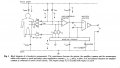
(The above is from Metting van Rijn "High_quality recording of bioelectric events" Part 1)

For days. I thought when capacitive coupling from mains happens in the body. There is a common mode in the two input electrodes on top (chest) that can be cancelled by the DRL electrode producing a current that inverse the entire capacitive coupling in the body cancelling it.

But I learnt that is not really the case. The trick is to make the Zrl or ground impedance almost 0. Then it's like the capacitive coupling can be ignored because the 2 upper electrodes can measure the real signal with respect to 0 ground hence ignoring the contribution of the capacitive coupling.

The trick of DRL is injecting current just so that the DRL electrode impedance would be much lowered from opposite directed currents in the electrodes. It doesn't mean the current goes to the whole body cancelling the capacitive coupilng, right?

It doesn't mean the DRL current goes to the 2 upper electrodes too. The purpose of the current is just to lower the DRL electrode so it can measure the 2 inputs directly. Do you agree?

Bottom line is. If Zrl or the ground electrode has zero impedance, then any capacitive coupling can be ignored?

If so, what kind of common mode interference where the zero impedance ground electrode would not be able to address. like would "EMI (AC hum, radio waves etc.). and each patient has different "content" (volume, temperature, pulse, breathing...) and movements (breathing, shivering, spasms...). and any movement generates static charge of the clothing (even if all you move is an elbow)." still affect the common mode if the ground impedance is zero. Answer is yes? except capacitive coupling that won't affect the common mode voltage if the ground electrode has zero impedance?
 

Thread Starter

Secan

Joined Sep 20, 2024
205
thank you for sharing where you copied the diagram from,

its not only polite , it enables us to further understand what a diagram is trying to illustrate.,
any diagram is almost by definition an approximation, can't show everything, and has an agenda of its own that is important to understand.,

pickup ,you have seen in other posts of yours, comes from many sources, and is of many types .
indeed, at one time you were concerned about esd , this could be considered as a common mode interference,
each type of common mode have different methods of minimising or removing it.

hence, there is no magic number above/ below one has not to be concerned with common mode,

the big method of combating it, is the equipotential technique that you have covered in depth in your other posts.

Ecg is a very sensitive measurement,
it takes a hierarchical approach to achieve good results,

your asking about can common mode be greater than 250 mV

with the left diagram of yours , the DRL injects constantly the changing -Vcml, so the ever changing Vpwl is canceled out ,

The DRL has a range of voltages it can operate,
what I would suggest is you make and post a sketch graph
volts against time.
show the voltage at Zel 1 and 2 approximation you expdct.
then add a interference, and show with no DRL the volts you expect at the IA input,
remember that Ze1 and 2 are dependent on the pads , so will be extremely different resistances.
now show what DRL waveform yoh would expect,
I'll answer the above (don't miss last message for the Metting figure).

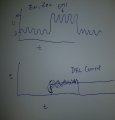
figure drl.jpg

Ok here are the sequence of events.

1. User encounters capacitive coupling when say entering a room or turning on the house breaker, there is a Vsource or capacitor between the say ceiling and body just like in the Metting figure (in last message I just wrote today).

2. The ground/DRL electrode has impedance, the capacitive coupling induces voltage in the ground/DRL electrode which creates huge common mode voltage in the inputs. After the DRL turns on, there is reverse current which cancels or lower the ground electrode much. Then the input measures lower common mode due to the ground electrode voltage no longer there..

3. What this means is that capacitive coupling and common mode voltage are induced with respect to the amplifier common or ground electrode. My mistaken thought before was I thought the capacitive coupling induces a fixed common mode voltage say 4V in the body that the DRL amplifier can phase reverse and the entire body 4V is cancelled. But the capacitive coupling still has common mode noise in body. Only because the ground electrode become almost zero impedance that no voltage to induced in the ground/DRl electrode and hence the inputs and amplifier common no longer affected by the still existing common mode in body. Correct? If wrong. It's hard to believe the DRL current can travel in entire body and cancels all the common mode in body. Remember body has so much resistance that the current in 9V body can't enter all parts of body.
 

drjohsmith

Joined Dec 13, 2021
1,549
View attachment 354740

(The above is from Metting van Rijn "High_quality recording of bioelectric events" Part 1)

For days. I thought when capacitive coupling from mains happens in the body. There is a common mode in the two input electrodes on top (chest) that can be cancelled by the DRL electrode producing a current that inverse the entire capacitive coupling in the body cancelling it.

But I learnt that is not really the case. The trick is to make the Zrl or ground impedance almost 0. Then it's like the capacitive coupling can be ignored because the 2 upper electrodes can measure the real signal with respect to 0 ground hence ignoring the contribution of the capacitive coupling.

The trick of DRL is injecting current just so that the DRL electrode impedance would be much lowered from opposite directed currents in the electrodes. It doesn't mean the current goes to the whole body cancelling the capacitive coupilng, right?

It doesn't mean the DRL current goes to the 2 upper electrodes too. The purpose of the current is just to lower the DRL electrode so it can measure the 2 inputs directly. Do you agree?

Bottom line is. If Zrl or the ground electrode has zero impedance, then any capacitive coupling can be ignored?

If so, what kind of common mode interference where the zero impedance ground electrode would not be able to address. like would "EMI (AC hum, radio waves etc.). and each patient has different "content" (volume, temperature, pulse, breathing...) and movements (breathing, shivering, spasms...). and any movement generates static charge of the clothing (even if all you move is an elbow)." still affect the common mode if the ground impedance is zero. Answer is yes? except capacitive coupling that won't affect the common mode voltage if the ground electrode has zero impedance?
you are referring to grounding the patient again, based upon a random document which seems to have an optional switch to ground , not related to your test equipment.

please do not ever conect your patient to ground.,

please also note the different common voltage symbols used in your diagram, and what that means.. one means safety ground one means equipotential point..
 

drjohsmith

Joined Dec 13, 2021
1,549
I'll answer the above (don't miss last message for the Metting figure).

View attachment 354758

Ok here are the sequence of events.

1. User encounters capacitive coupling when say entering a room or turning on the house breaker, there is a Vsource or capacitor between the say ceiling and body just like in the Metting figure (in last message I just wrote today).

2. The ground/DRL electrode has impedance, the capacitive coupling induces voltage in the ground/DRL electrode which creates huge common mode voltage in the inputs. After the DRL turns on, there is reverse current which cancels or lower the ground electrode much. Then the input measures lower common mode due to the ground electrode voltage no longer there..

3. What this means is that capacitive coupling and common mode voltage are induced with respect to the amplifier common or ground electrode. My mistaken thought before was I thought the capacitive coupling induces a fixed common mode voltage say 4V in the body that the DRL amplifier can phase reverse and the entire body 4V is cancelled. But the capacitive coupling still has common mode noise in body. Only because the ground electrode become almost zero impedance that no voltage to induced in the ground/DRl electrode and hence the inputs and amplifier common no longer affected by the still existing common mode in body. Correct? If wrong. It's hard to believe the DRL current can travel in entire body and cancels all the common mode in body. Remember body has so much resistance that the current in 9V body can't enter all parts of body.
why in your waveform are you showing there no drl current before the emi, when there is after the emi has ended ? where's the drl current flowing after the emi ?
what do you mean by huge common mode voltage being created by the capacitive coupling ?
 

Thread Starter

Secan

Joined Sep 20, 2024
205
why in your waveform are you showing there no drl current before the emi, when there is after the emi has ended ? where's the drl current flowing after the emi ?
what do you mean by huge common mode voltage being created by the capacitive coupling ?
I thought capacitive coupling can make the body produce voltages like 4Volts coming out of the say two breasts. But it appears to be related to the amplifier common. Wait ill reread all references I read the past 2 days and review discussions with many experts. And ponder on them. Tnx for bringing that up with that question.
 

drjohsmith

Joined Dec 13, 2021
1,549
I thought capacitive coupling can make the body produce voltages like 4Volts coming out of the say two breasts. But it appears to be related to the amplifier common. Wait ill reread all references I read the past 2 days and review discussions with many experts. And ponder on them. Tnx for bringing that up with that question.
please do, and try drawing out the waveforms again,
 

Thread Starter

Secan

Joined Sep 20, 2024
205
please do, and try drawing out the waveforms again,
In my initial drawing. I thought when capacitive coupling caused the breasts to produce 4 volts common (mode), the inputs would have common mode of 4 volts (versus differential).. then it would take finite take for the DRL to kick in and produce the current that would produce reverse -4 volts in the breasts.

But realizing common mode voltage is simply the voltage difference between body and amplifier common. Then the input voltage is really just a trick, the breasts are not producing 4 volts. Instead the 4 volts is produced by the amplifier common and ground/DRL electrode on the skin. It's not really in the inputs.. maybe it's because one uses Input minus ground.. that this comes about 0- 4Volts.. so it's like the input has -4Volts or producing common mode (meaning same phase) voltage?

if my statement is confusing. When the person is standing under high transmission wires, the breasts don't produce 4V common to both inputs right? If right, then the so called Input common mode voltage is really because the ground impedance is attracting current that produces voltages, which one blames on the inputs, right?

If so, then in the drawing, when the capacitive coupling occurs, the DRL instantly produces the counter current because the ground terminal is supposedly getting common mode that really not coming from the breasts or inputs at all, but because the ground/DRL electrode itself is having impedance attracting interferent current and producing voltage that one blames on the breasts.

It's really confusing by saying the breasts produced 4 volts to the inputs of the amplifier. If it doesn't, they must change the description as it caused students many days of confusion.
 

drjohsmith

Joined Dec 13, 2021
1,549
In my initial drawing. I thought when capacitive coupling caused the breasts to produce 4 volts common (mode), the inputs would have common mode of 4 volts (versus differential).. then it would take finite take for the DRL to kick in and produce the current that would produce reverse -4 volts in the breasts.

But realizing common mode voltage is simply the voltage difference between body and amplifier common. Then the input voltage is really just a trick, the breasts are not producing 4 volts. Instead the 4 volts is produced by the amplifier common and ground/DRL electrode on the skin. It's not really in the inputs.. maybe it's because one uses Input minus ground.. that this comes about 0- 4Volts.. so it's like the input has -4Volts or producing common mode (meaning same phase) voltage?

if my statement is confusing. When the person is standing under high transmission wires, the breasts don't produce 4V common to both inputs right? If right, then the so called Input common mode voltage is really because the ground impedance is attracting current that produces voltages, which one blames on the inputs, right?

If so, then in the drawing, when the capacitive coupling occurs, the DRL instantly produces the counter current because the ground terminal is supposedly getting common mode that really not coming from the breasts or inputs at all, but because the ground/DRL electrode itself is having impedance attracting interferent current and producing voltage that one blames on the breasts.

It's really confusing by saying the breasts produced 4 volts to the inputs of the amplifier. If it doesn't, they must change the description as it caused students many days of confusion.
please make a drawing to explain what you mean,
 

drjohsmith

Joined Dec 13, 2021
1,549
Btw
You seem to be heading back towards wanting to earth patients , and use that non medical grade mains ECG equipment that you also want to modify the firmware on .
Is this where your heading again or have you sold / binned that gear and requirements ?
 

Thread Starter

Secan

Joined Sep 20, 2024
205
Btw
You seem to be heading back towards wanting to earth patients , and use that non medical grade mains ECG equipment that you also want to modify the firmware on .
Is this where your heading again or have you sold / binned that gear and requirements ?
No. I'm the only patient and i will always use batteries in both bioamplifier and laptops. And i don't need to modify the Brainmaster unit because the g.USBamp can probe up to 2400 Hz.

Btw.. after a day of reading and asking. I figured out the dynamics of the driven right legs. It has to do with negative feedback in the op amp. The DRL has negative feedback amp. The negative input is connected to the mean of the common modes in the input. And the DRL tries to make it like the positive input zero reference. In other words, the input common mode can turn zero. The output of the DRL can be whatever voltage or current to make the inputs similar. Right now I'm wondering why the DRL output has to form connection to the foot to make a loop with the chest inputs. Once I figured that out. I can make the voltage against time plots you were asking me. Stay tuned. I'll meditate on it.
 
Top