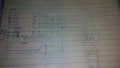
by putting the source on.. the count is from 9-7-5-3-1.. there is nothing unique .. when i turn on the source the clock pulse start then the 7segment just display 9-7-5-3-1 number again and again... 1001 - 0111 - 0101 - 0011 - 0001..
by putting the source on.. the count is from 9-7-5-3-1.. there is nothing unique .. when i turn on the source the clock pulse start then the 7segment just display 9-7-5-3-1 number again and again... 1001 - 0111 - 0101 - 0011 - 0001..
Have a good look at the binairy values of the A,B,C and D outputs.
How do they relate to the wanted sequence?
Also what values do you need at the input of the counter to start at 9?
Have a good look at the binairy values of the A,B,C and D outputs.
How do they relate to the wanted sequence?
Also what values do you need at the input of the counter to start at 9?
Have a good look at the binairy values of the A,B,C and D outputs.
How do they relate to the wanted sequence?
Also what values do you need at the input of the counter to start at 9?
I'm going to be a spoil sport and let you off the hook. In the given sequence the least significant digit is always a 1. So tie that input to the display high. What do the remaining digits do? That's right they go {100, 011, 010, 001, 000}. Those values concatenated with a constant, always 1, least significant digit, make up the desired sequence. Preset the counter to 4, aka 100, let it count down to 0, and reset the counter to 4 on the next clock after the counter reaches 0. Recognizing patterns is half the secret to clever logic and state machine design. It has always worked for me.

 Facebook
 Google
 GitHub
 Linkedin