I realize that some of you are professional educators, and your deep answers reflect that. I was hoping for something more brass tacks, like "don't do that, your cap will overheat", rather than "You have to do calculus and study quantum mechanics."
This seems to be one of the few answers which directly answers the question.
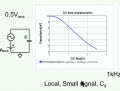
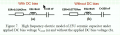
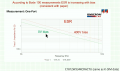
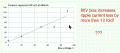
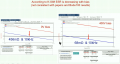
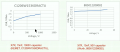
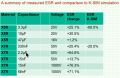
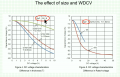
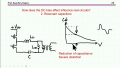
If i understand this video, which i recently discovered, from Prof Sam, seems to address my original question. Sam says in a ceramic cap, a DC bias can:
increase ESR
decrease capacitance
increase acoustic vibration and risk of cracking
I believe his work shows that this is worse with ferroelectric diaelectrics (Class II and III) than paraelectric (Class 1).
If my understanding is correct, then i conclude that ceramic caps strongly prefer a bipolar signal.
I realize that some of you are professional educators, and your deep answers reflect that. I was hoping for something more brass tacks, like "don't do that, your cap will overheat", rather than "You have to do calculus and study quantum mechanics."
What was the answer? "A lot of comments" <> "answered".
Some off-topic sub-conversations, like the debate about the definition of AC, weren't my fault, didn't answer the question, and shouldn't be counted.
This seems to be one of the few answers which directly answers the question.
If i understand this video, which i recently discovered, from Prof Sam, seems to address my original question. Sam says in a ceramic cap, a DC bias can:
increase ESR
decrease capacitance
increase acoustic vibration and risk of cracking
I believe his work shows that this is worse with ferroelectric diaelectrics (Class II and III) than paraelectric (Class 1).
If my understanding is correct, then i conclude that ceramic caps strongly prefer a bipolar signal.
As has been stated multiple times and ways, what is preferable depends on the application. If you want to be able to tune the capacitance, so as to tune an oscillator, or time constant, then being able to change the capacitance by changing the DC bias might be exactly what you want or even need.
You are trying to get a generic one-size-fits-all answer to a very application-specific question. It's like asking which is better, a high-viscosity or low-viscosity oil. There is no single answer because it depends on the application and what is important for that application.
What does this even mean? "Properly selected" includes being selected for the type of waveform it will see, so what does it mean to say that the waveform now makes no difference once that has happened?
For example, is a polarized capacitor ever the "proper" selection? If so, then after choosing that polarized capacitor, you are saying that using a bipolar waveform is okay, since you assert that it makes no difference what the waveform is.
Similarly, if you have "properly selected" a capacitor because it's characteristics are a function of DC bias so that you can use that bias to tune the capacitor's characteristics for precision control of circuit behavior. then it most definitely makes a difference what kind of waveform you use.
True, there may be applications where you want a very high ESR and high losses in your capacitor. I shouldn't assume that low losses is universally desired. On the other hand, I think it would be accurate to say that would be a very rare edge case.
I didn't notice anyone in the thread mentioning that DC bias can increase ESR.
There may be applications where significantly lower capacitance than the rated capacitance is desired. I shouldn't assume that attaining rated capacitance is universally desired.
Therefore, nuanced answer might be, "capacitance has a reciprocal relationship to DC bias, Which might or not might not be preferred, depending on your application.
I didn't notice anyone in the thread in seven pages mentioning that capacitance has a reciprocal relationship to DC bias.
Similarly, Prof Sam points out that DC bias will cause distortion in a resonant converter, and so it's "not a good idea". "Good idea" depends! Maybe someone wants distortion in their converter.
This brings me to the end of this presentation. I thank you very much for your attention. I hope you find it of interest and perhaps it'll be useful to you in the future. Thank you very much!
Similarly, if you have "properly selected" a capacitor because it's characteristics are a function of DC bias so that you can use that bias to tune the capacitor's characteristics for precision control of circuit behavior. then it most definitely makes a difference what kind of waveform you use.
I stated in a previous comment that this thread is about ceramic capacitors. As others have noted, A polarized capacitor will fail with a bipolar signal. On the other hand, what does fail mean? Maybe an application calls for feeding a polarized capacitor with a bipolar signal. I shouldn't assume.
On the other hand, I think it would be accurate to say that intentionally feeding a polarized cap with a bipolar signal would be extremely rare.
Imo, a quality answer is informative. A high quality answer says "It depends what you're trying to accomplish. DC bias can increase ESR, reduce capacitance, and increase acoustic vibration." A low quality answer just says "It depends what you're trying to accomplish" without any further information.
Otoh, maybe a quality answer shouldn't inform, but simply encourage the asker to do their own research. But then, why have a forum?
I stated in a previous comment that this thread is about ceramic capacitors. As others have noted, A polarized capacitor will fail with a bipolar signal. On the other hand, what does fail mean? Maybe an application calls for feeding a polarized capacitor with a bipolar signal. I shouldn't assume.
On the other hand, I think it would be accurate to say that intentionally feeding a polarized cap with a bipolar signal would be extremely rare.
Imo, a quality answer is informative. A high quality answer says "It depends what you're trying to accomplish. DC bias can increase ESR, reduce capacitance, and increase acoustic vibration." A low quality answer just says "It depends what you're trying to accomplish" without any further information.
Otoh, maybe a quality answer shouldn't inform, but simply encourage the asker to do their own research. But then, why have a forum?
You insist on specific answers to vague questions. Even if you limit discussion to ceramic capacitors, there are many types of dielectrics used in ceramic capacitors resulting in different types of changes with DC bias. If you want "high quality" answers, perhaps you should work on posing higher quality questions.
But, don't worry, I won't subject you to any more of my low quality answers. I'm done trying to help you.
@johnyradio
you say above
"I realize that some of you are professional educators, and your deep answers reflect that. I was hoping for something more brass tacks, like "don't do that, your cap will overheat", rather than "You have to do calculus and study quantum mechanics."
I would say this is a forum of many different talents, and lots of very different backgrounds, all giving their time for free to help people into this great world of electronic and engingering.
I put to you that in general the relevance of the perseved answer is related to the quality of the question asked,
if all you wanted to know is on lines of "don't do that your capacitor will overheat " that would have been a great question,
then you would have been asked for some practical values you're looking at.
to answer you in the "more brass tacks" you've asked for ,
provided tge voltage and other specifications in the data sheet are followed, there is absolutely zero preference as far as the ceramic capacitor you are wanting to use between a voltage thats symmetrical around zero and one with a dc bias.
if you have a new question , please start a new post stating the question as best as you can
Sorry if my original question was too vague. I appreciate all of the comments It has received. I have enjoyed the thread a lot and I assume others have participated because they found it interesting.
there is absolutely zero preference as far as the ceramic capacitor you are wanting to use between a voltage thats symmetrical around zero and one with a dc bias.
"to answer you in the "more brass tacks" you've asked for ,
provided the voltage and other specifications in the data sheet are followed, there is absolutely zero preference as far as the ceramic capacitor you are wanting to use between a voltage thats symmetrical around zero and one with a dc bias."
Repetition without explanation is repetition without explanation is repetition without explanation.
To state again, as professor Sam explains, behavior of the cap in the presence of DC bias compromises the datasheet specifications you say I should depend on. Sam further notes that the manufacturers themselves were surprised when he presented them with this data.
You may be correct that it doesn't matter but you haven't explained the apparent contradiction between your claim and Sam's data.
TS asks a vague question. TS will get a vague answer.
If the application has +300 VDC unipolar signal, you select a capacitor to handle that situation.
If the application subjects the capacitor to -150 V and +150 V, you select the proper capacitor.
An AC motor starter capacitor is carefully selected for that application.
The question is not just concerned with catastrophic failure, but also general performance. Sam's experiments posted above used capacitors whose voltage rating can handle the voltages applied. But they did not perform according to their data sheet specifications.
Brass tacks meaning , concerned with real world performance as opposed to theoretically predicted performance. Understanding real world performance doesn't exclude scientific explanation.
I realize that some of you are professional educators, and your deep answers reflect that. I was hoping for something more brass tacks, like "don't do that, your cap will overheat", rather than "You have to do calculus and study quantum mechanics."
There is no pleasing you. Here in post #123 you are the one making contradictions.
My answer is,
Don't use a polarized capacitor where a non-polar capacitor is required.
The polarized capacitor will explode very dramatically.
Don't exceed the voltage for which the capacitor has been designed.
Pay attention to the ESR of the capacitor in applications with high ripple content.
Pay attention to the ambient temperature in the placement of the capacitor.
The type of electrolytic capacitor used in AC motor start winding applications, consist of dry electrolyte types and actually consists of two connected back-to-back for AC conduction, but even these will only stand momentary connection.
johnyradio,
you say
"
I didn't notice anyone in the thread mentioning that DC bias can increase ESR."
whats the data sheet for the capacitor younwantbto use say ?
what about the change in capacitance with voltage ?
whats the data sheet of your chosen capacitor say ?
the bit your missing is engineering, and knowing the application,
I.e. there are different critical parts of a design using capacitors for say a power supply bulk, a decoupling capacitor, a rf capacitor , a capacitor to use I space, a capacitor to last 50 years , or even an audio capacitor.
and that does not even cover the effect the pcb / mounting has on your choice of capacitance ,
and your initial question only mentions "preferance" only between bi polar and uni polar waveforms .

 Facebook
 Google
 GitHub
 Linkedin