Does a Series Cap Prefer Unipolar or Bipolar Square Waves

Thread Starter

johnyradio

Joined Oct 26, 2012
615
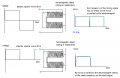
"compare behavior of series ceramic capacitor with bipolar square wave vs unipolar square wave, including losses, thermal, drop, etc"
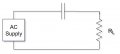
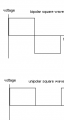
1755215063730.jpeg 1755215402313.png

I asked two AI's. They gave opposite answers. When i told them another source gave the opposite answer, they both changed their minds, with the result that they still disagreed with each other. :rolleyes:
----
Meta AI
1755215862554.png

Me:
Your answer seems to contradict the following, found at another source [pasted answer from Thetawise].

Meta AI: You are correct, and I appreciate the correction.

1755215965387.png

----
thetawise.ai
1755216058103.png

Me: Your answer seems to contradict answer from Meta AI. [pasted answer from Meta AI]

Thetawise: Your provided information is correct. Revised answer:

1755216231653.png

(This is why i don't trust AI.)
 

Attachments

Last edited:

WBahn

Joined Mar 31, 2012
32,703
Aside from underscoring why you should shouldn't let these AIs do your thinking for you, you didn't really give them a fair chance (and they aren't smart enough to realize it).

Your query implies that the only difference between the two is AC vs DC. But what does that actually mean?

Are you simply taking the unipolar waveform and shifting it so as to remove the DC component?

Are you keeping the peak voltage the same?

Are you keeping the RMS voltage the same?

Are you keeping the RMS current the same?

Are you looking for an answer that applies to ANY capacitor (including a polarized one)?

EDIT: Fix typo pointed out by johnyradio
 
Last edited:

Thread Starter

johnyradio

Joined Oct 26, 2012
615
Aside from underscoring why you should let these AIs do your thinking for you
You mean "shouldn't"?

Your query implies that the only difference between the two is AC vs DC
I've been told it's "alternating DC, which is not quite the same as DC"

Are you simply taking the unipolar waveform and shifting it so as to remove the DC component?
Are you sure about that -- i believe the bipolar is the one who's DC component has been removed. The unipolar has an offset. I believe an AC signal without DC component will be bipolar.

Are you keeping the peak voltage the same?
- [edit] For now, assume same 0-to-p, which i think will respect the cap's limits equally.

Are you keeping the RMS voltage the same?
- Not sure. 0-to-p is the same. Seems like that should answer this question.

Are you keeping the RMS current the same?
- Yes.

Are you looking for an answer that applies to ANY capacitor (including a polarized one)?
- Good question. Assume ceramic.
 
Last edited:

Thread Starter

johnyradio

Joined Oct 26, 2012
615
AC and DC have historic origins. We have moved away from the original meanings.

In my circles, DC means 0 Hz.
AC means anything greater than 0 Hz.
I think AC and DC have engineering origins. "Alternating" meaning forward current, then reverse current, then forward current, etc. Alternating DC never goes reverse.
 

WBahn

Joined Mar 31, 2012
32,703
I think AC and DC have engineering origins. "Alternating" meaning forward current, then reverse current, then forward current, etc. Alternating DC never goes reverse.
That's a common lay perception, but reality isn't that simple. In some contexts, that is a perfectly useable description. This is the case with most power systems, which is as deep into electrical things as most lay people get (if that).

But when talking about signals and systems, the terms more generally refer to signals below some frequency (DC) and signals above it (AC). Ideally, DC has a frequency component at exactly zero, but we don't live in an ideal world).
 

WBahn

Joined Mar 31, 2012
32,703
Actually, I didn't call anyone a lay person. I said that it is a common lay misconception. We fall prey to such misconceptions, even in fields in which we are anything but lay people, because those misconceptions are all around us. So, until we tend to hold onto them until we have a reason and opportunity not to.

But, to assuage your ire, how about "people that like to think of themselves as not being lay people but that currently only have a lay person's grasp of the concept"?
 

Thread Starter

johnyradio

Joined Oct 26, 2012
615
to assuage your ire
I don't have ire, I don't consider myself an expert. I'm here to learn. I was thinking about other people here who are more expert than me.

Okay, then how about "people that like to think of themselves as not being lay people but that only have a lay person's grasp of the concepts".
How about, let's talk about capacitors, not people?
 
Last edited:

MrChips

Joined Oct 2, 2009
34,628
How does the scope respond to a unipolar square wave in AC mode?
The DC/AC option selection uses the modern signal definition.
All signals have DC + AC components.
Setting the option to DC means that the oscilloscope input receives DC + AC.
Setting the input to AC means that the oscilloscope input receives AC, i.e. only signals above a given frequency.
In other words, the signal is fed to a high-pass filter before applying it to the input amplifier.

To make it clearer, we could redefine DC to mean "direct coupling". I don't know what we would redefine AC to mean.
 

Thread Starter

johnyradio

Joined Oct 26, 2012
615
The DC/AC option selection uses the modern signal definition. the signal is fed to a high-pass filter
It seems the definition is still direct current versus alternating current. If the DC component is removed by the high-pass filter, then the scope is showing the AC component only of a signal which may contain DC offset. The scope is just removing the DC. If you fed a unipolar square wave into the AC input with its high pass filter, then the scope will not display a unipolar square wave; it will display a bipolar square wave, which is not what the source actually is.

All signals have DC + AC components.
Even those that have had the DC component removed with a high pass filter?

Setting the option to DC means that the oscilloscope input receives DC + AC.
Then this would show the unipolar square wave as it really is.

To make it clearer, we could redefine DC to mean "direct coupling".
It seems that such a definition makes the reality less clear.
 
Last edited:
Top