Do K Type Thermocouples 'short out' when wires touch surface

Thread Starter

Hkeiner

Joined Aug 23, 2014
3
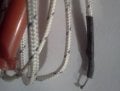
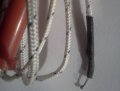
I am using a K type thermocouple with PID to monitor/control the temp of a metal surface (stainless steel water boiler on an espresso machine actually) by sandwiching the tip end between the boiler surface and an insulated pad pressed down on to the thermocouple tip end. The range of temps are between 25C and 125C.

I notice that the short bit of the two wires between the tip (bead) and the shrink wrap also touch the surface. Does this cause any type 'short' that would significantly affect the accuracy of the thermocouple? If the wires should NOT touch the surface, what is a good way of isolating the two wires from the surface? Seems like it would be kind of PITA to accomplish if that were to be necessary.


Thermocouple Pic.jpg
 

Attachments

jpanhalt

Joined Jan 18, 2008
11,087
I am using a K type thermocouple with PID to monitor/control the temp of a metal surface (stainless steel water boiler on an espresso machine actually) by sandwiching the tip end between the boiler surface and an insulated pad pressed down on to the thermocouple tip end. The range of temps are between 25C and 125C.

I notice that the short bit of the two wires between the tip (bead) and the shrink wrap also touch the surface. Does this cause any type 'short' that would significantly affect the accuracy of the thermocouple? If the wires should NOT touch the surface, what is a good way of isolating the two wires from the surface? Seems like it would be kind of PITA to accomplish if that were to be necessary.
View attachment 72911
No, it does not affect the result. What you need to look up is Seebeck: Law of Intermediate Metals. There are lots of PowerPoint presentations, which I don't particularly like for explaining things. Here is one reference that is not PowerPoint, but I don't know if it is very good either: http://www.chem.mtu.edu/~tbco/cm416/Lab_5_Thermocouple_2k8.pdf I had a great explanation in my files, but can't find it right now.

John
 

profbuxton

Joined Feb 21, 2014
421
There should be no concern about the "shorting" of the thermocouple over the short distance exposed as shown in your pic. If there any concerns about connecting the thermocouple tip to the metal you can use a silicon sleeve over the tip and fix the tip to the measured vessel(with some form of clamp arrangement) or some other suitable method. This "insulating" of the tip is usually only needed if the control system cannot have an earthed(grounded) thermocouple.
There may also be a small increase in measurement "lag" due to the insulation.
I assume that the thermocouple wires are insulated from each other further back into the cable.
 

Thread Starter

Hkeiner

Joined Aug 23, 2014
3
I have concluded that I do not need to worry about any significant inaccuracy of the thermocouple if the short bits of exposed wire touch the surface of the boiler. I am an avid espresso drinking home barista with plenty of knowledge on how to brew good espressos and how to use a PID to better control the boiler temp on an espresso machine. I was not so knowledgeable, however, on thermocouples and whether my installation method might negatively affect its accuracy. I now have that knowledge, thanks to your excellent answers and this forum. THANKS
 

MrCarlos

Joined Jan 2, 2010
400
Hello Hkeiner

I was hoping that someone mentioned to be careful with the type of PID you are using.
It may be that it requires the Thermocouple is isolated from ground. It is likely that the PID manual will mention that.
 

cmartinez

Joined Jan 17, 2007
8,727
It all depends on the kind of chip you're using to amplify the thermocouple signal.
For instance, the MAX31855 (which already includes the amplifier and a 14 bit ADC) does not allow shorting the tips to ground, while the AD8494 is ok by it, as long as there is only one point along the wires to which ground is connected.
It is because of grounding issues that I had to change an entire project and had to use the AD8494, along with the 16-bit ADC ic AD7680, so that grounding at the tip didn't affect temperature readings.
 

Thread Starter

Hkeiner

Joined Aug 23, 2014
3
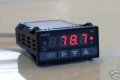
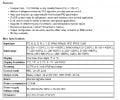
I am using an Auber SYL-1512A PID with K Type thermocouple. This PID is pretty popular amongst the home barista crowd that like to mod/upgrade their espresso machines that have high/low on/off button type thermostats to control temp. Specs don't seem to mention the word 'isolation'. Good thing as I don't know what that would mean anyway.


Auber PID pic.jpg
 

Attachments

Last edited:

nicsky

Joined Aug 1, 2009
11
The thermocouple is just two pieces of wire welded together ( although of precise metal type !) . you can buy probes with covers that are insulated but your picture is not of this type. It does not matter whether your have k or T or any other type, they will have to be insulated. To directly connect the thermocouple to your system without insulation you will need to isolate your measurement cct from ground (your could use a transformer or battery), also any noise picked up your cct connection will be injected into your amplifier so make sure a good low pass filter is present. Because the metal vessel and the water in it are quite large you could get good results by electrically isolating your sensor tip
 
Top