Diorama LED lighting

Ya’akov

Joined Jan 27, 2019
10,235
Thank you for the suggestions, sounds like a good solution, and you have some very creative ideas, but I have to keep this fairly simple and any buyer might have a hard time dealing with non standard charging batteries... I have one large diorama that handles about 10 SMD lights using the same power distribution board I mentioned above in #5 and it has a switch and an input jack on the side so that the user can use any wall outlet power supply. It works great with a 12v DC supply but the hassle of having a wall supply is an inconvenience so I want to keep them simple and just be able to use readily available batteries from now on; just a matter of figuring out the best setup for the longest run time with my limited space of about 3/4" depth under the diorama. I didn't realize the 9v batteries were so limited in capacity.
It might not have been clear, but the first option I mentioned is even simpler than anything you presented. The end result is that any USB PD power supply (if you choose the 9V trigger option) can be used to power your diorama. It could be a power bank or a wall-powered charger.

I can’t see anything simpler than that for an end user. No special supply, their choice of battery or wall power. Given your requirements, it really seems the best bet.

And, for the record, 18650 cells are available from Amazon and many other sources should they need replacement. They are just like oversized AA cells from the end user point of view, so the second is also a user friendly solution.

If you are interested in either one of these, I am happy to help with the details. Whatever you choose to do, good luck.
 

BobTPH

Joined Jun 5, 2013
11,516
Simple and cheap is a 4.5V battery (3 cells) and a resistor in series with each LED. Resistors cost about few cents a piece, compared to the $14 board, which doesn’t do what you want.
 

djsfantasi

Joined Apr 11, 2010
9,237
What makes you say that? I see nothing to indicate it does current control.

And if the Vf is greater than the 3V output (which it usually is for white LEDs) you cannot control the current with an added resistor. As I see it, that board is clearly the wrong thing to solve this problem.

Can I ask you and @Ya’akov what you think the board is doing and how you arrived at that? Because the only clue I see is that it runs the LEDs well with 9V input and not with 6V input.
Because I am familiar with those types of boards and have designed my own.

Plus I have dozens of 3V LEDs with resistor which have run for hundreds of hours.

This power hub design is used extensively in model railroading. One such hub is produced by Woodland Scenics which supplies 3V. They also have a line of 3V accessories (building lighting, street lights, exterior building lighting, traffic lights, etc…
 

Ya’akov

Joined Jan 27, 2019
10,235
Can I ask you and @Ya’akov what you think the board is doing and how you arrived at that? Because the only clue I see is that it runs the LEDs well with 9V input and not with 6V input.
The eBay listing and the image of the board itself provides a lot of information, even if not everything. I would certainly want to test it before I would say with certainty it’s a good thing.

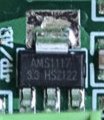
But, the board has a AMS 1117 3.3V LDO on it. It has an output of 800mA, which should be enough for the LEDs—in this case.

1693766262366.jpeg
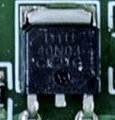
There is a 40N03 MOSFET that can handle 25A for switching the output, it seems overkill but it does provide a good power switch that can be used remotely at very low current.

1693766663828.jpeg
And, as I mentioned before, it has multiple options for power supply sources and connections. So, for someone that builds things for others, and is not an expert in electronics, this represents a modular, repeatable solution that would be easy to implement and easy to repair with a good set of capabilities for more sophisticated applications like remote soft switching and dimmer control.
It may be more expensive than resistors, but for bespoke applications like this one, the functionality easily outweighs the extra cost because of the ease of use and standardization. That’s my opinion.
 

djsfantasi

Joined Apr 11, 2010
9,237
It may be more expensive than resistors, but for bespoke applications like this one, the functionality easily outweighs the extra cost because of the ease of use and standardization. That’s my opinion.
And I concur. The “plug and play” functionality is exactly why these boards were originally made for the modeling community - particularly for those modelers whose main interest is an artistic one that’s focused on appearance, such as scenery.
 

BobTPH

Joined Jun 5, 2013
11,516
And I concur. The “plug and play” functionality is exactly why these boards were originally made for the modeling community - particularly for those modelers whose main interest is an artistic one that’s focused on appearance, such as scenery.
And I would agree with you if he was using it with the LED model railroad lamps it is designed for, but that does not seem the case. He mentions SMD LEDs. No idea of the specs. Since he confirmed white LEDs, there is little to negative headroom to control the current with resistors.

And I am still puzzled that the result would differ using 9v and 6V input since both are allegedly within its requirements.
 

djsfantasi

Joined Apr 11, 2010
9,237
And I would agree with you if he was using it with the LED model railroad lamps it is designed for, but that does not seem the case. He mentions SMD LEDs. No idea of the specs. Since he confirmed white LEDs, there is little to negative headroom to control the current with resistors.

And I am still puzzled that the result would differ using 9v and 6V input since both are allegedly within its requirements.
I understand. However I suspect he is actually using SMD LEDs. When selling to the model railroading community, SMD LEDs are simply referred to as LED Lights. Understand the difference in marketing approaches? See my pic attached. Those were sold as 5V LED lights and has a current limiting resistor built-in..

image.jpg

Plus while the TS board uses a 3.3V LDO, it’s marketed as dimmable by using the trimpot. Who knows what the pot is set to? And we don’t know yet how the pot is used although it looks as if it might be an input to the 1117. The 1117 3.3 needs a minimum of 4.8 V to operate; this is consistent with the “about 5V” which the TS reported as when the board stopped working.
 

BobTPH

Joined Jun 5, 2013
11,516
Well, we won’t know unless he tells us, will we.

Anyway he said this:

Okay I tested out using 4 fresh c cells in series = 6v to supply the power regulator board and the lights are really dim.
4 fresh C cells and a regulator with 1V dropout is plenty of headroom. It should work down to 4.3V.

To the TS: The problem with using 3V in with pass through mode is that your 3V battery will soon fall below the minimum voltage for the LEDs. They will not last long at all, that is why I suggested (and still do) 4.5V battery and resistors. 6 would be even better. Use the board in pass through mode if you must.

Are your LEDs just bare SMD LEDs or do they have a resistor connected? Do you have specs for them? Or, at least, a link to where you bought then? The problem is we don’t have enough information to solve you issues. That is why there is disagreement among us.

Also, do you have a multimeter? If so, can you measure the voltage in and out with the 6V and the 9V batteries? If not, get one. Even a $5 one would be extremely helpful in diagnosing problems like this.
 

Thread Starter

Doane2u

Joined Sep 2, 2023
42
Well, we won’t know unless he tells us, will we.

Anyway he said this:


4 fresh C cells and a regulator with 1V dropout is plenty of headroom. It should work down to 4.3V.

To the TS: The problem with using 3V in with pass through mode is that your 3V battery will soon fall below the minimum voltage for the LEDs. They will not last long at all, that is why I suggested (and still do) 4.5V battery and resistors. 6 would be even better. Use the board in pass through mode if you must.

Are your LEDs just bare SMD LEDs or do they have a resistor connected? Do you have specs for them? Or, at least, a link to where you bought then? The problem is we don’t have enough information to solve you issues. That is why there is disagreement among us.

Also, do you have a multimeter? If so, can you measure the voltage in and out with the 6V and the 9V batteries? If not, get one. Even a $5 one would be extremely helpful in diagnosing problems like this.
They are 0402 SMD LEDs Soldered LED Bulbs Pre Wired Lights Soldered Lamps bought on ebay.
Name: 0402 SMD LED light with cable
Line type: 0.34OK line
Cable length: 30CM
Voltage: 3V
Forward current (typ/max): 15mA/20mA.
Long life LEDs and avoid getting too hot
Operating voltage: 12V DC (don't use on more than 12V unless wire a resistor with each light)
Light color:Warm white
 

Thread Starter

Doane2u

Joined Sep 2, 2023
42
Well, we won’t know unless he tells us, will we.

Anyway he said this:


4 fresh C cells and a regulator with 1V dropout is plenty of headroom. It should work down to 4.3V.

To the TS: The problem with using 3V in with pass through mode is that your 3V battery will soon fall below the minimum voltage for the LEDs. They will not last long at all, that is why I suggested (and still do) 4.5V battery and resistors. 6 would be even better. Use the board in pass through mode if you must.

Are your LEDs just bare SMD LEDs or do they have a resistor connected? Do you have specs for them? Or, at least, a link to where you bought then? The problem is we don’t have enough information to solve you issues. That is why there is disagreement among us.

Also, do you have a multimeter? If so, can you measure the voltage in and out with the 6V and the 9V batteries? If not, get one. Even a $5 one would be extremely helpful in diagnosing problems like this.
I will measure the board output tomorrow with my multimeter, that’s how how measured the depleted 9v batteries I mentioned earlier☹
It might not have been clear, but the first option I mentioned is even simpler than anything you presented. The end result is that any USB PD power supply (if you choose the 9V trigger option) can be used to power your diorama. It could be a power bank or a wall-powered charger.

I can’t see anything simpler than that for an end user. No special supply, their choice of battery or wall power. Given your requirements, it really seems the best bet.

And, for the record, 18650 cells are available from Amazon and many other sources should they need replacement. They are just like oversized AA cells from the end user point of view, so the second is also a user friendly solution.

If you are interested in either one of these, I am happy to help with the details. Whatever you choose to do, good luck.
 

Thread Starter

Doane2u

Joined Sep 2, 2023
42
Yaakov: You are winning me over with this other option, I’m just trying to absorb everything being said by everyone.. the math part sort of went over my head.. I’m an old guy and it’s been a loooong time since I had to do trig or basic calculations. I’ll make some voltage measurements of the board this morning and get back to all of you, but I really don’t need to use one since I decided to not use a wall power supply anymore. Then again, having the option of using a wall supply might be a good thing; I was impressed that this board handles various ac and dc voltage inputs so a user isn’t likely to use the wrong supply and fry everything! One diorama I made has that option with a spdt switch on the side with a power input jack and a planned on battery pack battery pack
 

BobTPH

Joined Jun 5, 2013
11,516
They are 0402 SMD LEDs Soldered LED Bulbs Pre Wired Lights Soldered Lamps bought on ebay.
Name: 0402 SMD LED light with cable
Line type: 0.34OK line
Cable length: 30CM
Voltage: 3V
Forward current (typ/max): 15mA/20mA.
Long life LEDs and avoid getting too hot
Operating voltage: 12V DC (don't use on more than 12V unless wire a resistor with each light)
Light color:Warm white
Link

It sounds like they are claiming there is 340Ω resistance in series, but I don’t see it, unless the wires have that resistance.

It claims you can use them at up to 12V. I calculate the current would be 26mA, which is a bit high but would likely not destroy them immediately.

If you are willing to risk one, connect it directly to your 6V battery. Then try same with the multimeter in current mode in line. I calculate 8mA at 6V.

I still don’t see how they could possibly work at 3V if they can work up to 12. They should be barely lit at 3V. Of course that is what you saw with your 6V battery and distribution board.

I am beginning to think that when you had them working at 9V, you had the board in pass through mode.
 

djsfantasi

Joined Apr 11, 2010
9,237
I also recommend Ya’akov’s suggestion.

Yaakov: You are winning me over with this other option, I’m just trying to absorb everything being said by everyone.. the math part sort of went over my head..
I had a feeling that you would have said this from your comments. It is exactly why these boards were designed… for people like you. Not everyone is comfortable with the math involved. And it’s now the case that lighting models/ dioramas/ modrl RRs is more difficult nowadays. Using LEDs are more difficult than incandescent bulbs, which is what I started with in model RRing.

Yaakov’s solution is straightforward. Power banks are slim (<1/2” thick) and will fit in your 3/4” deep diorama base. It will last much longer than batteries. It is easily rechargeable, it will provide the minimum voltage that your board requires (and you don’t have to go any math).

The board is designed to take care of the other issues have brought up, as you have noted. No worries about polarity. No worries about voltage levels. No worry about current. It’s almost like magic! You can use an USB cable to connect the battery pack to the board. Cut to length and strip the wires. Measure the voltage in the red/ black wires and connect them to the board. I usually solder them to a short length of solid copper wire and insulate it (shrink tubing) so just the right amount of copper is exposed.

I was wondering… Do your lights look similar to either of the LEDs on my model interior? I posted a pic of them.
 

BobTPH

Joined Jun 5, 2013
11,516
I do not believe those lights will light brightly at 3.3V. If they will, then the claim that you can drive them with 12V is ridiculous.

There is evidence for this belief. There will likely be more if he measures the input and output voltages when they are lit with the 6V battery.
 

djsfantasi

Joined Apr 11, 2010
9,237
I do not believe those lights will light brightly at 3.3V. If they will, then the claim that you can drive them with 12V is ridiculous.

There is evidence for this belief. There will likely be more if he measures the input and output voltages when they are lit with the 6V battery.
BTW, for modeling/ diorama purpose, you do not want the LEDs to be bright. You want them with a low brightness and a warm glow. Think of looking at a building where the interior (incandescent) lighting is on. I put a 2.2kΩ resistor in series with a 12V pre-wired LED to get the appearance I want.
 

Thread Starter

Doane2u

Joined Sep 2, 2023
42
Okay, guys, I did some tests this morning as follows using an inexpensive 10k/DCv multimeter I own:

I measured the current on one SMD 0402 white LED as approximately 50ma attached directly to a 3v battery; this is higher than the 15-20ma they show in the ad. With the meter in series with it, the light was very dim.
Attached directly to a 3v (2x C cell 3.6v) battery the light is very bright.
Attached to 6v using 4x C cells (6.4v) it burns out immediately... pop!
Attached to 6v as before using a 1k resister it is still very bright and is fine.

Tests of the regulator board mentioned previously, again, here are the two I have used:
https://www.ebay.com/itm/154622667353
https://www.ebay.com/itm/1540572374...2EXg6TvSDIezkA%3D%3D|ampid:PL_CLK|clp:2047675

Both of these have no output with 3v input
With 6v in using 4x c cells they output 3.8v on the connector strips same with one 9v battery... same with a 12v wall DC source.
The on board dimmer adjusts the voltage from basically, 0, to the full 3.8v out, but when dimmed the lights flicker, so is not useful.
 

Thread Starter

Doane2u

Joined Sep 2, 2023
42
I'm intrigued with Yaakov's suggestion, but maybe for now I should just use what I have?...

I'll throw out my thinking:

I can get some 3x c cell holders with lids for 4.5v each, but I already have several 2x holders with lids for 3v each. I also have several terminal blocks I could use. I could use two of either in parallel with the 1k resistor, but the comment about the longevity limitation of a 3v source makes sense, so maybe two of the 3x/4.5v in parallel with a 1k resistor for each light would power 14 lights the longest time? Or two of the 2x c cell holders in series for 6v with 1k resistors for each SMD?
Or:
Since I already have two of these regulator boards I could just try running them with my 2x c cell holders in series for 6v input to the board and see if that lasts a lot longer than the two 9v in parallel I have been using? ( I even have room for 3x c cell holders for 9v total in series for the board for even longer longevity?)

Any thoughts? And thanks again for all the help, I'm learning a lot from all of you.

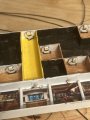
I attached some photos of my newest diorama that has the 9v supply problems with 14 lights. Brightness had been mentioned.. For the interiors of these the warm white at full brightness works well for me. For the Jazz club I wanted a reddish light so I simply put a red acrylic paint wash on the two lights in that building on the right. The street lights I put a yellow paint tint on them to decrease the light output and make them a warmer color.
 
Last edited:

djsfantasi

Joined Apr 11, 2010
9,237
I'm intrigued with Yaakov's suggestion, but maybe for now I should just use what I have?...

I'll throw out my thinking:

I can get some 3x c cell holders with lids for 4.5v each, but I already have several 2x holders with lids for 3v each. I also have several terminal blocks I could use. I could use two of either in parallel with the 1k resistor, but the comment about the longevity limitation of a 3v source makes sense, so maybe two of the 3x/4.5v in parallel with a 1k resistor for each light would power 14 lights the longest time? Or two of the 2x c cell holders in series for 6v with 1k resistors for each SMD?
Or:
Since I already have two of these regulator boards I could just try running them with my 2x c cell holders in series for 6v input to the board and see if that lasts a lot longer than the two 9v in parallel I have been using? ( I even have room for 3x c cell holders for 9v total in series for the board for even longer longevity?)

Any thoughts? And thanks again for all the help, I'm learning a lot from all of you.

I attached some photos of my newest diorama that has the 9v supply problems with 14 lights. Brightness had been mentioned.. For the interiors of these the warm white at full brightness works well for me. For the Jazz club I wanted a reddish light so I simply put a red acrylic paint wash on the two lights in that building on the right. The street lights I put a yellow paint tint on them to decrease the light output and make them a warmer color.
Pretty good, but you absolutely need a 1kΩ resistor for each light in parallel. The math shows that for each additional LED with only one resistor, the LEDs will get dimmer and dimmer. With so many LEDs, they may not light at all.

Edit: added text to clarify. Additional text is underlined.
 
Last edited:

Thread Starter

Doane2u

Joined Sep 2, 2023
42
Djsfantasi: #*%# So, that sounds like I go with Yaakov's idea or stick with my regulator boards, which have current protection and don't need any resistors? And if I do that, then maybe just upping to larger size batteries, like 6 c cells for 9v will work?
 
Top