Facebook
 Google
 GitHub
 Linkedin
vanderghast
- Joined Jun 14, 2018
- 70
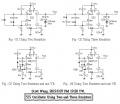
Without D1 and D2, we charge C1 with R1+R2 (none can be zero, since then we would have a short at charge or at discharge) and discharge C1 through only R2. Adding D1 allows us to "bypass" R2 when we charge C1, so only R1 will govern the RC constant for C1. But we decrease the allowable voltage by V<sub>D1</sub>. D2 may be then required for some ratio of t1/t2 (if I remember correctly).Here's another more complicated schematic. What is the purpose of each diode in this circuit ?
View attachment 189657