Oh, but it was an answer. You have a point and from the diode equation you can find other points. Note that the diode you have from NTE may or may not correspond to a real 1N34A or even any other diode. It may be a species unto itself.
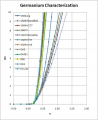
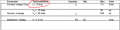
Your datasheet specifies a Vf of 1.0v at a particular If of 5mA. The various 1N34 diodes in the graph have a Vf of 1 volt at around 7 or so mA, which is not too dissimilar from your datasheet.
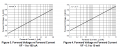
Here for example is the Vf for a 1N4148, a silicon diode with a Vf ostensibly about 0.65 to 0.75 volt. But note that this is only at the specified If measurements:
A more complete picture shows that the Vf of a 1N4148 lies between a quarter and three quarters of a volt, depending on forward current, quite a wide variation:
The 1.0 V spec is the MAX Vf that you might see at a forward current of 5 mA (at a junction temperature of 25°C). It is unlikely that you would ever see an actual diode that would be very close to that.
Your 0.25 V to 0.3 V values are the typical knee voltages, which are at sub-milliamp currents.
If you follow the graphs for the 1N34A variants in the plot provided by boostbuck, they seem to fall in the 0.7 V to 0.8 V range at 5 mA. These curves are almost certainly for typical devices, so each curve is basically at the center of a spread of actual performance, and thus you would expect them to be somewhat below the max specification since the upper edge of the actual performance envelope has to fall below that max spec.
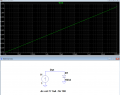
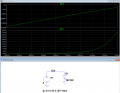
Most diodes show such a straight when plotted with a log current scale (below for 1N4148):
The voltage is not really "stable", but follows the usual log function relation between voltage and current (top trace).
We often just use 0.6V-0.7V since that's in the "knee" appearing voltage for a typical silicon junction-diode operating current of a few mA when plotted with a linear voltage/current scale (bottom trace).

 Facebook
 Google
 GitHub
 Linkedin