Diagnosing lithium battery packs ?

Thread Starter

Externet

Joined Nov 29, 2005
2,624
Hi.
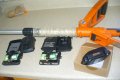
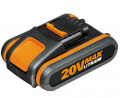
Have several battery packs for a tool; a couple of them last about 20 minutes, am happy with those. Perform well the way I suppose it is 'normal'
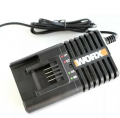
Four other equal packs I have for the same tool last from seconds to a minute working on the same tool. All packs charged with the same original charger provided with the tool.

The failing battery packs that barely run for less than a minute, when placed in the charger, show fully charged status immediately; no charging indication seems to happen. I believe is 'abnormal' . Have you seen this behavior ? What would be a proper diagnostic procedure ?
1747570374808.png

1747570100604.png
 

Ya’akov

Joined Jan 27, 2019
10,226
Sounds like one or more bad cells. It is very often one bad cell.

You can rebuild the packs if they can be non-destructively disassembled. For a few dollars a piece you can get five new, high capacity cells and build a much better pack than the original—or if you check the cells, you can root out the bad one and for less possibly replace a single cell. This will "work" but if you can't get an identical cell, it's not a good idea.
 

Ya’akov

Joined Jan 27, 2019
10,226
A simple load test is better with some lith

The one you do already, load test.
That's true, though the most common case I encounter is a clearly low voltage cell.

But, thank you, I should have said: charge the pack, load it to failure, then measure the cells.
 

Ian0

Joined Aug 7, 2020
13,097
Bad cells with poor chemical reactions resulting in poor energy storage. They have become resistors, junk them.
Don't you mean "dispose of them carefully"? In a manner that is not likely to set fire to the landfill or the vehicle taking them there!
 

Thread Starter

Externet

Joined Nov 29, 2005
2,624
Every 18650 cell measured 4.05V. Every cell individually loaded with a 21W light bulb filament in parallel to the voltmeter measured 3.93V steady after 15 seconds. Surprisingly / jawdropping uniform, nothing warm. Plugged the pack to the tool (weed trimmer) ; ran for ~15 seconds and the tool stops ( protecting the pack?? or pack self protects ?? ) Restarting the tool that stopped, runs for ~5 seconds and stops again. Measuring the cells immediately, all within 20mV of 3.84 V loaded as above. None warm.

My next guessy plan is disconnect the thermal sensor in the pack. Or short it ? Or whatever you suggest.
I have hundreds of 18650 cells to replace, but none in the pack is telling me!, me! am the bad one!. And do not want to replace any blindly if there is no reason, to later find that solved nothing.

Edited:
Lithium pack number 2, same brand and type :
Same exact test as above, same exact behavior with +10 mV difference unloaded and +30mV loaded each cell :oops:

Edited again...
New lithium pack out of the box, same type. Ran the tool fine for 10 minutes non-stop and still going strong as if was putting no effort.

1747600782257.jpeg
 
Last edited:

nsaspook

Joined Aug 27, 2009
16,249
Every 18650 cell measured 4.05V. Every cell individually loaded with a 21W light bulb filament in parallel to the voltmeter measured 3.93V steady after 15 seconds. Surprisingly / jawdropping uniform, nothing warm. Plugged the pack to the tool (weed trimmer) ; ran for ~15 seconds and the tool stops ( protecting the pack?? or pack self protects ?? ) Restarting the tool that stopped, runs for ~5 seconds and stops again. Measuring the cells immediately, all within 20mV of 3.84 V loaded as above. None warm.

My next guessy plan is disconnect the thermal sensor in the pack. Or short it ? Or whatever you suggest.
I have hundreds of 18650 cells to replace, but none in the pack is telling me!, me! am the bad one!. And do not want to replace any blindly if there is no reason, to later find that solved nothing.

Edited:
Lithium pack number 2, same brand and type :
Same exact test as above, same exact behavior with +10 mV difference unloaded and +30mV loaded each cell :oops:

Edited again...
New lithium pack out of the box, same type. Ran the tool fine for 10 minutes non-stop and still going strong as if was putting no effort.

View attachment 349485
It's a high impedance (electrically) bad cell in series with other good or bad cells to make a battery pack. It's chemical energy being stored, not electrical energy. There is sufficient chemical energy (very little needed) to generate the open circuit potential of the chemical reaction but not sufficient to supply the needed energy for powering the load. So if you want to salvage something from your many packs, a single cell load test needs be done on every pack (via a set of precisely drilled testing holes if possible ) to cull the bad from the good in each one. You must decide if that is a wise thing to do.[/QUOTE]
 
Last edited:

MisterBill2

Joined Jan 23, 2018
27,164
To "Y"Where do I find reasonably priced lithium batteries suitable for powering a serious drill/driver.????
I inherited a very good one with two failed nicad packs. My goal is to replace the nicads with lithium for the same voltage, and then use a lithium battery pack charger to recharge them. Because the Li batteries are much higher voltage I can put two strings in parallel, possibly. I do not need fast charging and so there is no need for that. Slow charging is fine. But where to get the GOOD Li cells at a reasonable price???
 

Ya’akov

Joined Jan 27, 2019
10,226
To "Y"Where do I find reasonably priced lithium batteries suitable for powering a serious drill/driver.????
I inherited a very good one with two failed nicad packs. My goal is to replace the nicads with lithium for the same voltage, and then use a lithium battery pack charger to recharge them. Because the Li batteries are much higher voltage I can put two strings in parallel, possibly. I do not need fast charging and so there is no need for that. Slow charging is fine. But where to get the GOOD Li cells at a reasonable price???
This is my usual source. They are reliable sellers and offer a good range. The cost of the cells varies dramatically based on the combination of maximum current and capacity, so you can choose what makes the most sense for your application.
 

MisterBill2

Joined Jan 23, 2018
27,164
Many thanks to "Y"!! One puzzle is that while the listing is presented as rechargeable batteries, only one had that added to the description.
Certainly having the maximum discharge current listed is valuable indeed.
Now I will need to do all of the math to see which ones I will need to select. I will need to measure the full load current of the tool's motor. What I don't know is what the full load voltage drop of the NICAD battery packs was.I can put just five of the 4 volt cells in series instead of 15 of the 1.2 volt nicad cells. So space should not be the problem.
Thanks AGAIN, YA'a'kov!!!
 

jaclement

Joined Apr 15, 2009
60
I have built a few battery packs using 2s,3s,and 4s cheapo BMS's from Amazon. One or two BMS's have failed in a low current output state under load, but work normally under low load. The same cells work properly with a good BMS.
 
Top