Designing a buck converter

Thread Starter

Batiskaff

Joined Apr 17, 2024
2
I’m working on a project where I need to step down 24V to a stable 5V with a load current of up to 1A. I’ve decided to use a buck converter based on the LM2675 IC. Here is my schematic made in DipTrace:
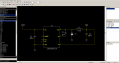
1724136923973.png

Input: 24V (DC)
Output: 5V / 1A
Controller: LM2675
Switching Frequency: 260 kHz
I’m planning to use two capacitors:
Input Capacitor (C1): To smooth the input voltage and suppress noise.
Output Capacitor (C2): To smooth the output voltage and minimize ripple.
I have the following questions and concerns:
Type and value of the input capacitor: I’m considering using a 100 µF electrolytic capacitor with low ESR, but I’ve heard that ceramic or polymer capacitors might be better for high-frequency applications. Which type would be optimal for input noise suppression?
Type and value of the output capacitor: Given the need to minimize output ripple, should I use multiple low ESR ceramic capacitors or a single large electrolytic capacitor? Or perhaps a combination of both?
Impact of switching frequency on capacitor selection: How does the 260 kHz switching frequency affect capacitor choice? Should this be a factor when determining capacitance?
Temperature stability: The system will operate at elevated temperatures (up to 70°C). Which type of capacitor is best suited for these conditions?
I’d appreciate any advice or suggestions! I’m especially interested in hearing from anyone who has experience with similar circuits.
By the way, how do you like DipTrace 5? Has anyone tried working on it yet?
 

MrAl

Joined Jun 17, 2014
13,667
I’m working on a project where I need to step down 24V to a stable 5V with a load current of up to 1A. I’ve decided to use a buck converter based on the LM2675 IC. Here is my schematic made in DipTrace:

View attachment 329613

Input: 24V (DC)
Output: 5V / 1A
Controller: LM2675
Switching Frequency: 260 kHz
I’m planning to use two capacitors:
Input Capacitor (C1): To smooth the input voltage and suppress noise.
Output Capacitor (C2): To smooth the output voltage and minimize ripple.
I have the following questions and concerns:
Type and value of the input capacitor: I’m considering using a 100 µF electrolytic capacitor with low ESR, but I’ve heard that ceramic or polymer capacitors might be better for high-frequency applications. Which type would be optimal for input noise suppression?
Type and value of the output capacitor: Given the need to minimize output ripple, should I use multiple low ESR ceramic capacitors or a single large electrolytic capacitor? Or perhaps a combination of both?
Impact of switching frequency on capacitor selection: How does the 260 kHz switching frequency affect capacitor choice? Should this be a factor when determining capacitance?
Temperature stability: The system will operate at elevated temperatures (up to 70°C). Which type of capacitor is best suited for these conditions?
I’d appreciate any advice or suggestions! I’m especially interested in hearing from anyone who has experience with similar circuits.
By the way, how do you like DipTrace 5? Has anyone tried working on it yet?
Hi,

I can comment briefly on this right now maybe more at a later time.

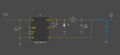
A good way to reduce output ripple on these things is to add a small inductor in series with the output in combination with another capacitor on the output. That allows the capacitor to be more effective. The inductor can be an air core and it's probably better if it is. Even a 2uH inductor can reduce the higher frequency ripple.
An important note: the feedback line should not come from the very output after the inductor + cap is added though but from the first cap on the output of the chip itself before the inductor.

Low ESR caps usually are enough on the output and on the input. You can of course see what the effect of multiple ESR caps have. It is always best to bench test any power supply before using in an application or going into production. An oscilloscope is a good tool for this.
 

Attachments

Last edited:

MisterBill2

Joined Jan 23, 2018
27,180
Certainly following the buck supply with a (not small) inductor and another capacitor will provide more filtering. Another fast diode, connected like D1, but to the output of the supply, will allow the filter inductor to supply current more effectively.
 

MisterBill2

Joined Jan 23, 2018
27,180
A series inductance can be more effective than a shunt capacitance. Inductors are usually left out because of cost. AND, the lifetime of inductors is much greater than the predictable lifetime of filter capacitors. My SIXTY year old PA amplifier only needs the filter capacitors replaced. The power supply filter choke is OK.
 

MrAl

Joined Jun 17, 2014
13,667
A series inductance can be more effective than a shunt capacitance. Inductors are usually left out because of cost. AND, the lifetime of inductors is much greater than the predictable lifetime of filter capacitors. My SIXTY year old PA amplifier only needs the filter capacitors replaced. The power supply filter choke is OK.
Hi,

That's an interesting observation. Capacitors often fail mainly because of constant changes in the current through them, and inductors help to reduce that by a huge amount.

Even a hand wound air core coil works wonders on the output, followed by another capacitor of course, and of course bench tested.
 

MrAl

Joined Jun 17, 2014
13,667
Certainly following the buck supply with a (not small) inductor and another capacitor will provide more filtering. Another fast diode, connected like D1, but to the output of the supply, will allow the filter inductor to supply current more effectively.
Not sure of a couple things here...

1. Why did you say "not small" is that referring to the inductor value?
2. What purpose would that extra diode do as it would be in antiparallel with the output which is assumed to be always positive.

A 2uH inductor with an ESR=0.01 Ohms and a 10uf low ESR cap reduces 100kHz frequency down to 14 percent.
The extra diode looks like it would never conduct?
 
Last edited:

Ian0

Joined Aug 7, 2020
13,097
Not sure of a couple things here...

1. Why did you say "not small" is that referring to the inductor value?
2. What purpose would that extra diode do as it would be in antiparallel with the output which is assumed to be always positive.

A 2uH inductor with an ESR=0.01 Ohms and a 10uf low ESR cap reduces 100kHz frequency down to 14 percent
The extra diode looks like it would never conduct?
If you are tempted to use a value of inductance that is very not-small, then watch its self-resonant frequency.
At some point you get to the frequency where the capacitance between the windings dominates over the inductance, and then you have a high-pass filter, not a low-pass.
 

MisterBill2

Joined Jan 23, 2018
27,180
If you are tempted to use a value of inductance that is very not-small, then watch its self-resonant frequency.
At some point you get to the frequency where the capacitance between the windings dominates over the inductance, and then you have a high-pass filter, not a low-pass.
OK, the purpose of the diode is not super obvious, it is true. The diode allows the inductor to use the energy stored in the magnetic field to supply load power, independent of the voltage source, during spikes in the load current demand. It is exactly the same type of action provided by the high-speed diode in a switcher supply. That is why they are sometimes helpful in power supplies with large inductor input filters.
 

MisterBill2

Joined Jan 23, 2018
27,180
My term "not small" is in reference to the application, and how much energy it would need to deliver. So it is not easily defined without a whole bunch of thinking. And certainly I did mean inductance, not physical size, ALTHOUGH they do sort of follow each other.
AND, CERTAINLY, self resonance of the inductor is to be avoided.
 
Top