Facebook
 Google
 GitHub
 Linkedin

I was looking at a pcb (which I cannot share) in which the 48V output of a power supply comes through a connector to the pcb board.
As you see in the picture, 48V input is filtered with a common mode filter and sent to an isolated DC-DC.
It is not in the picture, but the 5V output of the DC-DC will power a microcontroller
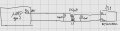
I have some practical questions that I would like to discuss with you, I have provided you with the datasheets and can give you all the information you need (and that I have available):
1) The cutoff frequency is 1 / [2*pi*sqrt(L*C1)] ??
2) How do I choose IF and HOW much to filter the 48V input?
Ideally the input is DC, but it obviously contains some ripple at higher frequencies. I can't find any information in the power supply datasheet about this.
3) How do I choose the parameters of L and C?
I am not talking about their values (Farad and Henry), but the others that I have to filter for example on DigiKey (see image below).
In the case of inductor, for example:
- maximum current (which I would say is at least twice the maximum drawn by the DC-DC)
- impedance (it is usually reported for MHz ... but in the picture the filter is a few kHz)
- AC and DC RATINGS
- etc.
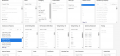
I actually notice that since I choose 470uH@1kHz ... I no longer have the option to choose the other parameters/filters, but the choice between them remains:
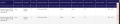
These are necessary questions by generic design, which is why I am asking for help.
Thanks
As you see in the picture, 48V input is filtered with a common mode filter and sent to an isolated DC-DC.
It is not in the picture, but the 5V output of the DC-DC will power a microcontroller
I have some practical questions that I would like to discuss with you, I have provided you with the datasheets and can give you all the information you need (and that I have available):
1) The cutoff frequency is 1 / [2*pi*sqrt(L*C1)] ??
2) How do I choose IF and HOW much to filter the 48V input?
Ideally the input is DC, but it obviously contains some ripple at higher frequencies. I can't find any information in the power supply datasheet about this.
3) How do I choose the parameters of L and C?
I am not talking about their values (Farad and Henry), but the others that I have to filter for example on DigiKey (see image below).
In the case of inductor, for example:
- maximum current (which I would say is at least twice the maximum drawn by the DC-DC)
- impedance (it is usually reported for MHz ... but in the picture the filter is a few kHz)
- AC and DC RATINGS
- etc.
I actually notice that since I choose 470uH@1kHz ... I no longer have the option to choose the other parameters/filters, but the choice between them remains:
These are necessary questions by generic design, which is why I am asking for help.
Thanks
Last edited: